The Zero Trust Roadmap: A Phased, Vendor-Neutral Plan to Implement Zero Trust
Zero Trust is a multi-year journey, and journeys need a map.
- Content owner
- Insyto Content Team
- Editorial reviewer
- Ritesh Mhatre
- Technical reviewer
- Navish Ansari
- Next review
- To be scheduled
- Last reviewed
- Review pending
- Technical level
- Intermediate · CISOs, security architects, IT directors
Zero Trust is a multi-year journey, and journeys need a map. A Zero Trust roadmap is the phased, prioritized plan that takes an organization from where it is today to a target security posture — sequencing the work so that risk falls quickly, effort is spent where it matters, and the program does not stall in analysis or drown in simultaneous initiatives. Without a roadmap, Zero Trust becomes a shopping list of tools; with one, it becomes a disciplined program with measurable milestones and executive support.
This is a vendor-neutral guide. The roadmap is grounded in the foundational frameworks — the NIST SP 800-207 architecture, the CISA Zero Trust Maturity Model, the U.S. Department of Defense Zero Trust strategy, and analyst and vendor adoption frameworks — and uses real technologies only as examples. Its logic holds regardless of which platforms you standardize on: assess honestly, plan a target state, implement in phases across the pillars, and optimize continuously.
Who should read this
- CISOs and security architects building a Zero Trust program
- Zero Trust program and transformation leaders
- IT and security leaders planning a multi-year investment
- Risk and compliance leaders aligning to Zero Trust mandates
Key points for executives
A workable Zero Trust roadmap normally rests on four ideas:
- It starts from an honest assessment of current maturity, not from a product decision.
- It is phased and prioritized — quick wins first, strategic initiatives sequenced deliberately.
- It advances every pillar over time, on realistic timeframes, not all at once.
- It is governed continuously, with metrics that show progress and keep investment aligned.
The roadmap turns the Zero Trust Maturity Model’s assessment into an executable plan. To baseline first, see The Zero Trust Maturity Model.
Executive takeaways
- A roadmap sequences Zero Trust from assessment through optimization in phases.
- Start with identity and device quick wins; sequence network, apps, and data.
- Prioritize by impact and effort so early phases deliver visible risk reduction.
- Run visibility, automation, and governance throughout — not as a final phase.
- Govern continuously and report progress by pillar to sustain momentum.
What is a Zero Trust roadmap?
A roadmap is the bridge between strategy and execution. It begins by assessing current maturity, defines a target state and the strategy to reach it, implements the change in prioritized phases, and then optimizes continuously as threats and the business evolve. The journey is anchored to the maturity model: the goal is to move each pillar from Traditional toward Optimal at a pace the organization can sustain.
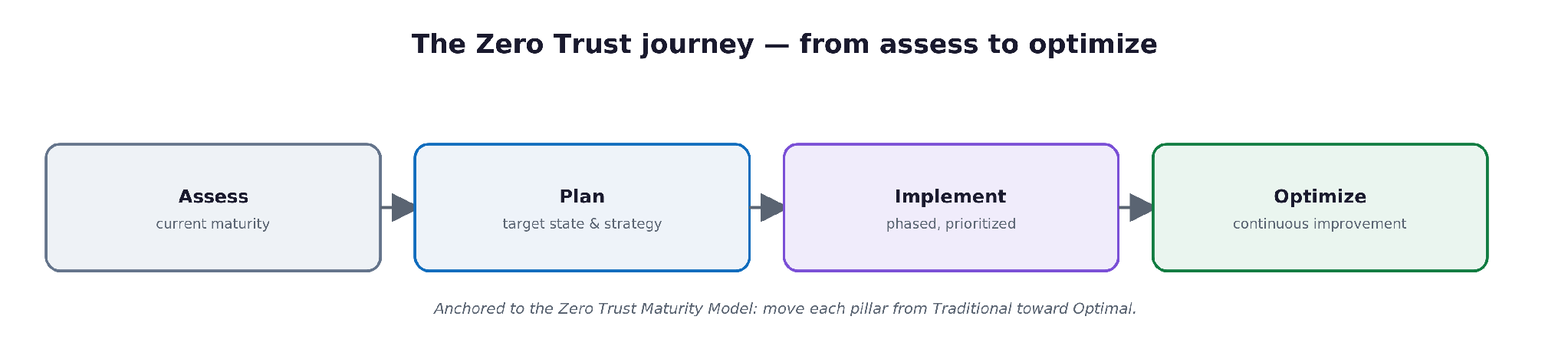
Figure 1. The Zero Trust journey — assess, plan, implement, and optimize, anchored to the maturity model.
Diagram description: The Zero Trust journey moves through four stages: Assess (current maturity), Plan (target state and strategy), Implement (phased and prioritized), and Optimize (continuous improvement). It is anchored to the Zero Trust Maturity Model — moving each pillar from Traditional toward Optimal.
What does a phased roadmap look like?
Most successful programs follow a recognizable phase structure. Identity and device controls come first because they deliver the fastest, largest risk reduction; network, application, and data controls follow; and visibility, automation, and governance run throughout and mature into the optimize phase.
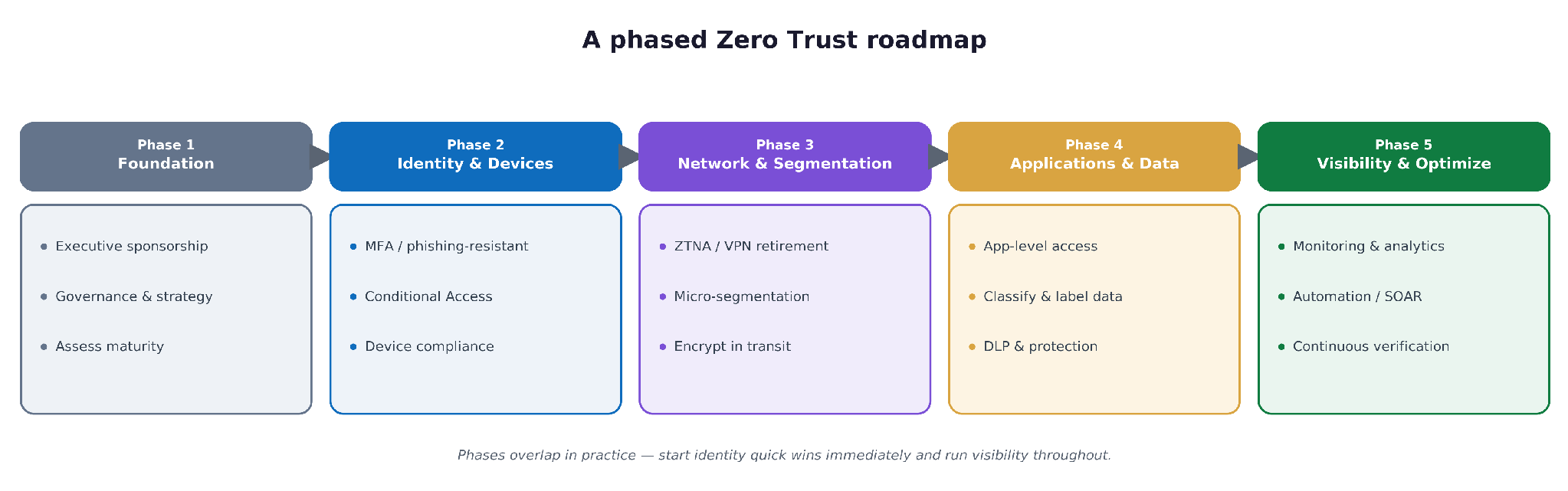
Figure 2. A phased Zero Trust roadmap — foundation, identity and devices, network, applications and data, and visibility and optimization.
Diagram description: A phased Zero Trust roadmap: Phase 1 Foundation (executive sponsorship, governance and strategy, assess maturity); Phase 2 Identity and Devices (MFA/phishing-resistant, Conditional Access, device compliance); Phase 3 Network and Segmentation (ZTNA/VPN retirement, micro-segmentation, encrypt in transit); Phase 4 Applications and Data (app-level access, classify and label data, DLP and protection); and Phase 5 Visibility and Optimize (monitoring and analytics, automation/SOAR, continuous verification). Phases overlap in practice — start identity quick wins immediately and run visibility throughout.
Table 1. The roadmap phases.
| Phase | Focus |
|---|---|
| 1 · Foundation | Sponsorship, governance, strategy, and a maturity baseline |
| 2 · Identity & Devices | Strong authentication, Conditional Access, device compliance |
| 3 · Network & Segmentation | Micro-segmentation, ZTNA, encryption |
| 4 · Applications & Data | Application access controls, data classification, DLP |
| 5 · Visibility & Optimize | Monitoring, automation, and continuous verification |
How do you sequence work by pillar and timeframe?
Because the pillars mature at different rates and depend on each other, a roadmap benefits from a per-pillar timeline. The swimlane view below sequences concrete actions for each pillar across realistic timeframes, from quick wins to optimization — a practical planning artifact for a multi-year program.
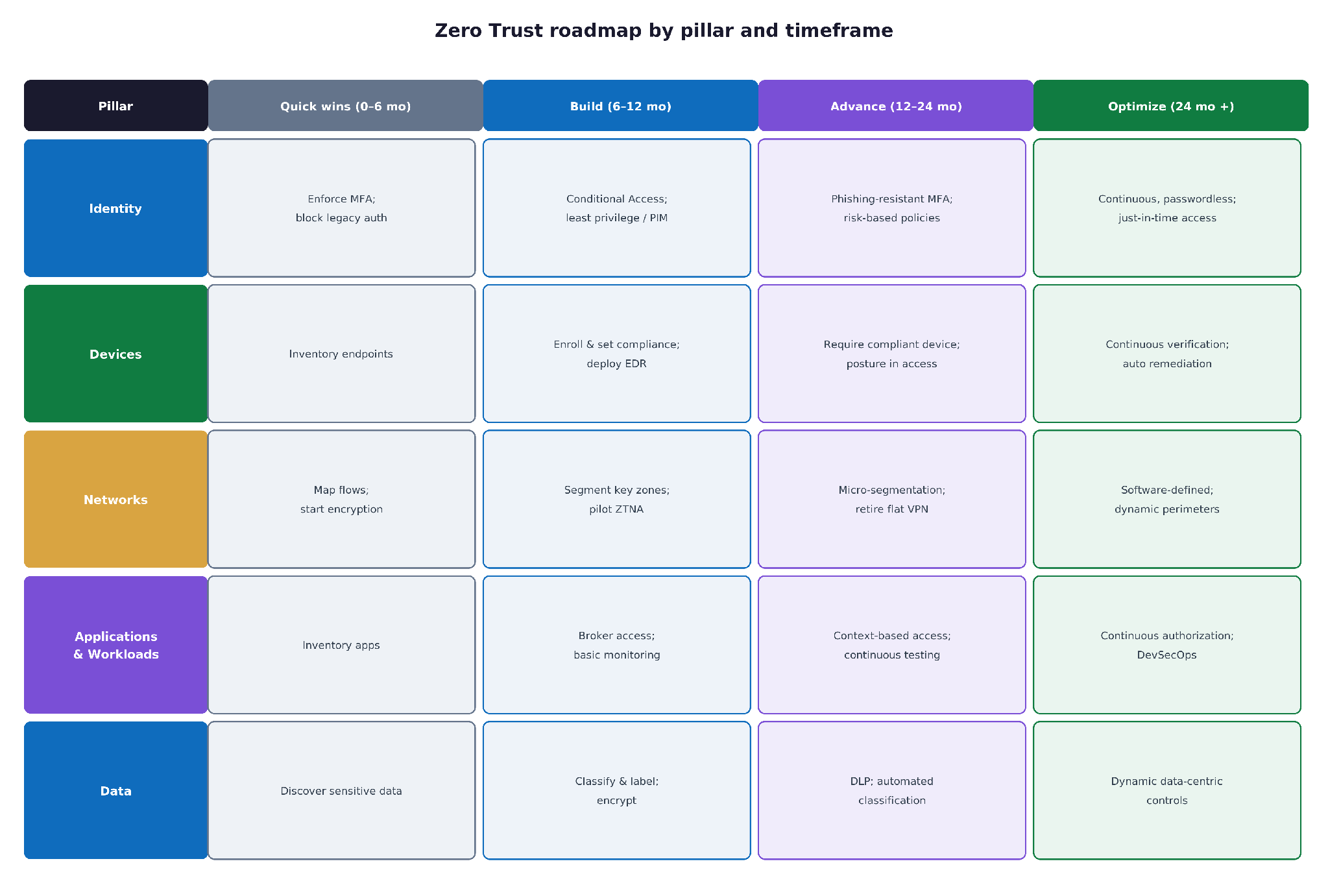
Figure 3. A Zero Trust roadmap by pillar and timeframe — concrete actions from quick wins to optimization.
Diagram description: A roadmap swimlane maps each pillar across four timeframes. Identity: quick wins (enforce MFA, block legacy auth), build (Conditional Access, least privilege/PIM), advance (phishing-resistant MFA, risk-based policies), optimize (continuous, passwordless, just-in-time). Devices: inventory endpoints; enroll and set compliance, deploy EDR; require compliant device, posture in access; continuous verification, auto remediation. Networks: map flows, start encryption; segment key zones, pilot ZTNA; micro-segmentation, retire flat VPN; software-defined, dynamic perimeters. Applications and Workloads: inventory apps; broker access, basic monitoring; context-based access, continuous testing; continuous authorization, DevSecOps. Data: discover sensitive data; classify and label, encrypt; DLP and automated classification; dynamic data-centric controls.
How do you prioritize?
Not every initiative is worth doing early. Plotting candidate work by impact and effort makes the sequence obvious: do the high-impact, low-effort quick wins first, plan the high-impact, high-effort strategic initiatives deliberately, slot low-effort fill-ins where convenient, and think carefully before committing to high-effort, low-impact work.
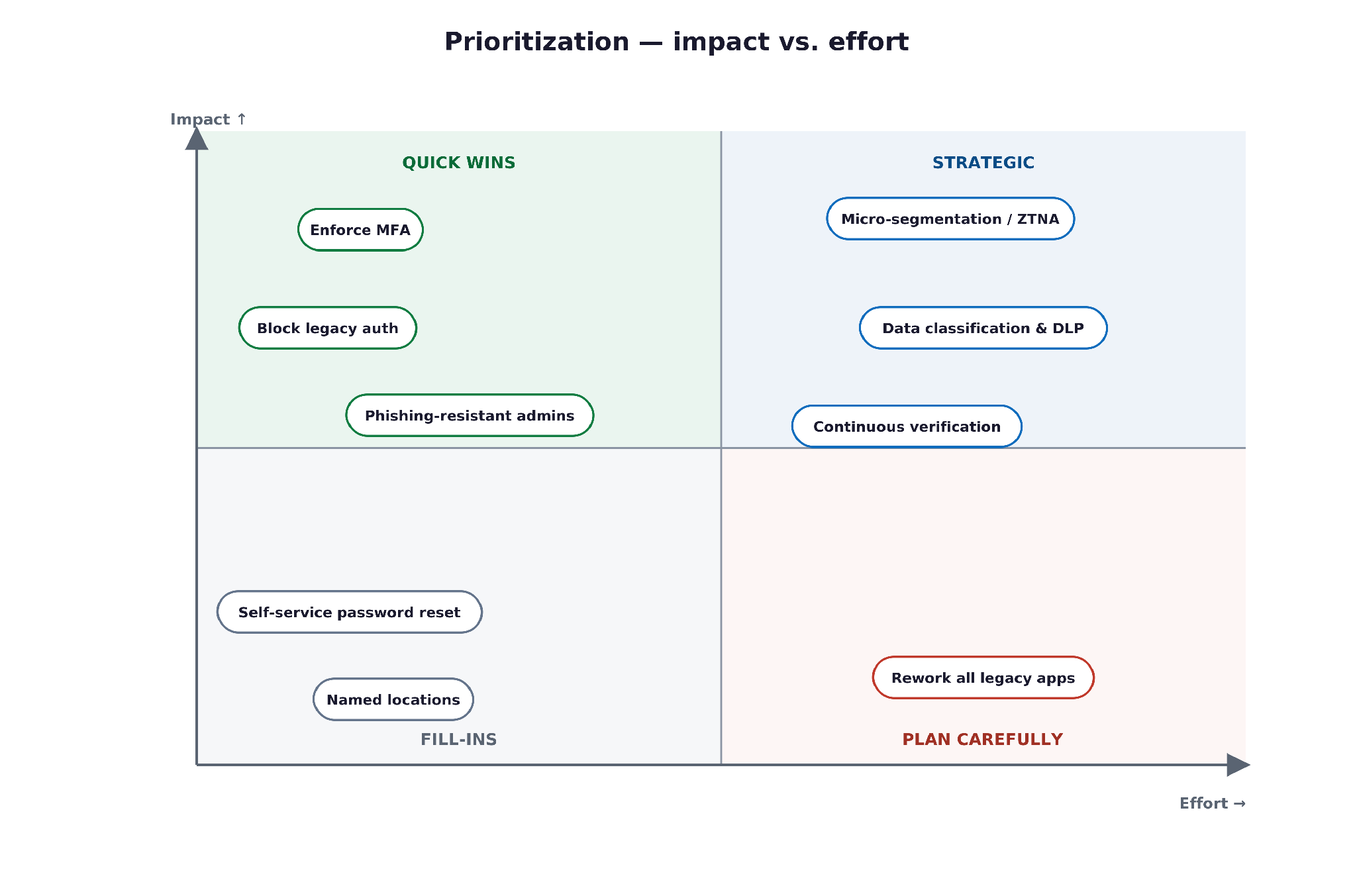
Figure 4. Prioritization — impact versus effort, with quick wins, strategic initiatives, fill-ins, and work to plan carefully.
Diagram description: An impact-versus-effort quadrant. Quick wins (high impact, low effort): enforce MFA, block legacy authentication, phishing-resistant authentication for admins. Strategic (high impact, high effort): micro-segmentation/ZTNA, data classification and DLP, continuous verification. Fill-ins (low impact, low effort): self-service password reset, named locations. Plan carefully (high effort, lower immediate impact): reworking all legacy applications.
Best practice. Front-load the quick wins — MFA everywhere, blocking legacy authentication, and phishing-resistant authentication for administrators typically deliver the largest risk reduction for the least effort, and they build momentum and executive confidence for the strategic initiatives that follow. Never let a perfect end-state design delay the controls you could enable this month.
How do you govern the program?
A roadmap is not a one-time plan; it is a governed, repeating cycle. Set strategy and target maturity, assess where you are, prioritize by risk and effort, implement in phases, measure and report — then adjust and repeat. Governance keeps the program aligned to business risk and keeps funding tied to demonstrated progress.

Figure 5. Continuous governance and improvement — strategy, assess, prioritize, implement, and measure, run as a cycle.
Diagram description: A continuous governance and improvement cycle: Strategy (set target and policy), Assess (score maturity), Prioritize (by risk and effort), Implement (deliver in phases), and Measure (report and adjust) — looping continuously.
Table 2. Roadmap governance essentials.
| Element | Why it matters |
|---|---|
| Executive sponsorship | Secures funding and cross-team authority |
| Cross-functional governance | Coordinates identity, endpoint, network, app, and data teams |
| Maturity baseline & targets | Provides measurable start and end points per pillar |
| Metrics & reporting | Shows progress and keeps investment aligned to risk |
| Change management | Brings users along and reduces friction |
What are the prerequisites and success factors?
Before the technical phases, a program needs the right foundation. Secure executive sponsorship and a named program owner. Establish cross-functional governance so the pillars are coordinated rather than siloed. Define the business scenarios and outcomes the roadmap must deliver, and set a maturity baseline and target per pillar. Align to a recognized framework (NIST SP 800-207 for architecture, the maturity model for assessment) so the plan is defensible. And plan change management from the start — Zero Trust changes how people work, and adoption depends on communication as much as configuration.
Best practices
- Baseline maturity before planning; do not start from a product decision.
- Front-load identity and device quick wins for fast, visible risk reduction.
- Sequence the pillars but run visibility, automation, and governance throughout.
- Prioritize by impact and effort; plan strategic initiatives deliberately.
- Set realistic per-pillar target stages and timeframes, not “Optimal everywhere now.”
- Secure executive sponsorship and cross-functional governance early.
- Measure and report progress by pillar to sustain funding and momentum.
- Invest in change management alongside technology.
- Reassess and re-plan on a cadence — the roadmap is a living artifact.
Common mistakes
- Tool-first roadmaps. Buying platforms before defining the plan and gaps.
- Boiling the ocean. Trying to advance every pillar to Optimal simultaneously.
- Skipping quick wins. Delaying MFA and legacy-auth blocking for a grand design.
- Treating visibility as a final phase. You need monitoring from day one.
- No governance or metrics. Progress that is not measured is not managed.
- Ignoring change management. Technical rollout without user adoption fails.
- A static plan. Threats and the business change; the roadmap must too.
Roadmap checklist
Before executing your Zero Trust roadmap, confirm that:
- Current maturity is assessed across all pillars
- A target maturity stage and timeframe are set per pillar
- Executive sponsorship and cross-functional governance are in place
- Business scenarios and outcomes are defined
- Initiatives are prioritized by impact and effort
- Identity and device quick wins are scheduled first
- Visibility, automation, and governance run throughout the program
- Metrics and executive reporting are defined
- Change management is planned alongside technology
- The roadmap is reviewed and re-planned on a cadence
Frequently asked questions
What is a Zero Trust roadmap?
It is a phased, prioritized plan to implement Zero Trust — moving from an assessment of current maturity to a target state through sequenced phases, then optimizing continuously.
Where should we start?
With foundation and identity: secure sponsorship and governance, assess maturity, then deliver identity and device quick wins (MFA, block legacy auth, Conditional Access, device compliance).
How long does Zero Trust take?
It is a multi-year journey, but risk falls quickly if you front-load quick wins. Use per-pillar timeframes (quick wins in months, strategic initiatives over one to two years) rather than a single deadline.
Should we advance all pillars at once?
No. Sequence by risk and dependency, and set realistic per-pillar targets. Trying to reach Optimal everywhere at once is costly and rarely justified.
How do we prioritize initiatives?
By impact and effort. Do high-impact, low-effort quick wins first; plan high-impact, high-effort strategic work deliberately; and reconsider high-effort, low-impact items.
Is a Zero Trust roadmap vendor-specific?
No. It is grounded in NIST, CISA, and DoD frameworks and applies to any technology stack. Vendor adoption plans implement it with specific products.
How does the roadmap relate to the maturity model?
The maturity model tells you where you are and where you could go; the roadmap is the prioritized plan to get there, phase by phase.
Key takeaways
- A roadmap sequences Zero Trust from assessment to optimization in phases.
- Front-load identity and device quick wins; sequence network, apps, and data.
- Prioritize by impact and effort; run visibility and governance throughout.
- Set realistic per-pillar targets and timeframes, and govern continuously.
- The roadmap is a living, vendor-neutral plan tied to measurable progress.
Summary
A Zero Trust roadmap turns a broad strategy into an executable, multi-year program. Start by baselining maturity, define a target state, and implement in prioritized phases — identity and device quick wins first, then network, applications, and data — while running visibility, automation, and governance throughout and optimizing continuously. Prioritize by impact and effort so early phases deliver visible risk reduction and build momentum, set realistic per-pillar targets and timeframes, and govern the program with executive sponsorship and clear metrics. Anchored in standards and independent of any vendor, the roadmap is the plan that makes Zero Trust real.
Organizations can begin with the Data & AI Readiness Checklist, review the Microsoft 365 Governance Knowledge Center, or schedule a technology assessment.
Authoritative references
Verified against publicly available standards and government guidance. Source access date: 23 July 2026. Frameworks evolve — confirm current guidance before use.
- NIST SP 800-207: Zero Trust Architecture
- CISA: Zero Trust Maturity Model
- U.S. Department of Defense: Zero Trust Strategy and roadmap
- OMB M-22-09: Federal Zero Trust Strategy
- Federal Zero Trust Resource Hub
- NIST SP 1800-35: Implementing a Zero Trust Architecture
- Microsoft: Zero Trust adoption framework overview
- Microsoft: Zero Trust deployment plan with Microsoft 365
- Forrester: The Zero Trust eXtended (ZTX) Ecosystem
- Cloud Security Alliance: Zero Trust guidance
- The Open Group: Zero Trust reference model
- CISA: Zero Trust Maturity Model v2.0 (PDF)
Frameworks and their versions change over time. Confirm the current guidance from the issuing body before making design or investment decisions.
Related Knowledge Center resources
- The Zero Trust Maturity Model — Assess before you plan.
- Identity Security Assessment Checklist — The identity pillar baseline.
- Passwordless Authentication — A high-impact identity initiative.
- Enterprise Identity Protection — Detection and response.
- Zero Trust for Microsoft 365 — A vendor implementation of the roadmap.
On this page
- Key points for executives
- Executive takeaways
- What is a Zero Trust roadmap?
- What does a phased roadmap look like?
- How do you sequence work by pillar and timeframe?
- How do you prioritize?
- How do you govern the program?
- What are the prerequisites and success factors?
- Best practices
- Common mistakes
- Roadmap checklist
- Frequently asked questions
- Summary
- Authoritative references
- Related Knowledge Center resources