The IT Automation Roadmap: From Scattered Scripts to a Strategic Capability
Almost every IT team already automates something.
- Content owner
- Insyto Content Team
- Editorial reviewer
- Ritesh Mhatre
- Technical reviewer
- Navish Ansari
- Next review
- To be scheduled
- Last reviewed
- Review pending
- Technical level
- Intermediate · IT operations leaders, platform engineers
Executive Summary
Almost every IT team already automates something. There is a backup script on someone’s laptop, a cron job nobody documented, a batch file last edited years ago, and three different versions of a sync script where no one is quite sure which one actually runs. This is automation, but it is not an automation capability. It is a pile of one-off scripts, each built in isolation, each owned by whoever happened to write it, none of it standardized, tested, or version-controlled. Effort like this does not compound. Every new script starts from zero, knowledge stays trapped with individuals, and the same task gets solved five different ways. When the person who wrote a critical script leaves, the knowledge leaves with them.
A roadmap changes automation from a series of random acts into a deliberate, sequenced program that builds a shared, compounding capability. The difference is not how much a team automates but how it goes about it. A roadmap starts by understanding where the team is today, targets the work that will pay off soonest, standardizes on shared tools and practices so effort is reusable, connects individual automations into end-to-end workflows, and finally offers self-service while measuring outcomes and improving continuously. Along the way it answers the questions that scattered scripting never does: what should we automate first, what should we deliberately leave alone, and what has to be true for the whole thing to keep working after the initial enthusiasm fades.
This vendor-neutral guide lays out that roadmap. It contrasts ad-hoc scripting with a planned approach, presents an automation maturity ladder so a team can locate itself honestly, walks through the five phases of the roadmap from assessment to scale, provides a simple value-versus-effort framework for prioritizing candidates, and describes the operating model — the pillars of standards, testing, security, documentation, ownership, and measurement — that holds a mature program up. The throughline is that automation is an engineering discipline to be built intentionally, not a collection of scripts to be accumulated by accident, and that the goal is not to automate everything but to move the work that matters to the level where the payoff justifies the effort.
Scattered Scripts vs. a Planned Roadmap
The value of a roadmap is easiest to see against its absence. Random acts of automation and a planned program start from the same tools but end in very different places.
Scattered scripts vs. a planned automation roadmap
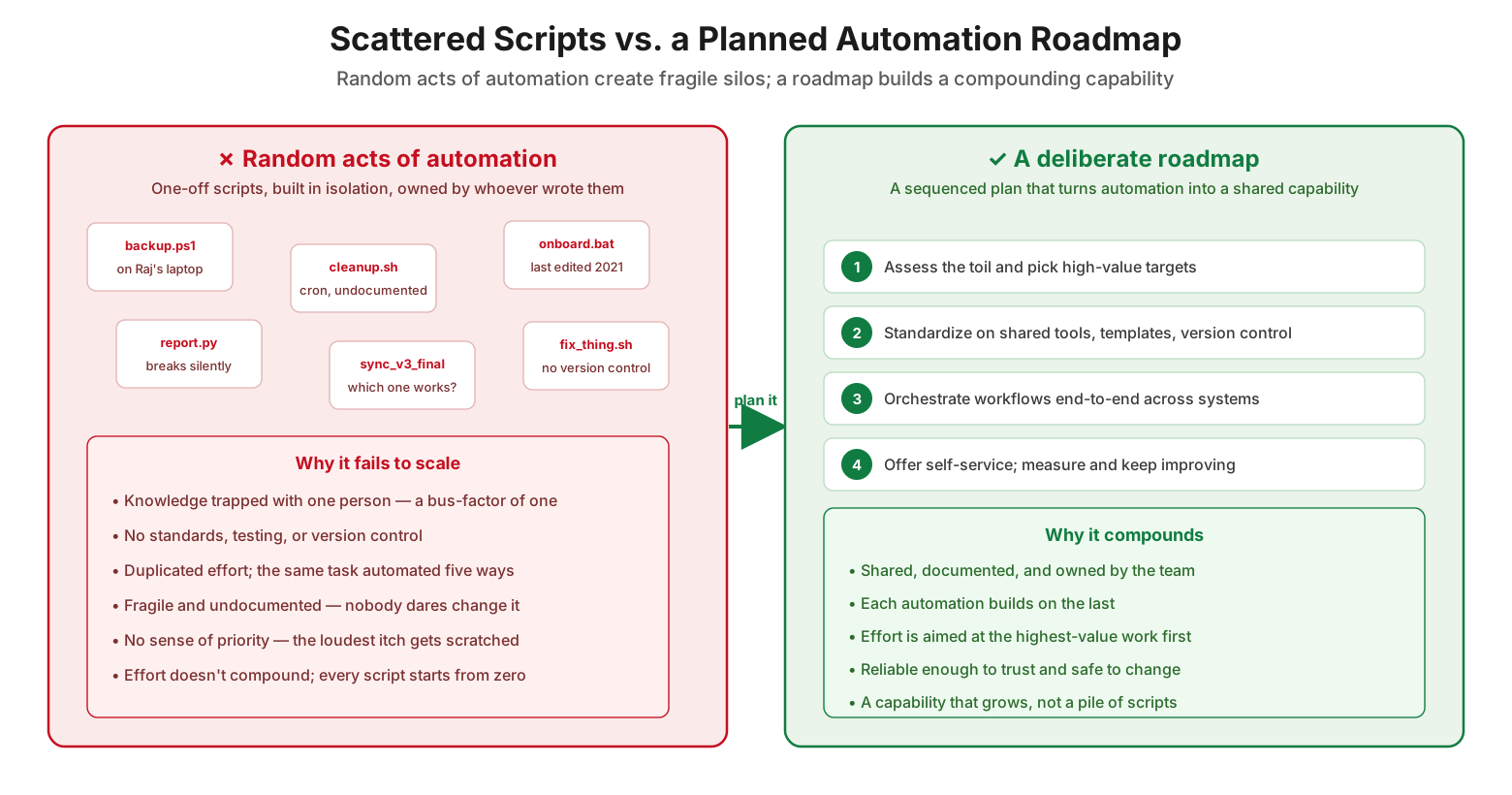
Ad-hoc automation is a scatter of one-off scripts — backup.ps1 on one person’s laptop, an undocumented cleanup job, an onboarding batch file last touched years ago, a report script that fails silently. It does not scale, and the reasons are consistent: knowledge is trapped with one person, giving the team a bus-factor of one; there are no standards, no testing, and no version control; the same task is automated several incompatible ways; the scripts are fragile and undocumented, so nobody dares change them; there is no sense of priority, so whoever’s itch is loudest gets scratched; and crucially, effort does not compound — every script begins again from nothing. A deliberate roadmap replaces this with a sequenced plan: assess the toil and pick high-value targets, standardize on shared tools and version control, orchestrate workflows end-to-end, and then offer self-service while measuring and improving. The payoff is that automation compounds — it is shared, documented, and owned by the team; each automation builds on the last; effort is aimed at the highest-value work first; and the result is a capability that grows rather than a pile of scripts that decays.
The Automation Maturity Ladder
Before planning where to go, a team needs an honest picture of where it stands. Automation maturity tends to progress through recognizable levels, and most teams climb them one at a time.
The automation maturity ladder
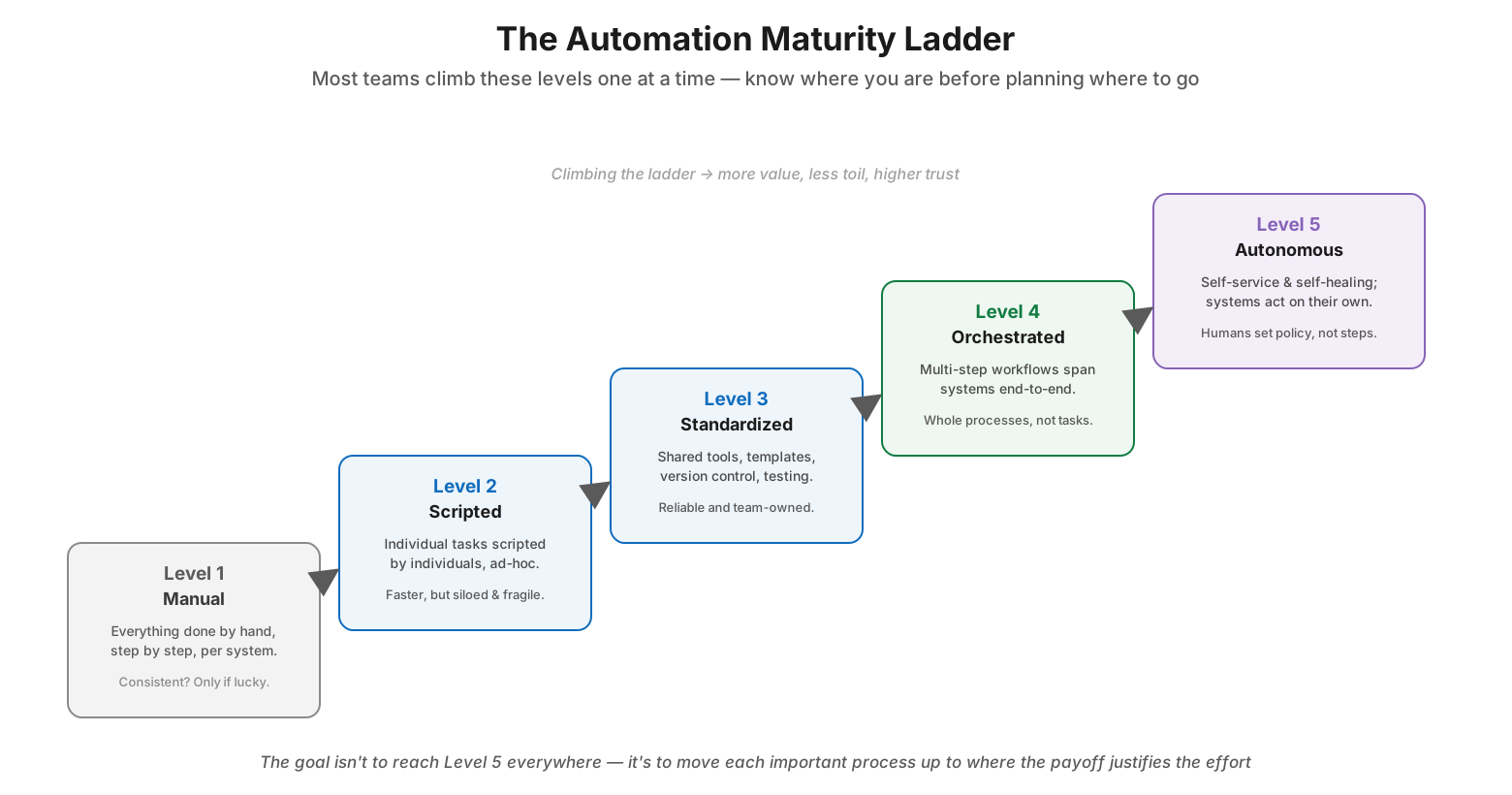
At Level 1, Manual, everything is done by hand, step by step, on each system, and consistency happens only by luck. At Level 2, Scripted, individuals script individual tasks in an ad-hoc way — faster than manual, but siloed and fragile. At Level 3, Standardized, the team adopts shared tools, templates, version control, and testing, making automation reliable and collectively owned rather than personal. At Level 4, Orchestrated, multi-step workflows span systems end-to-end, automating whole processes rather than isolated tasks. At Level 5, Autonomous, systems provide self-service and self-healing, acting on their own within guardrails while humans set policy rather than execute steps. Higher levels deliver more value, less toil, and higher trust — but the goal is not to reach Level 5 everywhere. It is to move each important process up to the level where the payoff justifies the effort. A rarely-used internal tool may be perfectly fine at Level 2, while employee onboarding may be worth taking all the way to self-service. Knowing your current level, process by process, is what makes the rest of the roadmap realistic.
| Level | Name | What it looks like | Trade-off |
|---|---|---|---|
| 1 | Manual | Every step done by hand, per system | Consistent only if lucky |
| 2 | Scripted | Individuals script individual tasks ad-hoc | Faster, but siloed and fragile |
| 3 | Standardized | Shared tools, templates, version control, testing | Reliable and team-owned |
| 4 | Orchestrated | Multi-step workflows span systems end-to-end | Whole processes, not tasks |
| 5 | Autonomous | Self-service and self-healing within guardrails | Humans set policy, not steps |
The IT Automation Roadmap: Five Phases
With a starting point established, the roadmap sequences the work so that each phase builds the foundation the next one needs. Skipping ahead — trying to orchestrate before standardizing, for instance — is how programs collapse under their own complexity.
The IT automation roadmap — five phases
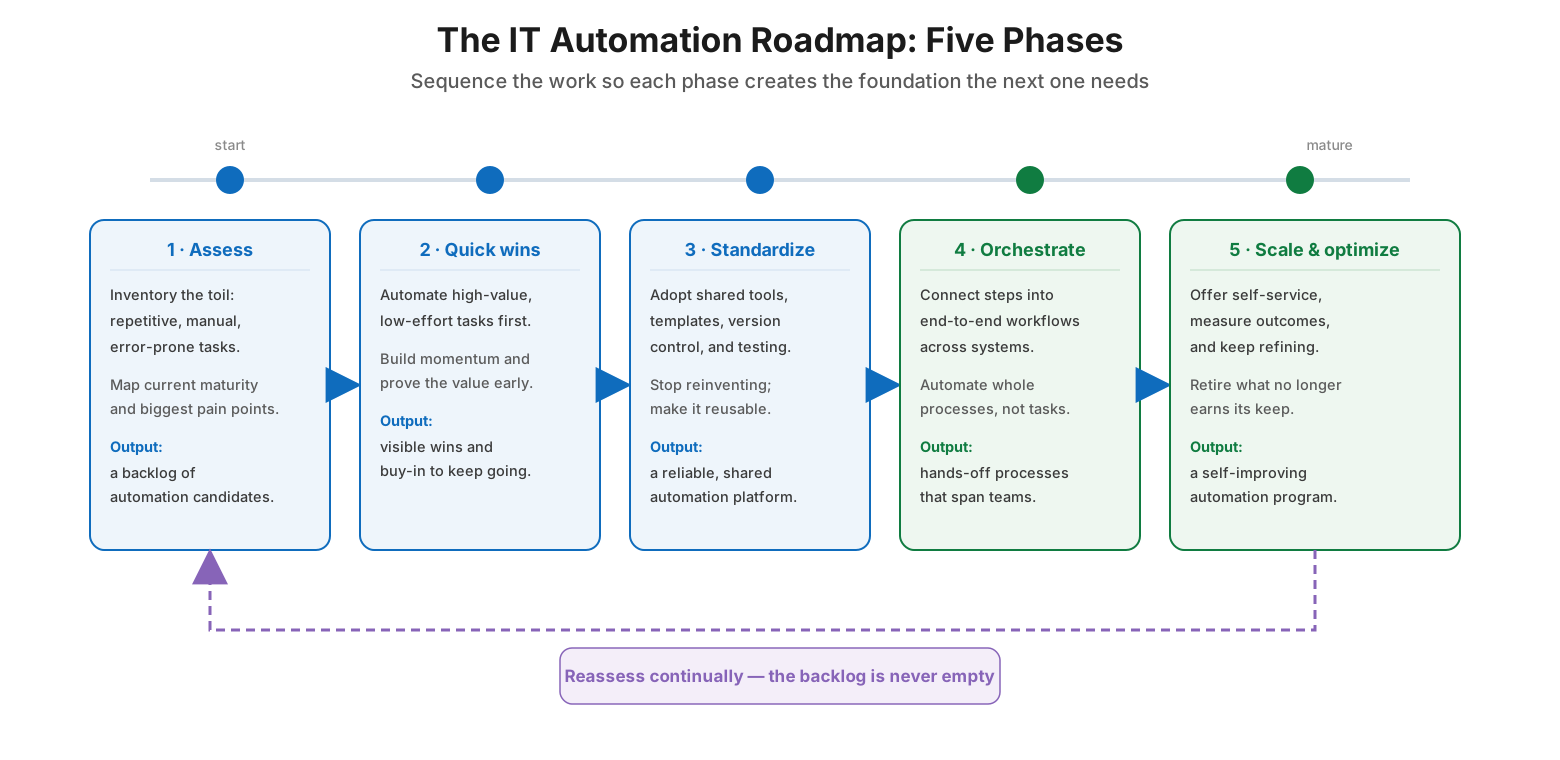
The first phase is Assess: inventory the toil — the repetitive, manual, error-prone tasks — map current maturity, and identify the biggest pain points. Its output is a backlog of automation candidates. The second phase is Quick wins: automate the high-value, low-effort tasks first to build momentum and prove the value early, producing visible wins and the buy-in to keep going. The third phase is Standardize: adopt shared tools, templates, version control, and testing so the team stops reinventing and starts reusing, yielding a reliable, shared automation platform. The fourth phase is Orchestrate: connect individual steps into end-to-end workflows across systems, automating whole processes rather than tasks, so hands-off processes span teams. The fifth phase is Scale and optimize: offer self-service, measure outcomes, keep refining, and retire whatever no longer earns its keep, producing a self-improving program. The phases are not a one-way march — reassessment is continuous, because the backlog is never empty and new toil appears as the environment changes. The discipline of sequencing is what keeps the program stable: quick wins fund credibility, standardization makes orchestration possible, and measurement directs the next investment.
| Phase | Focus | Output |
|---|---|---|
| 1. Assess | Inventory toil; map maturity and pain points | A backlog of automation candidates |
| 2. Quick wins | Automate high-value, low-effort tasks first | Visible wins and organizational buy-in |
| 3. Standardize | Shared tools, templates, version control, testing | A reliable, shared automation platform |
| 4. Orchestrate | Connect steps into end-to-end workflows | Hands-off processes that span teams |
| 5. Scale & optimize | Self-service, measurement, continual refinement | A self-improving automation program |
What to Automate First: Value vs. Effort
The most common way an automation program stalls is by pouring effort into the wrong candidates — automating a rarely-run task that needed brittle, complex code while the daily toil goes untouched. A simple value-versus-effort framework keeps prioritization honest.
What to automate first — value vs. effort
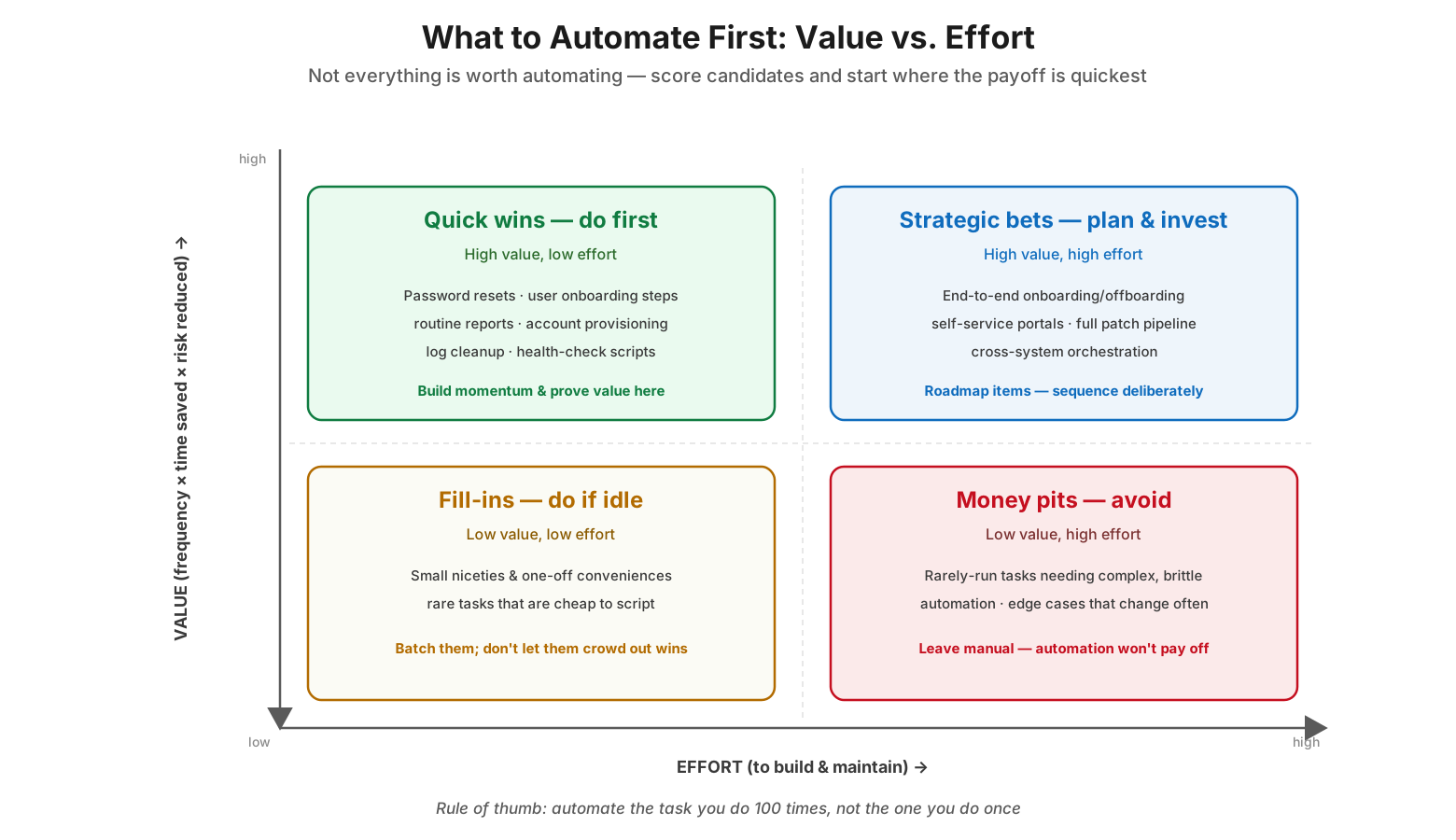
Score each candidate on two axes: value — driven by how often the task runs, how much time it saves, and how much risk it removes — and effort to build and maintain the automation. The result is four quadrants. High-value, low-effort tasks are quick wins: password resets, onboarding steps, routine reports, account provisioning, log cleanup. Do these first — they build momentum and prove value. High-value, high-effort tasks are strategic bets: end-to-end onboarding and offboarding, self-service portals, a full patch pipeline, cross-system orchestration. These are genuine roadmap items to sequence deliberately, not to attempt on a whim. Low-value, low-effort tasks are fill-ins: small conveniences and rare tasks that are cheap to script — batch them, but do not let them crowd out the wins. Low-value, high-effort tasks are money pits: rarely-run tasks that would need complex, brittle automation, or edge cases that change often — leave these manual, because automation will never pay off. The rule of thumb is simple: automate the task you do a hundred times, not the one you do once.
| Quadrant | Value / Effort | Examples | Action |
|---|---|---|---|
| Quick wins | High value, low effort | Password resets, routine reports, provisioning | Do first — build momentum |
| Strategic bets | High value, high effort | End-to-end onboarding, self-service, orchestration | Plan and sequence on the roadmap |
| Fill-ins | Low value, low effort | Small conveniences, cheap rare tasks | Batch; don’t crowd out wins |
| Money pits | Low value, high effort | Rare tasks needing brittle, changing code | Leave manual — won’t pay off |
IT Automation Roadmap Checklist
- Inventory the toil: list the repetitive, manual, error-prone tasks across the team.
- Assess current maturity honestly, process by process, before planning targets.
- Score candidates on value (frequency × time saved × risk reduced) versus effort.
- Start with high-value, low-effort quick wins to build momentum and prove value.
- Deliberately leave low-value, high-effort tasks manual — they won’t pay off.
- Standardize on shared tools, templates, version control, and testing before scaling.
- Put all automation code in version control, reviewed and tested like any code.
- Orchestrate individual automations into end-to-end workflows across systems.
- Give every automation a named owner; retire orphaned and stale scripts.
- Manage secrets and access with least privilege; automation is powerful.
- Document what each automation does and how, so it is never a black box.
- Measure hours saved, errors reduced, and speed gained; report ROI and reinvest.
Best Practices
A roadmap only delivers if the program underneath it is built to last. Six pillars — on a foundation of engineering culture — are what keep automation compounding instead of decaying.
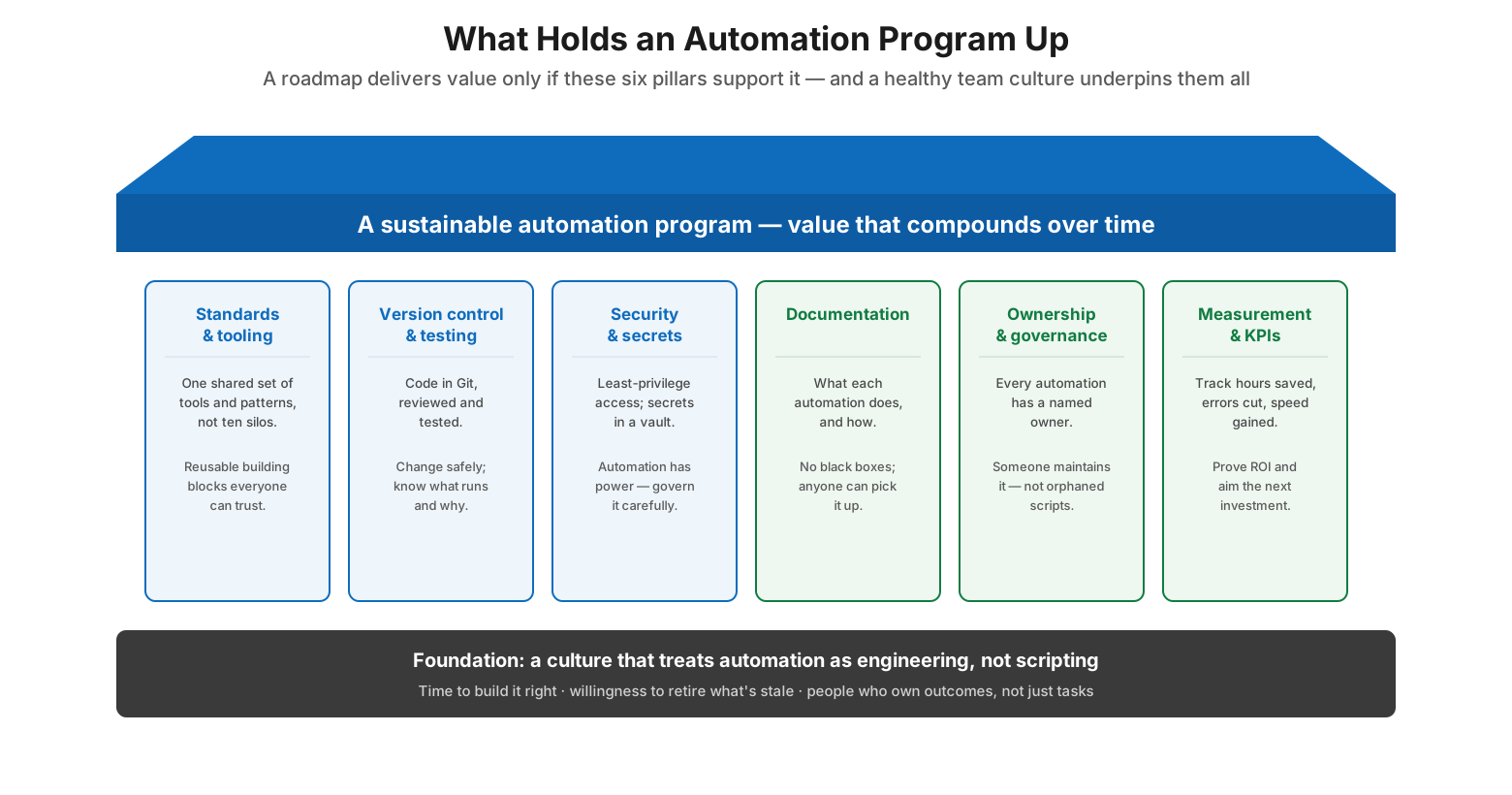
What holds an automation program up
Start with the toil, not the technology. The roadmap begins with an honest inventory of repetitive, manual, error-prone work — not with a shiny automation tool looking for a use. Let the pain points define the backlog.
Win credibility with quick wins. Early, visible, high-value results build the momentum and buy-in that carry a program through its harder phases. Automate something the team feels the relief from within weeks, not months.
Sequence deliberately. Standardize before you orchestrate, and orchestrate before you chase autonomy. Each phase creates the foundation the next depends on, and skipping steps produces fragile complexity.
Treat automation as engineering. Version control, code review, testing, and documentation are not overhead — they are what separate a reliable capability from a pile of fragile scripts. Hold automation to the same standard as any production code.
Give everything an owner. Every automation needs a named person responsible for maintaining it. Orphaned scripts that no one owns are how a program silently accumulates risk and rot.
Measure and reinvest. Track hours saved, errors reduced, and cycle time improved. Measurement proves the program’s value, justifies further investment, and points to where the next automation will pay off most.
Common Mistakes
Automating without a plan. Building scripts reactively, one loud request at a time, produces scattered silos that never compound. Work from a prioritized backlog tied to maturity, not to whoever asks last.
Chasing the shiny, low-value task. Automating something clever but rarely used, while the daily grind stays manual, wastes the effort where it matters least. Prioritize by value and frequency.
Skipping standardization. Jumping straight to complex orchestration on top of ad-hoc scripts creates brittle systems no one can maintain. Standardize tools and practices first.
Ignoring ownership and documentation. Automations with no owner and no docs become black boxes that break unpredictably and can’t be changed. Assign owners and document from the start.
Treating automation as one-and-done. A program that is never revisited fills with stale, unused, and broken automations. Reassess continually and retire what no longer earns its keep.
Automating a bad process. Automating a broken or convoluted workflow just makes the mess run faster. Simplify and fix the process before you automate it.
Frequently Asked Questions
What is an IT automation roadmap? It is a sequenced plan for building automation as a shared capability rather than accumulating one-off scripts. It runs from assessing current toil and maturity, through quick wins and standardization, to orchestration and finally self-service — with prioritization and governance built in.
Where should we start if we have nothing but scattered scripts? Start with assessment: inventory the repetitive, manual, error-prone tasks and honestly rate your maturity. Then pick a few high-value, low-effort quick wins to build momentum before investing in standardization and bigger orchestration projects.
How do we decide what to automate? Score each candidate on value (how often it runs, how much time it saves, how much risk it reduces) against the effort to build and maintain it. Do the high-value, low-effort quick wins first, plan the high-value, high-effort strategic items, and leave low-value, high-effort tasks manual.
Do we need to reach the highest maturity level everywhere? No. The goal is to move each important process to the level where the payoff justifies the effort. Some processes are fine at basic scripting; others are worth taking all the way to self-service. Full autonomy everywhere is neither necessary nor cost-effective.
How is a roadmap different from just automating more? Automating more, without a plan, creates scattered scripts that don’t compound and can’t be maintained. A roadmap sequences the work so effort is reusable, prioritized by value, standardized, owned, and measured — turning automation into a growing capability instead of a pile of scripts.
How do we keep an automation program from decaying? Build it on a solid operating model: shared standards and tooling, version control and testing, secure access and secrets, documentation, clear ownership, and measurement. Reassess continually and retire stale automations. A healthy culture that treats automation as engineering is the foundation.
Conclusion
Most IT teams do not lack automation; they lack an automation strategy. The scattered scripts, undocumented cron jobs, and mystery batch files are real effort that simply never adds up to a capability, because nothing about them is shared, standardized, or sequenced. A roadmap is what turns that effort from a collection of random acts into a program that compounds — where each automation builds on the last, the highest-value work is tackled first, and the knowledge belongs to the team rather than to whoever happened to write the script.
The path is not complicated, but it is deliberate. Locate yourself honestly on the maturity ladder, then move through the phases in order: assess the toil, win credibility with quick wins, standardize so effort becomes reusable, orchestrate whole processes end-to-end, and scale into self-service while measuring what matters. Prioritize with a clear eye on value versus effort, automating the task done a hundred times rather than the one done once. And hold the whole thing up with the pillars of a real operating model — standards, testing, security, documentation, ownership, and measurement — on a foundation that treats automation as engineering, not scripting. Do that, and automation stops being a pile of scripts that decays and becomes a strategic capability that grows.