24×7 Security Monitoring: Closing the Gaps Attackers Wait For
Cyberattacks do not wait for a convenient time. In fact, adversaries deliberately choose the opposite — nights, weekends, and holidays, precisely when defenders have gone home.
- Content owner
- Insyto Content Team
- Editorial reviewer
- Ritesh Mhatre
- Technical reviewer
- Navish Ansari
- Next review
- To be scheduled
- Last reviewed
- Review pending
- Technical level
- Intermediate · CISOs, security teams, IT directors
Executive Summary
Cyberattacks do not wait for a convenient time. In fact, adversaries deliberately choose the opposite — nights, weekends, and holidays, precisely when defenders have gone home. A business that monitors its security only during office hours is leaving roughly two-thirds of every week uncovered, and it is exactly in those unmonitored windows that intrusions begin and quietly spread. An attacker who gains a foothold at 2 a.m. on a Sunday, in an environment watched only from nine to five on weekdays, has until Monday morning to move laterally, escalate privileges, exfiltrate data, or stage ransomware — an eternity in incident terms. This is the gap that 24×7 security monitoring exists to close.
The value of continuous monitoring comes down to time. Damage from a security incident scales with how long the attacker goes undetected — the “dwell time” — so the entire discipline is a race to shrink two numbers: mean time to detect (MTTD) and mean time to respond (MTTR). Round-the-clock monitoring drives both down by ensuring that a threat appearing at any hour is seen, triaged, and contained at that hour, not discovered days later. But effective 24×7 monitoring is more than a dashboard left running overnight. It requires broad telemetry across the whole attack surface, correlation of those signals in one place, tuned detections that surface real threats rather than noise, and — critically — people and process ready to act on what is found, at any time. For most small and mid-sized organizations, standing up that capability in-house is prohibitively expensive, which is why continuous monitoring is so often delivered as a managed service.
This vendor-neutral guide explains 24×7 security monitoring from the ground up. It shows why attackers exploit off-hours and how dwell time turns a small foothold into a major breach, describes what continuous monitoring watches and how signals are brought together, walks through the detection-to-response flow that must run around the clock, lays out the staffing math that makes in-house 24×7 so hard and managed services so common, and defines the hallmarks that distinguish genuine protection from a monitoring tool nobody is watching. The throughline is simple: security is only as strong as its weakest hour, and the goal of 24×7 monitoring is to leave no hour weak.
Attackers Don’t Keep Business Hours
The core argument for continuous monitoring is behavioral: attackers time their moves for when they are least likely to be caught. Understanding that pattern makes the coverage gap impossible to ignore.
Attackers don’t keep business hours
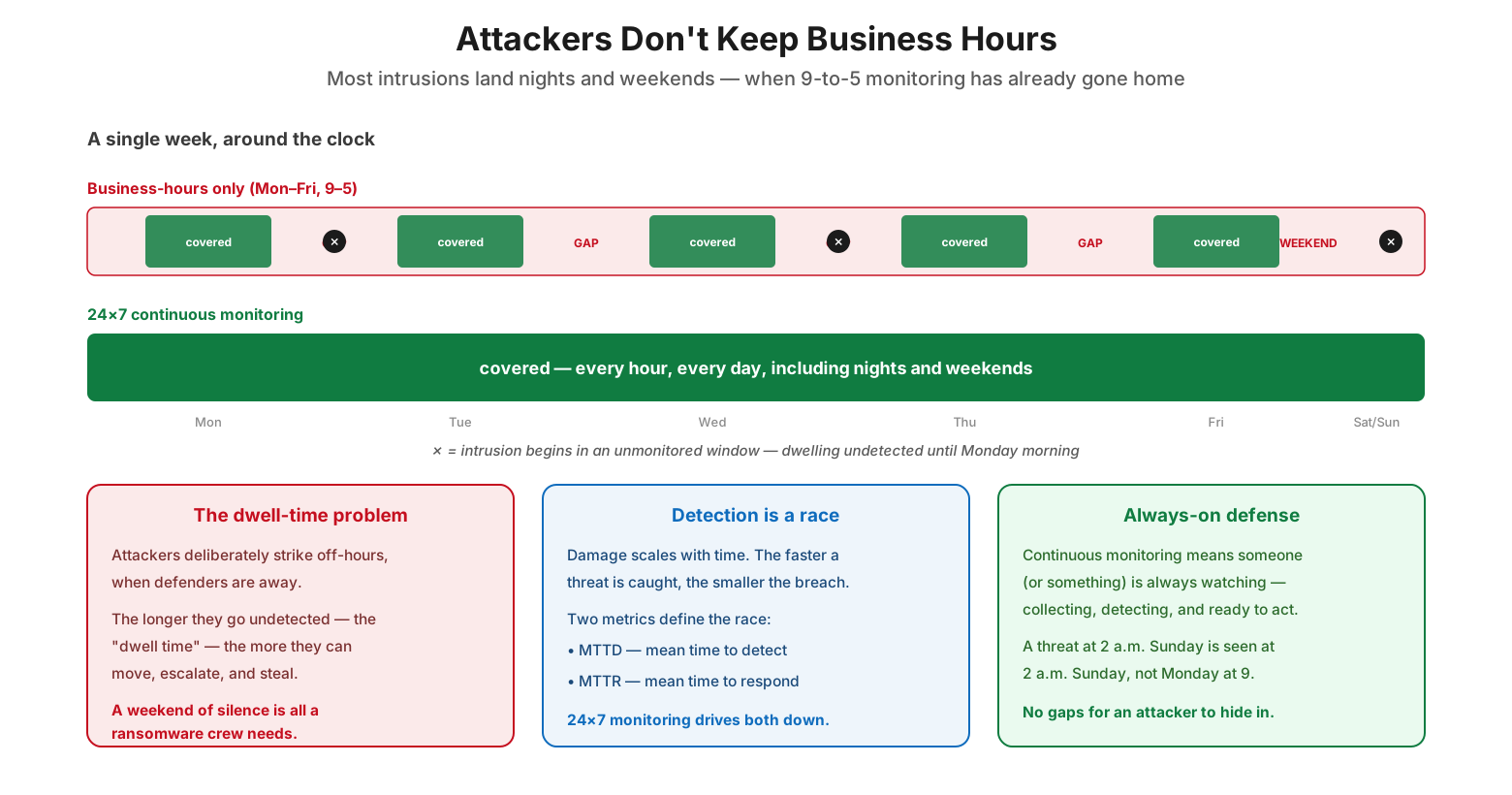
Picture a single week around the clock. Business-hours-only monitoring covers five weekday blocks from nine to five — and leaves everything else uncovered: every evening, every night, every early morning, and the entire weekend. Intrusions that begin in those gaps dwell undetected, often until Monday morning. This is the dwell-time problem: attackers deliberately strike off-hours when defenders are away, and the longer they go unseen, the more they can move, escalate, and steal — a weekend of silence is all a ransomware crew needs to encrypt an estate. It is why detection is best understood as a race. Damage scales with time, so the faster a threat is caught, the smaller the breach, and two metrics define the race: MTTD, the mean time to detect, and MTTR, the mean time to respond. Continuous, always-on monitoring is what drives both down. With 24×7 coverage, someone or something is always watching — collecting, detecting, and ready to act — so a threat at 2 a.m. Sunday is seen at 2 a.m. Sunday, leaving no gap for an attacker to hide in.
What 24×7 Security Monitoring Watches
Continuous coverage in time is only half the equation; coverage across the attack surface is the other. A modern intrusion rarely stays in one place, so monitoring has to span every major source of signal and bring them together.
What 24×7 security monitoring watches
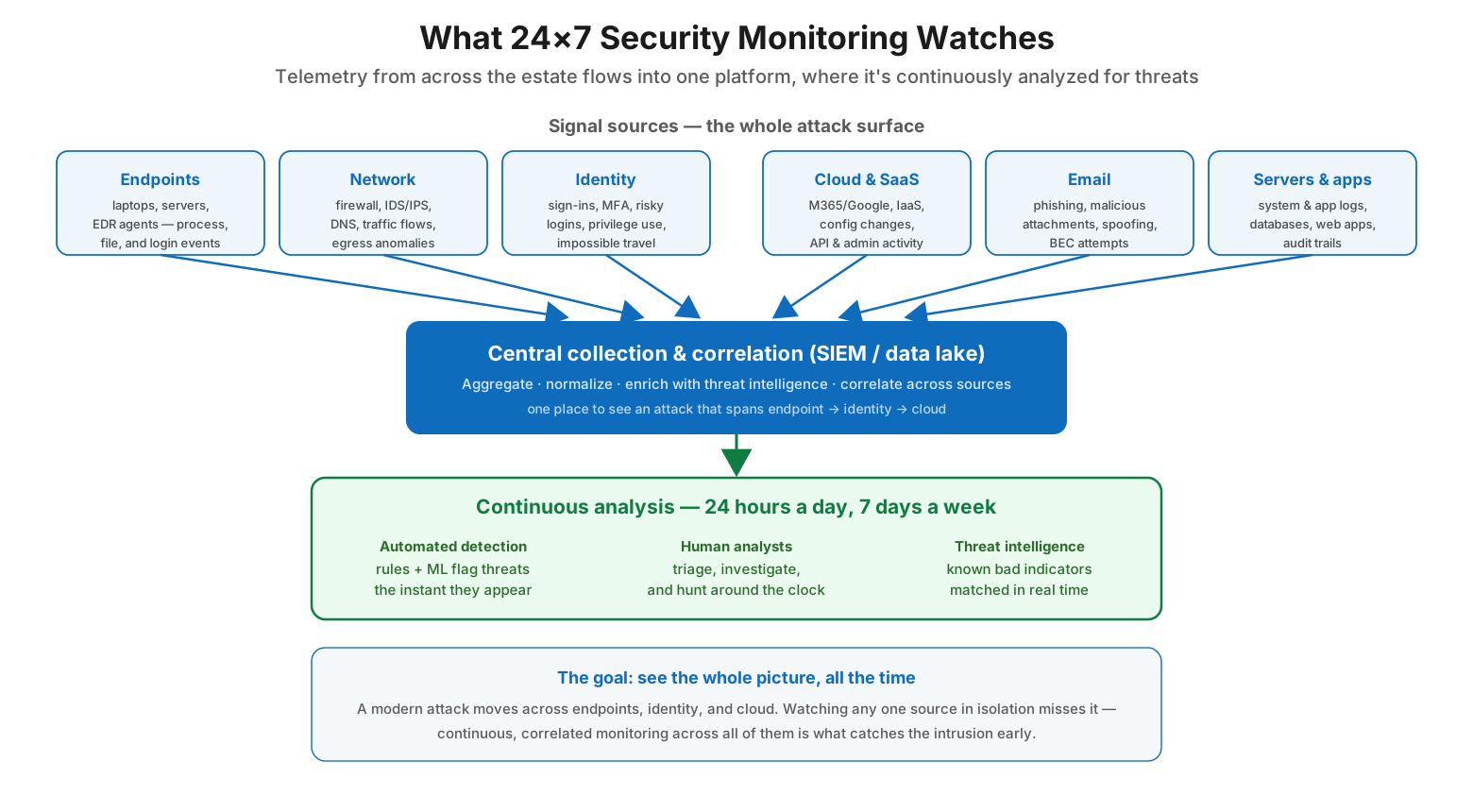
The signal sources span the whole attack surface. Endpoints — laptops and servers running EDR agents — provide process, file, and login events. The network layer contributes firewall, IDS/IPS, DNS, and traffic-flow data, revealing egress anomalies. Identity is now a primary battleground: sign-ins, MFA events, risky logins, privilege use, and impossible-travel patterns. Cloud and SaaS platforms like Microsoft 365 and Google Workspace add configuration changes and API and admin activity. Email supplies phishing, malicious-attachment, spoofing, and business-email-compromise signals. And servers and applications generate system and app logs, database activity, and audit trails. All of this flows into central collection and correlation — a SIEM or security data lake — where it is aggregated, normalized, enriched with threat intelligence, and correlated across sources, so that an attack spanning endpoint, identity, and cloud can be seen as one story rather than three disconnected fragments. On top sits continuous analysis, running 24 hours a day: automated detection where rules and machine learning flag threats instantly, human analysts who triage, investigate, and hunt around the clock, and threat intelligence matching known-bad indicators in real time. The goal is to see the whole picture, all the time — because watching any single source in isolation misses the intrusion that a correlated view would catch early.
| Source | What it reveals | Example threat caught |
|---|---|---|
| Endpoints (EDR) | Process, file, and login activity | Malware execution, credential theft |
| Network | Firewall, IDS/IPS, DNS, traffic flows | Command-and-control, data exfiltration |
| Identity | Sign-ins, MFA, privilege use | Account takeover, impossible travel |
| Cloud & SaaS | Config changes, API and admin activity | Malicious inbox rules, risky OAuth grants |
| Phishing, attachments, spoofing | Business email compromise, malware delivery | |
| Servers & apps | System, app, and database logs | Web-app attacks, unauthorized data access |
From Signal to Response — Without Waiting for Morning
Detection without timely response is nearly worthless; an alert that sits unhandled for hours gives the attacker exactly the time they wanted. Effective 24×7 monitoring therefore runs a complete detection-to-response flow at every hour of the day.
From signal to response, without waiting for morning
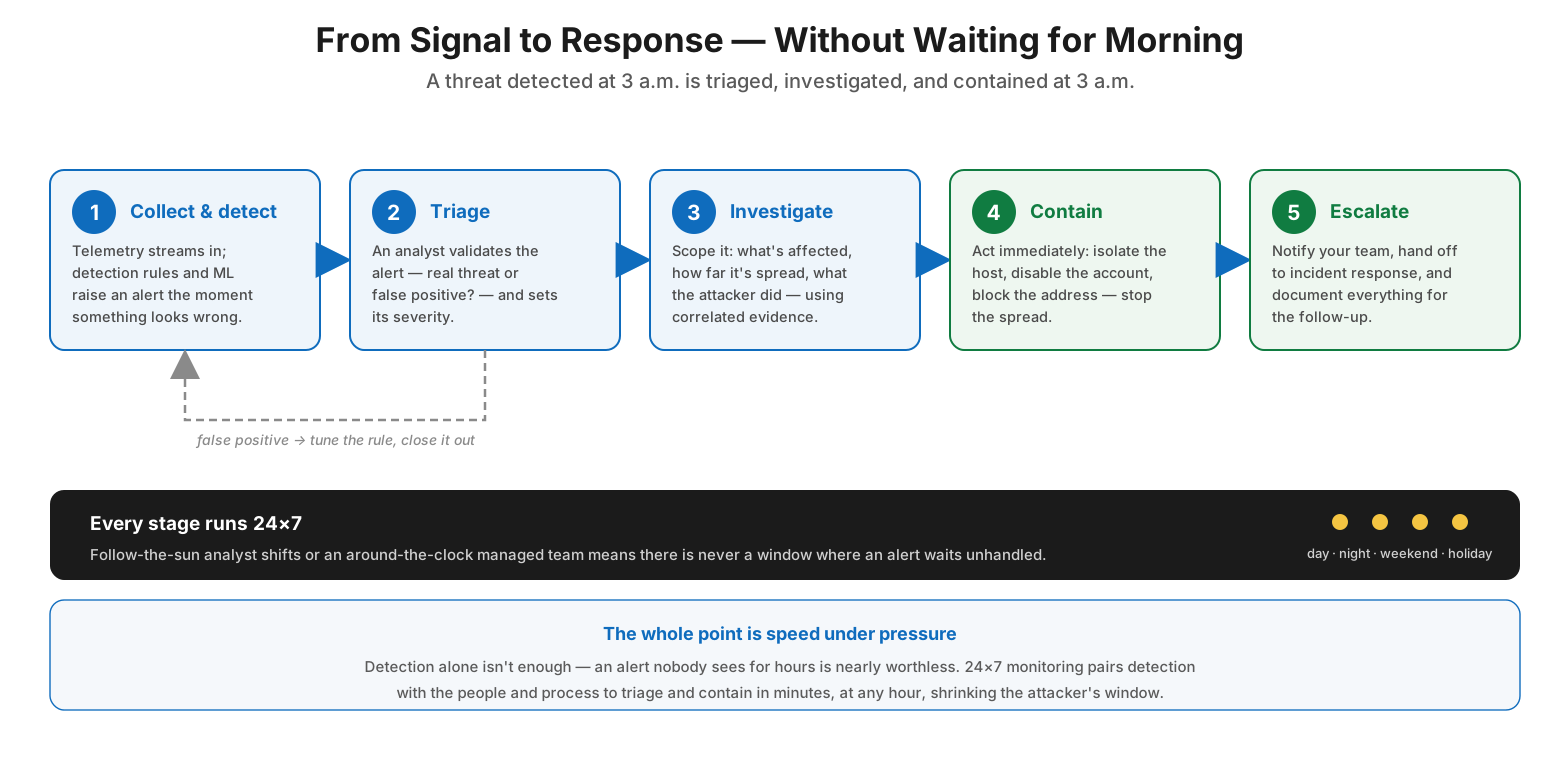
The flow moves through five stages. First, collect and detect: telemetry streams in and detection rules and machine learning raise an alert the instant something looks wrong. Second, triage: an analyst validates the alert — real threat or false positive? — and assigns severity, filtering the noise so effort goes where it matters. Third, investigate: the analyst scopes the threat, determining what is affected, how far it has spread, and what the attacker did, using correlated evidence from across the sources. Fourth, contain: act immediately to stop the spread — isolate the host, disable the account, block the malicious address. Fifth, escalate: notify the client’s team, hand off to incident response, and document everything for the follow-up. False positives loop back to tune the rule so the same noise does not recur. Crucially, every one of these stages runs 24×7. Whether through follow-the-sun analyst shifts or an around-the-clock managed team, there is never a window where an alert waits unhandled. That is the whole point: detection alone is not enough, so continuous monitoring pairs it with the people and process to triage and contain in minutes, at any hour, shrinking the attacker’s window before real damage is done.
The 24×7 Math: Build In-House or Buy the Service
Once an organization accepts the need for round-the-clock coverage, it confronts a hard reality: 24×7 is a staffing problem before it is a technology problem, and the arithmetic is unforgiving for smaller organizations.
The 24×7 math — build in-house or buy the service
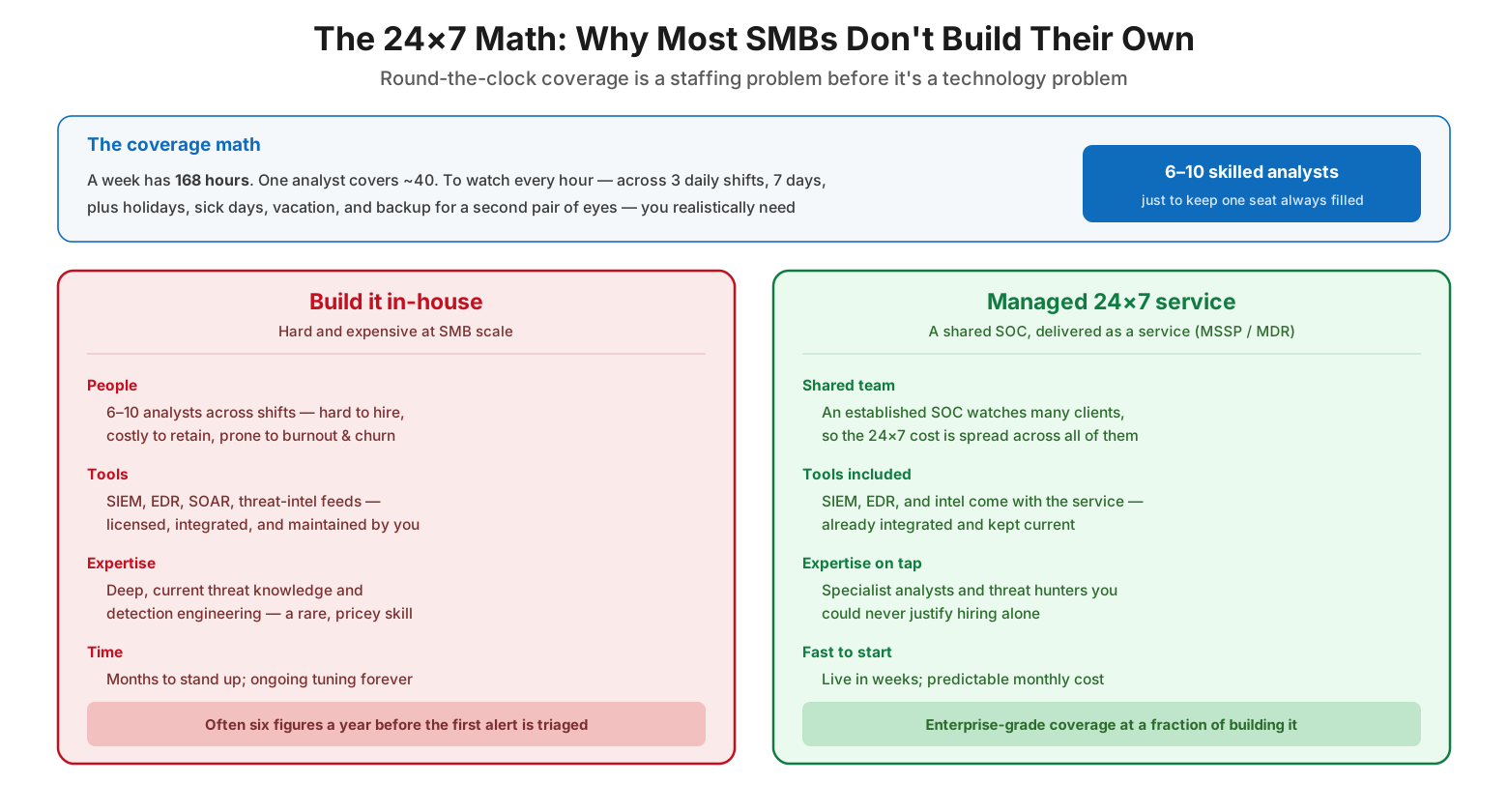
The coverage math is straightforward and sobering. A week has 168 hours; a single analyst covers around 40. To watch every hour — across three daily shifts, seven days a week, plus holidays, sick days, vacation, and a second pair of eyes for backup — an organization realistically needs six to ten skilled analysts just to keep one seat always filled. Building this in-house means carrying all of that: hard-to-hire, costly-to-retain analysts prone to burnout; a stack of tools (SIEM, EDR, SOAR, threat-intel feeds) to license, integrate, and maintain; deep, current threat expertise and detection engineering that is a rare and expensive skill; and months of effort to stand it up, followed by perpetual tuning. For most SMBs that runs into six figures a year before the first alert is ever triaged. The managed alternative — a shared security operations center delivered as a service (an MSSP or MDR provider) — spreads the 24×7 cost across many client organizations, includes and maintains the tooling, provides specialist analysts and threat hunters no single SMB could justify hiring, and goes live in weeks at a predictable monthly cost. For the vast majority of small and mid-sized organizations, the managed route delivers enterprise-grade coverage at a fraction of the cost of building it, which is why it dominates the market.
| Factor | Build in-house | Managed 24×7 service |
|---|---|---|
| People | Hire and retain 6–10 analysts | Shared SOC team, cost spread across clients |
| Tooling | License, integrate, maintain your own | Included and kept current |
| Expertise | Rare, expensive to build and keep | Specialist analysts and hunters on tap |
| Time to value | Months to stand up | Live in weeks |
| Cost profile | High fixed cost, often six figures/year | Predictable monthly subscription |
24×7 Security Monitoring Checklist
- Recognize that business-hours-only monitoring leaves ~two-thirds of the week uncovered.
- Aim to minimize dwell time by driving down both MTTD and MTTR.
- Feed all critical sources into monitoring: endpoints, network, identity, cloud, email, servers.
- Correlate signals centrally (SIEM/data lake) so cross-domain attacks are visible as one story.
- Pair automated detection with human triage, investigation, and threat hunting.
- Ensure detection-to-response runs at every hour, not just during the day.
- Tune detections continuously to keep the true-positive rate high and noise low.
- Enrich detections with current threat intelligence and map coverage to MITRE ATT&CK.
- Define and test escalation playbooks so real incidents reach the right people fast.
- Do the staffing math honestly before attempting to build 24×7 in-house.
- Evaluate managed detection and response (MDR/MSSP) for cost-effective coverage.
- Require regular reporting on threats seen, response times, and coverage.
Best Practices
Coverage alone doesn’t equal protection. The following traits — and the metrics that prove them — separate real 24×7 monitoring from a dashboard nobody watches.
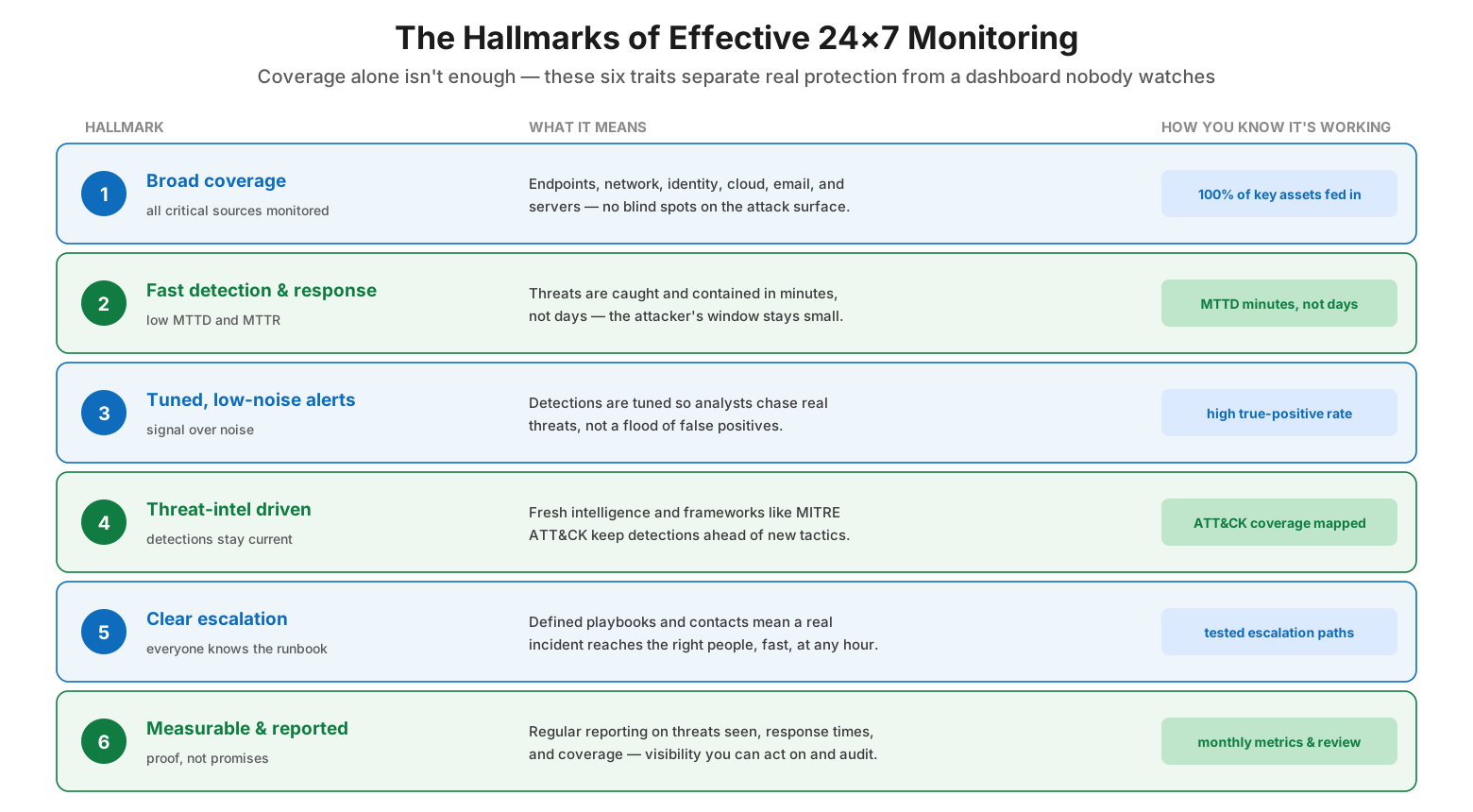
The hallmarks of effective 24×7 monitoring
| Hallmark | What it means | How you know it’s working |
|---|---|---|
| Broad coverage | All critical sources monitored | 100% of key assets feeding in |
| Fast detect & respond | Low MTTD and MTTR | Threats contained in minutes, not days |
| Tuned, low-noise alerts | Signal over noise | High true-positive rate |
| Threat-intel driven | Detections stay current | ATT&CK coverage mapped |
| Clear escalation | Everyone knows the runbook | Tested escalation paths |
| Measurable & reported | Proof, not promises | Monthly metrics and review |
Treat time as the primary metric. Every decision in security monitoring should be judged by its effect on dwell time. Prioritize the changes that most reduce MTTD and MTTR, because those are what shrink the attacker’s opportunity and the size of any breach.
Monitor the whole attack surface, and correlate it. Endpoints, network, identity, cloud, email, and applications must all feed a central platform. A siloed view misses the modern attack that hops from a phished credential to a cloud mailbox rule to an endpoint — correlation is what catches it.
Pair detection with response. A detection that no one acts on quickly provides little protection. Ensure that triage, investigation, and containment capacity is available at every hour the detection runs, not just during business hours.
Tune relentlessly to protect the signal. Alert fatigue is the enemy of 24×7 monitoring; overwhelmed analysts miss real threats. Continuously tune detections so that the alerts reaching a person are overwhelmingly real and actionable.
Ground detections in threat intelligence and ATT&CK. Keep detection logic current with fresh intelligence and map coverage against a framework like MITRE ATT&CK, so you can see which adversary techniques you would catch and where the gaps are.
Be honest about the staffing math. Round-the-clock coverage needs far more people than most assume. If the numbers do not support building an in-house SOC, a managed service is not a compromise — it is often the more capable and cost-effective choice.
Common Mistakes
Relying on business-hours monitoring. Watching only nine-to-five on weekdays leaves the majority of the week — and the exact hours attackers prefer — completely uncovered. Coverage must be continuous to matter.
Collecting logs but never watching them. Aggregating telemetry into a SIEM and assuming that constitutes monitoring is a common trap. Data with no one analyzing it in real time detects nothing; monitoring requires active, around-the-clock analysis.
Detection without response capacity. Generating alerts 24×7 but only staffing response during the day recreates the very gap you were trying to close. An off-hours alert that waits until morning is a missed containment window.
Drowning analysts in noise. Untuned detections produce a flood of false positives that exhausts analysts and buries real threats. Without disciplined tuning, more monitoring can mean less security.
Blind spots in coverage. Monitoring endpoints but ignoring identity or cloud — or vice versa — lets attacks slip through the unwatched domain. The attack surface must be covered comprehensively and correlated.
Underestimating what 24×7 costs to build. Attempting an in-house SOC without the six-to-ten-analyst reality in view leads to under-staffed, burnt-out coverage with gaps. Size the commitment honestly, or buy the capability.
Frequently Asked Questions
Why is 24×7 monitoring necessary — isn’t business-hours enough? No. Attackers deliberately strike nights, weekends, and holidays, when business-hours monitoring is offline. That leaves roughly two-thirds of every week uncovered, giving an intruder who lands off-hours a long, unwatched window to spread and cause damage before anyone notices.
What is dwell time, and why does it matter? Dwell time is how long an attacker remains in an environment before being detected. Because the damage from an incident grows the longer the attacker operates undetected, reducing dwell time — by detecting and responding faster — is the single most important goal of security monitoring.
What does 24×7 monitoring actually watch? It watches the whole attack surface: endpoints, network traffic, identity and sign-in activity, cloud and SaaS platforms, email, and servers and applications. These signals are correlated centrally so that an attack moving across several of them can be seen and understood as a single incident.
Is 24×7 monitoring just software running overnight? No. Software provides detection, but effective monitoring also requires people and process to triage, investigate, and contain threats at any hour. A tool generating alerts that no one reviews until morning does not deliver 24×7 protection — the response has to be continuous too.
Should we build our own SOC or use a managed service? It depends on scale, but the math is demanding: covering every hour realistically needs six to ten skilled analysts plus tooling and expertise, often costing six figures a year. For most SMBs, a managed detection and response or MSSP service delivers stronger coverage far more cost-effectively than building in-house.
How do we know our monitoring is actually effective? Look for the hallmarks: broad coverage of all critical sources, low MTTD and MTTR, tuned low-noise alerts with a high true-positive rate, threat-intelligence-driven detections mapped to MITRE ATT&CK, tested escalation playbooks, and regular reporting on threats seen and response times. Effectiveness should be measurable, not assumed.
Conclusion
Security is only as strong as its weakest hour. An organization can invest heavily in prevention and still be undone by a single unwatched window, because attackers actively seek out the nights and weekends when defenders are away. The purpose of 24×7 security monitoring is to eliminate those windows entirely — to ensure that a threat appearing at any moment is detected, understood, and contained at that moment, rather than discovered days later after the damage is done. In a discipline where damage scales directly with time, continuous coverage is what keeps dwell time short and breaches small.
Doing it well means more than leaving a tool running overnight. It means watching the whole attack surface and correlating those signals in one place, pairing automated detection with human analysts who can triage and respond around the clock, tuning relentlessly so real threats are not lost in noise, and grounding detections in current threat intelligence. It also means being honest about the considerable staffing required — which is precisely why so many organizations achieve enterprise-grade, always-on coverage through a managed service rather than by building it alone. Whichever path fits, the standard to hold to is the same: no hour left weak, no gap left for an attacker to wait in.
References
- NIST Cybersecurity Framework 2.0 — Detect and Respond functions
- NIST SP 800-61 Rev. 2 — Computer Security Incident Handling Guide
- NIST SP 800-137 — Information Security Continuous Monitoring (ISCM)
- CISA — Cyber Threats and Advisories
- MITRE ATT&CK — Adversary Tactics and Techniques
- SANS — Security Operations Center (SOC) resources
- CIS Controls — Continuous Vulnerability Management and Audit Log Management