Security Operations Center (SOC) Services: The People, Process, and Technology Behind Real Defense
Behind every organization that reliably detects and stops cyberattacks is a Security Operations Center.
- Content owner
- Insyto Content Team
- Editorial reviewer
- Ritesh Mhatre
- Technical reviewer
- Navish Ansari
- Next review
- To be scheduled
- Last reviewed
- Review pending
- Technical level
- Intermediate · CISOs, security teams, IT directors
Executive Summary
Behind every organization that reliably detects and stops cyberattacks is a Security Operations Center. A SOC is not a product, a tool, or a single service — it is a coordinated function that brings together skilled people, disciplined processes, and integrated technology to continuously detect, investigate, and respond to security threats across the whole organization. Where individual tools generate alerts and individual analysts chase individual incidents, the SOC is the command center that unifies them into a coherent, always-on defensive capability. It is the difference between owning security tools and actually operating security.
The value of thinking about security in terms of a SOC is that it forces attention onto all three pillars at once. Technology alone — a SIEM here, an EDR there — accomplishes little if no skilled people are watching it and no process governs how threats are handled. Skilled people with no process descend into chaos the moment a serious incident hits, and process with no technology cannot scale to the volume of modern telemetry. A real SOC is the disciplined combination of all three, structured so that alerts flow to the right level of expertise, incidents are handled by defined playbooks, and the whole operation improves over time. That structure includes a tiered analyst model, a set of specialized roles, a defined suite of functions, and an integrated technology stack with the SIEM at its core. Because building and staffing all of this around the clock is expensive and demanding, most organizations — especially small and mid-sized ones — deliver their SOC capability through a service model rather than building everything in-house.
This vendor-neutral guide explains SOC services from the ground up. It defines the SOC as people, process, and technology; breaks down the analyst tiers and supporting roles that staff it; details the eight core functions a SOC delivers; describes the technology stack it operates, with the SIEM at the center; and compares the three delivery models — in-house, outsourced (SOC-as-a-Service), and hybrid or co-managed — so an organization can choose the one that fits its size, risk, and resources. The throughline is that a SOC is an operating capability, not a purchase, and that how you staff and run it matters as much as the tools inside it.
A SOC Is People, Process, and Technology
The most important thing to understand about a SOC is that it is not any single element but the integration of three. Getting this framing right prevents the common and costly mistake of buying tools and calling it a SOC.
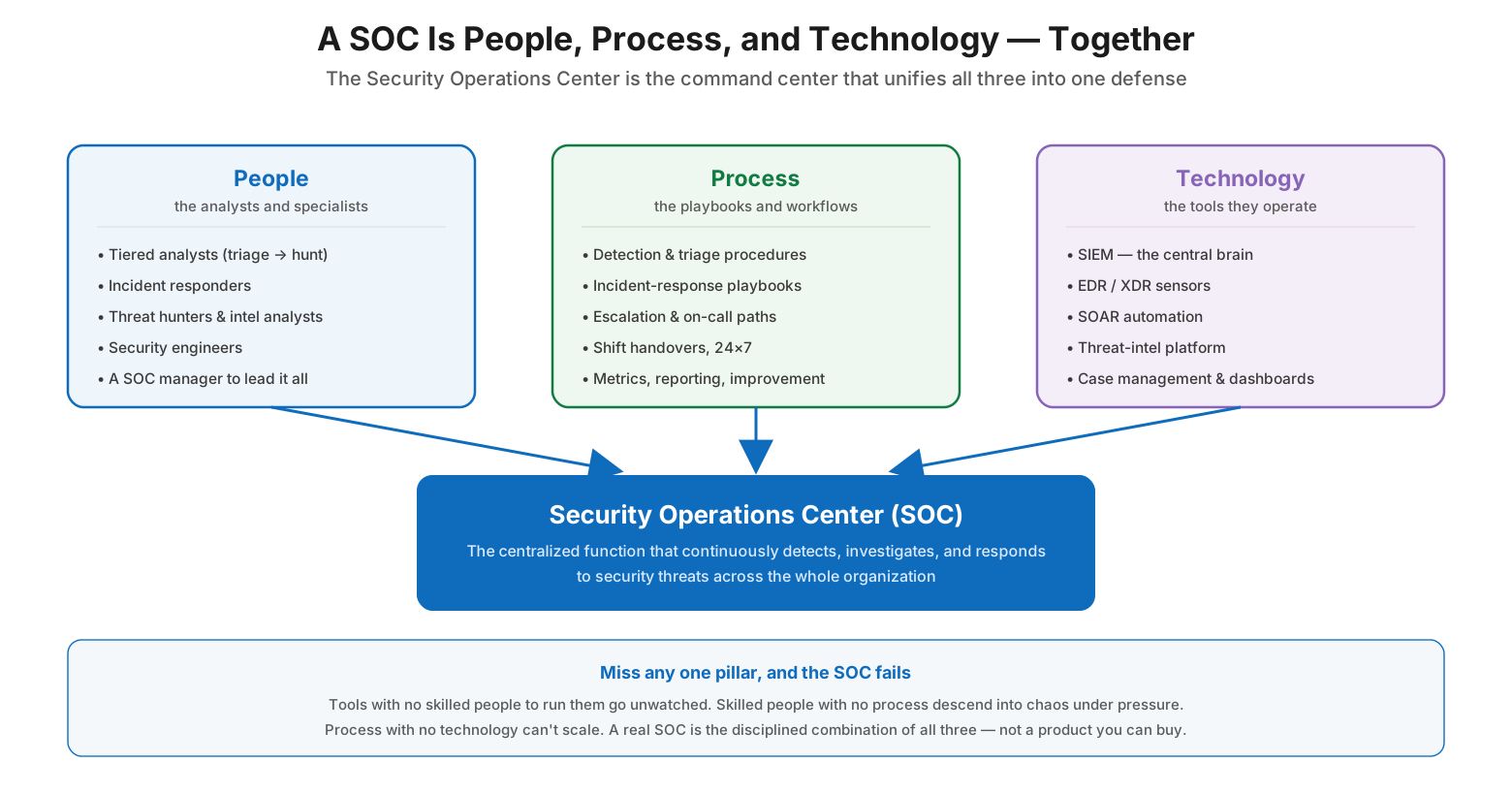
A SOC is people, process, and technology — together
The first pillar is people: the tiered analysts who move from triage to hunting, the incident responders, the threat hunters and intelligence analysts, the security engineers, and the SOC manager who leads them. The second is process: the detection and triage procedures, the incident-response playbooks, the escalation and on-call paths, the disciplined 24×7 shift handovers, and the metrics and reporting that drive improvement. The third is technology: the SIEM that acts as the central brain, the EDR and XDR sensors, the SOAR automation, the threat-intelligence platform, and the case management and dashboards. These three converge into the Security Operations Center — the centralized function that continuously detects, investigates, and responds to threats across the whole organization. Miss any one pillar and the SOC fails: tools with no skilled people to run them go unwatched, skilled people with no process descend into chaos under pressure, and process with no technology cannot scale. A real SOC is the disciplined combination of all three — which is precisely why it is an operating capability rather than a product you can buy off a shelf.
Inside the SOC: Who Does What
A SOC works because it routes each threat to the right level of skill, rather than dumping everything on everyone. That routing is achieved through a tiered analyst model supported by specialized roles.
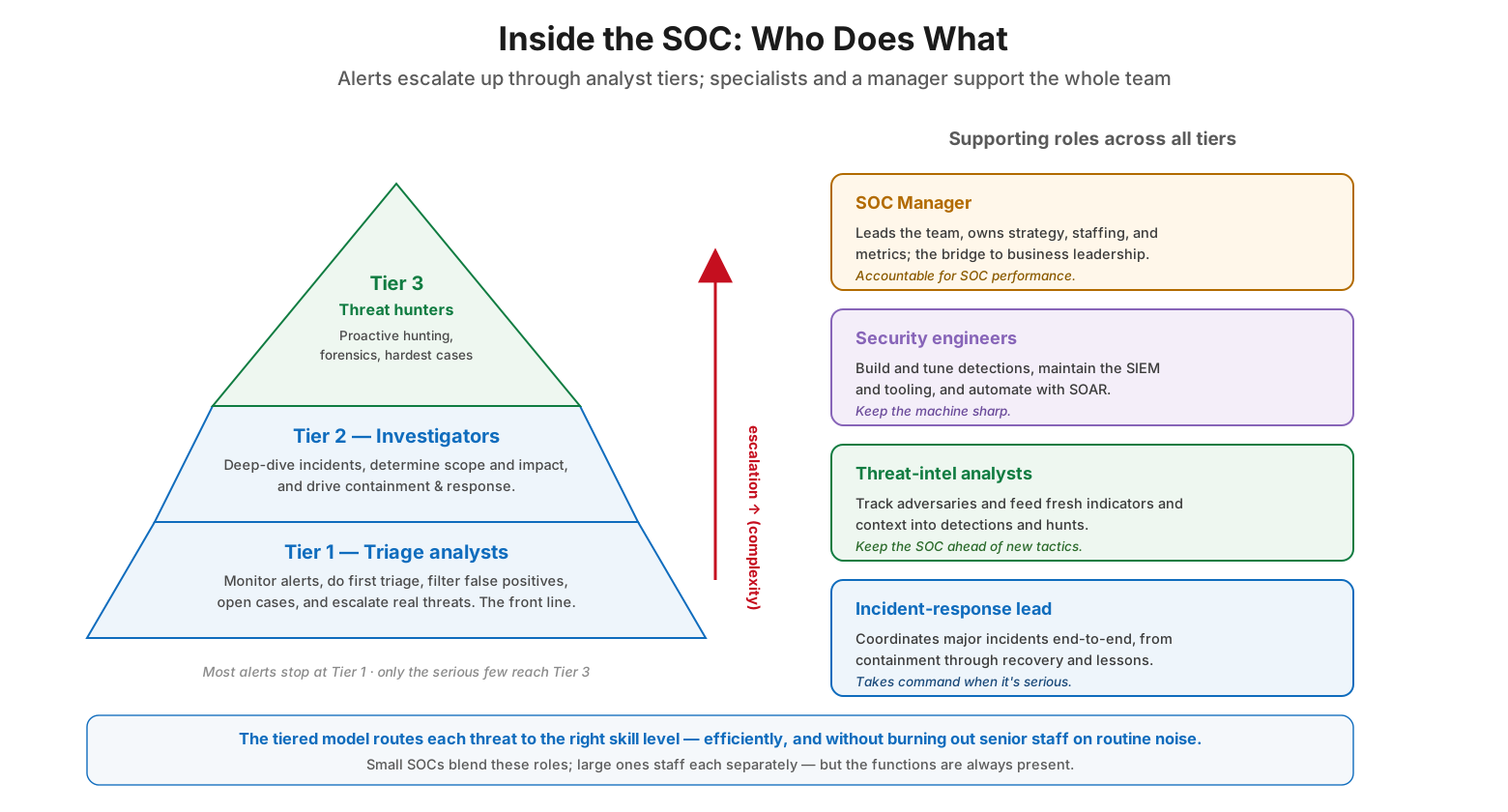
Inside the SOC — who does what
At the base are Tier 1 triage analysts — the front line, who monitor alerts, perform first triage, filter out false positives, open cases, and escalate genuine threats. Above them, Tier 2 investigators take the escalated cases, deep-diving into incidents to determine scope and impact and driving containment and response. At the apex, Tier 3 threat hunters handle the hardest cases, perform forensics, and proactively hunt for attackers that evaded automated detection. Alerts escalate upward through these tiers by complexity, so most alerts are resolved at Tier 1 and only the serious few ever reach Tier 3 — an efficient design that keeps senior staff from being buried in routine noise. Surrounding the tiers are supporting roles that span all levels: the SOC manager, who leads the team and owns strategy, staffing, and metrics, and serves as the bridge to business leadership; security engineers, who build and tune detections, maintain the SIEM and tooling, and automate with SOAR; threat-intelligence analysts, who track adversaries and feed fresh indicators and context into detections and hunts; and an incident-response lead, who takes command of major incidents from containment through recovery and lessons learned. Small SOCs blend these roles across fewer people, and large ones staff each separately, but the functions are always present.
| Role | Focus | Escalation position |
|---|---|---|
| Tier 1 — Triage analyst | Monitor, triage, filter, escalate | Front line; handles most alerts |
| Tier 2 — Investigator | Scope, impact, containment | Receives escalations from Tier 1 |
| Tier 3 — Threat hunter | Hunting, forensics, hardest cases | Top tier; the serious few |
| SOC manager | Strategy, staffing, metrics, leadership | Leads and is accountable |
| Security engineer | Build and tune detections; tooling | Supports all tiers |
| Threat-intel analyst | Track adversaries; feed detections | Supports all tiers |
What a SOC Actually Does — Eight Core Functions
A SOC is often imagined as simply “watching alerts,” but its remit is far broader: it runs a complete lifecycle from prevention through detection to response and improvement.
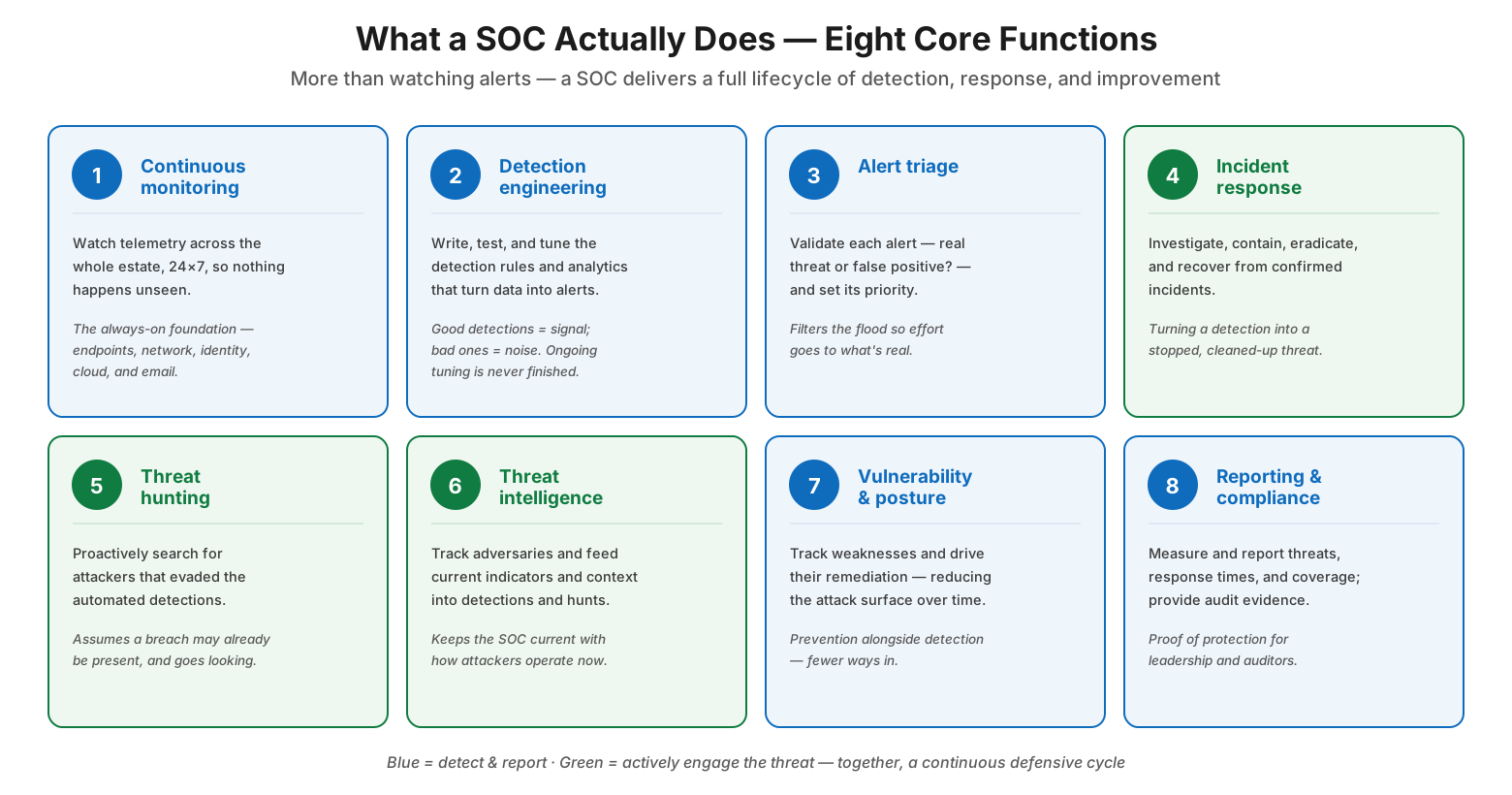
What a SOC actually does — eight core functions
The eight core functions begin with continuous monitoring — watching telemetry across the whole estate, 24×7, so nothing happens unseen. Detection engineering writes, tests, and tunes the rules and analytics that turn raw data into meaningful alerts; good detections produce signal, bad ones produce noise, and the tuning is never finished. Alert triage validates each alert as a real threat or false positive and sets its priority, filtering the flood so effort goes where it matters. Incident response investigates, contains, eradicates, and recovers from confirmed incidents — turning a detection into a stopped, cleaned-up threat. Threat hunting proactively searches for attackers that evaded the automated detections, assuming a breach may already be present. Threat intelligence tracks adversaries and feeds current indicators and context into detections and hunts, keeping the SOC current with how attackers operate now. Vulnerability and posture management tracks weaknesses and drives their remediation, reducing the attack surface so there are fewer ways in. And reporting and compliance measures and reports on threats, response times, and coverage, and provides the audit evidence leadership and regulators require. Together, the detection-and-report functions and the actively-engage-the-threat functions form a continuous defensive cycle rather than a set of isolated tasks.
| Function | What it delivers | Type |
|---|---|---|
| Continuous monitoring | 24×7 visibility across the estate | Detect |
| Detection engineering | Tuned rules that turn data into alerts | Detect |
| Alert triage | Real-vs-false-positive, prioritized | Detect |
| Incident response | Contain, eradicate, recover | Engage |
| Threat hunting | Proactively find evaded attackers | Engage |
| Threat intelligence | Current adversary indicators & context | Engage |
| Vulnerability & posture | Track and remediate weaknesses | Prevent |
| Reporting & compliance | Metrics, coverage, audit evidence | Report |
The SOC Technology Stack — SIEM at the Core
The SOC’s people and process are amplified by an integrated set of tools. Understanding how they fit together clarifies why integration — not any single product — is what makes the stack effective.
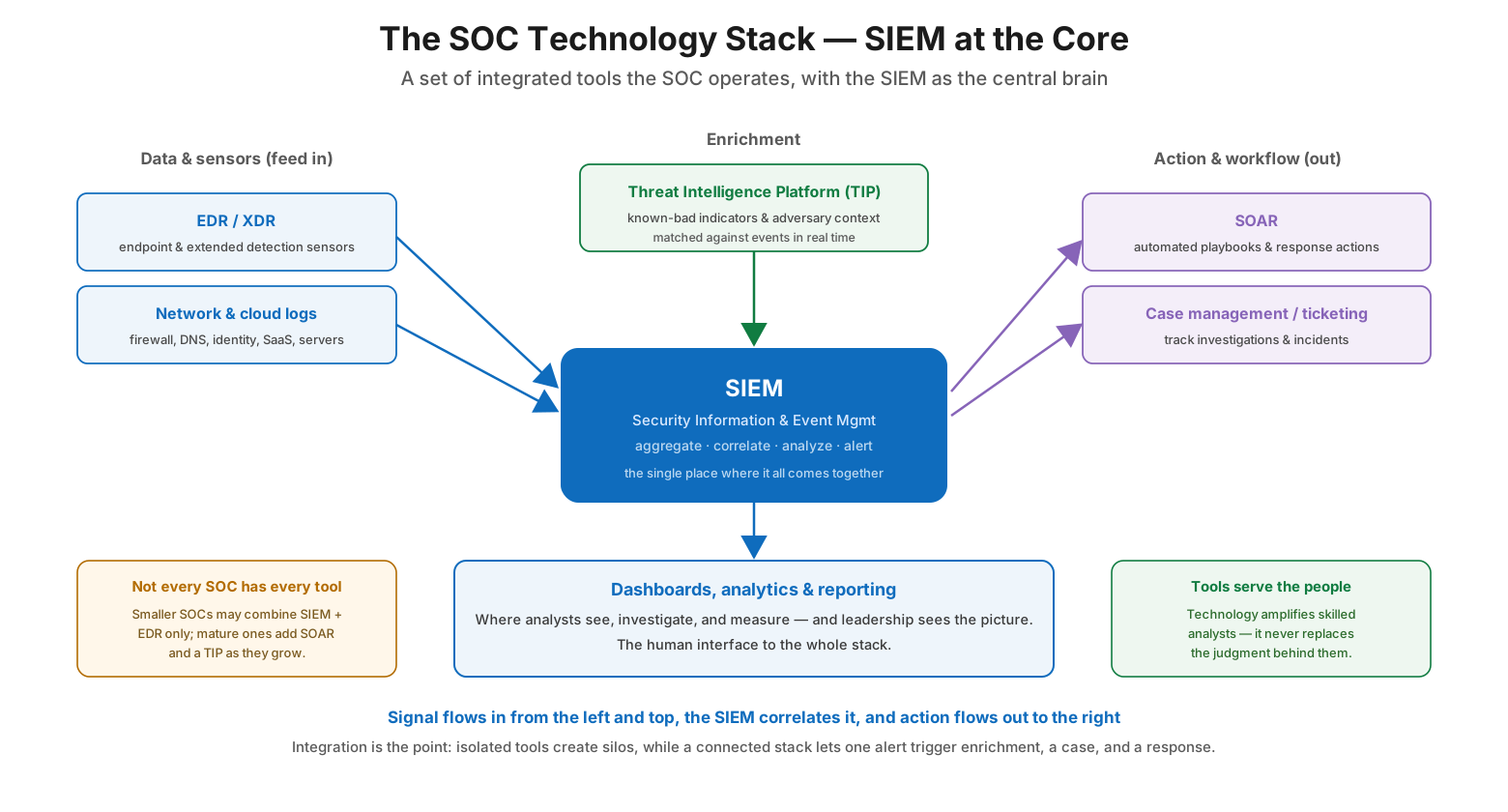
The SOC technology stack — SIEM at the core
At the center sits the SIEM (Security Information and Event Management), the brain that aggregates, correlates, analyzes, and alerts — the single place where everything comes together. Signal feeds in from the left and top: EDR and XDR sensors provide endpoint and extended detection, while network and cloud logs contribute firewall, DNS, identity, SaaS, and server data, and a Threat Intelligence Platform enriches events with known-bad indicators and adversary context matched in real time. Action flows out to the right: SOAR executes automated playbooks and response actions, and case management or ticketing tracks investigations and incidents. Below, dashboards, analytics, and reporting form the human interface where analysts see, investigate, and measure — and leadership sees the picture. Not every SOC has every tool: smaller SOCs may run just a SIEM plus EDR, while mature ones add SOAR and a TIP as they grow. And throughout, the tools serve the people — technology amplifies skilled analysts but never replaces the judgment behind them. Integration is the whole point: isolated tools create silos, while a connected stack lets a single alert automatically trigger enrichment, open a case, and drive a response.
Three Ways to Run a SOC
How a SOC is delivered matters as much as what is inside it. There are three broad models, and the right one depends on an organization’s size, risk, and resources.
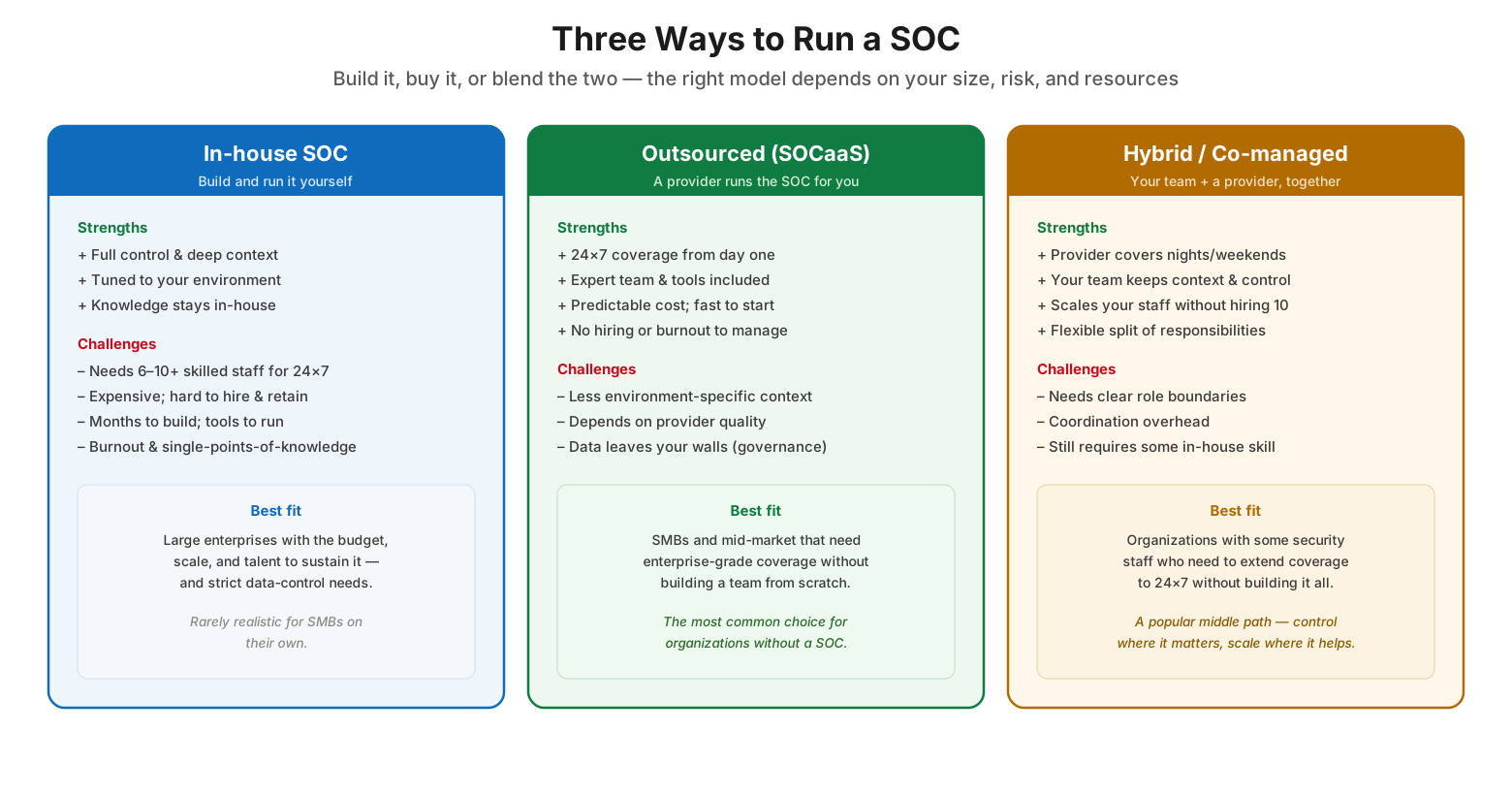
Three ways to run a SOC
An in-house SOC gives full control and deep environmental context but demands six to ten or more skilled staff for 24×7 coverage, is expensive and hard to sustain, and takes months to build — rarely realistic for SMBs alone. An outsourced SOC-as-a-Service (SOCaaS) provides around-the-clock coverage, an expert team, and tooling from day one at a predictable cost, at the trade-off of less environment-specific context and reliance on the provider’s quality — the most common choice for organizations without an existing SOC. A hybrid or co-managed model blends the two: the provider covers nights, weekends, and advanced analysis while the internal team keeps daytime operations, context, and control, extending coverage to 24×7 without building everything, at the cost of needing clear role boundaries and some in-house skill.
| Model | Strength | Trade-off | Best fit |
|---|---|---|---|
| In-house | Full control and context | Costly; 6–10+ staff; slow to build | Large enterprises with budget and talent |
| Outsourced (SOCaaS) | 24×7 and expertise from day one | Less context; provider-dependent | SMBs/mid-market needing coverage fast |
| Hybrid / co-managed | Control plus scaled coverage | Needs clear boundaries; some in-house skill | Teams extending existing staff to 24×7 |
SOC Services Checklist
- Treat the SOC as people, process, and technology — never just a set of tools.
- Ensure all three pillars are present; a gap in any one undermines the whole.
- Structure analysts in tiers so threats route to the right skill level efficiently.
- Staff or contract the supporting roles: manager, engineers, threat intel, IR lead.
- Cover all eight core functions, not just monitoring and alerting.
- Build detection engineering as an ongoing discipline, not a one-time setup.
- Put the SIEM at the core and integrate EDR/XDR, SOAR, TIP, and case management.
- Document playbooks, escalation paths, and 24×7 shift handovers.
- Measure and report threats, response times (MTTD/MTTR), and coverage.
- Choose a delivery model — in-house, outsourced, or hybrid — that fits your scale and risk.
- For SMBs, seriously evaluate SOC-as-a-Service or co-managed before building in-house.
- Define clear responsibility boundaries with any provider before onboarding.
Best Practices
Balance all three pillars. The most common SOC failure is investing heavily in technology while under-investing in the people and process to operate it. Fund and mature all three together — tools, skilled staff, and disciplined workflows.
Use tiers to protect your best people. A tiered analyst model keeps senior hunters and responders from drowning in routine alerts, routing the volume to Tier 1 and reserving expertise for what genuinely needs it. This is essential for both efficiency and retention.
Make detection engineering continuous. Detections decay as the environment and threats change. Treat writing and tuning detections as an ongoing engineering function, not a set-and-forget configuration, so signal stays high and noise stays low.
Integrate the stack, don’t just buy tools. The value of the technology comes from integration — a SIEM correlating across sources, enriched by intel, driving SOAR and case management. Prioritize connecting tools over accumulating them.
Cover the full function set. A SOC that only monitors and alerts leaves response, hunting, vulnerability management, and reporting undone. Ensure the complete lifecycle is covered, whether by your team, a provider, or a blend.
Match the delivery model to reality. Be honest about whether you can staff a 24×7 SOC in-house. For most organizations, a SOC-as-a-Service or co-managed model delivers stronger, faster, more sustainable coverage than an under-resourced internal attempt.
Common Mistakes
Calling a pile of tools a SOC. Buying a SIEM and some sensors without the people and process to operate them is not a SOC. Without skilled analysts and defined workflows, the tools generate alerts that no one effectively acts on.
Under-staffing the human side. Investing in technology but not in enough skilled analysts leaves the SOC unable to keep up, and burns out the few people it has. The people pillar is the hardest and most important to get right.
Skipping process and playbooks. Relying on individual heroics instead of documented procedures means inconsistent handling and chaos during major incidents. Playbooks, escalation paths, and handovers are what make a SOC dependable.
Neglecting detection tuning. Standing up detections and never revisiting them produces either floods of false positives or dangerous blind spots. Continuous tuning is not optional.
Treating monitoring as the whole job. Focusing only on watching alerts while ignoring response, hunting, and vulnerability management leaves the defensive lifecycle incomplete. A SOC must engage threats, not just observe them.
Building in-house without the resources. Attempting a full 24×7 in-house SOC without the budget, staff, and expertise to sustain it results in gaps and burnout. When the resources aren’t there, a service model is the stronger choice.
Frequently Asked Questions
What is a SOC? A Security Operations Center is a centralized function combining people, process, and technology to continuously monitor, detect, investigate, and respond to security threats across an organization. It is not a single tool or product but a coordinated capability — the command center for security operations.
What’s the difference between a SOC and a SIEM? A SIEM is a technology — a platform that aggregates and correlates security data and generates alerts. A SOC is the whole operation that uses the SIEM (among other tools), staffed by analysts following defined processes. The SIEM is a core component of a SOC, not a substitute for one.
What are SOC analyst tiers? Tiers organize analysts by skill and responsibility. Tier 1 handles monitoring and initial triage, Tier 2 performs deeper investigation and response, and Tier 3 does advanced work like threat hunting and forensics. Alerts escalate upward, so routine volume is handled at Tier 1 and only complex threats reach Tier 3.
What functions does a SOC perform? Beyond continuous monitoring, a SOC handles detection engineering, alert triage, incident response, threat hunting, threat intelligence, vulnerability and posture management, and reporting and compliance. Together these span the full lifecycle from preventing and detecting threats to responding and improving.
Should we build our own SOC or use a service? It depends on size, risk, and resources. In-house SOCs offer maximum control but require substantial staff, budget, and time. Outsourced SOC-as-a-Service provides 24×7 coverage quickly and cost-effectively. Hybrid or co-managed models blend the two. Most SMBs find a service or co-managed model far more practical than building in-house.
What is a co-managed or hybrid SOC? In a hybrid or co-managed model, your internal team and an external provider share SOC responsibilities — for example, the provider covers nights and weekends and advanced analysis while your staff retain daytime operations and environment-specific context. It extends coverage to 24×7 without building an entire SOC from scratch.
Conclusion
A Security Operations Center is what turns scattered security tools and occasional incident response into a continuous, dependable defensive capability. Its essence is integration: the disciplined combination of skilled people, defined processes, and connected technology, structured so that threats route to the right expertise, incidents are handled by proven playbooks, and the operation measurably improves over time. Understanding a SOC this way — as an operating capability rather than a purchase — is what keeps organizations from the expensive error of buying tools and expecting protection to follow.
Running a SOC well means attending to all of its parts: a tiered analyst model and the specialized roles that support it, the full set of functions from detection engineering to threat hunting to reporting, and an integrated stack with the SIEM at its core. It also means being realistic about how to deliver it. Few small or mid-sized organizations can sustain a 24×7 in-house SOC, and there is no shame in that — outsourced SOC-as-a-Service and co-managed models exist precisely to provide enterprise-grade operations without enterprise-scale staffing. Whether built, bought, or blended, the standard is the same: people, process, and technology working together, around the clock, so that when a threat appears, a capable operation is ready to detect it, understand it, and shut it down.
References
- NIST Cybersecurity Framework 2.0 — Detect and Respond functions
- NIST SP 800-61 Rev. 2 — Computer Security Incident Handling Guide
- SANS — Security Operations Center (SOC) resources
- MITRE ATT&CK — Adversary Tactics and Techniques
- MITRE — 11 Strategies of a World-Class Cybersecurity Operations Center
- CISA — Cyber Threats and Advisories
- CIS Controls — Audit Log Management and Incident Response