Vulnerability Management: Finding and Fixing Weaknesses Before Attackers Do
Every organization runs software, and all software has flaws.
- Content owner
- Insyto Content Team
- Editorial reviewer
- Ritesh Mhatre
- Technical reviewer
- Navish Ansari
- Next review
- To be scheduled
- Last reviewed
- Review pending
- Technical level
- Intermediate · CISOs, security teams, IT directors
Executive Summary
Every organization runs software, and all software has flaws. New vulnerabilities are disclosed by the thousands every year, and any one of them — an unpatched server, a misconfigured cloud bucket, an outdated library in a web application — can become the doorway an attacker walks through. Vulnerability management is the ongoing discipline of finding those weaknesses across the environment, deciding which ones genuinely matter, fixing or otherwise handling them, and confirming the work is done. Done well, it steadily shrinks the organization’s attack surface over time. Done poorly, or treated as a once-a-year checkbox for an audit, it leaves a growing backlog of exposure that attackers are only too happy to exploit.
The critical insight that separates a real program from a compliance exercise is that vulnerability management is not the same as running a scanner. A scan produces a list — often an overwhelming one, with thousands of findings. What turns that list into reduced risk is everything around it: a continuous lifecycle rather than a snapshot, risk-based prioritization rather than blindly chasing severity scores, comprehensive scanning coverage so nothing hides in a blind spot, a deliberate choice among remediation options rather than assuming everything must be patched, and verification that fixes actually worked. It is equally important to understand that patching is only one way to handle a vulnerability. A mature program also mitigates risks with compensating controls when a patch isn’t available, and — for genuinely low-risk items — formally and deliberately accepts residual risk rather than pretending the finding away.
This vendor-neutral guide lays out vulnerability management as a program, not a product. It walks through the continuous lifecycle, explains why risk-based prioritization beats fixing by CVSS score alone, describes the scanning methods that together provide full coverage, sets out the three remediation paths of remediate, mitigate, and accept, and shows how to mature the program with risk-tiered SLAs and meaningful metrics. The governing principle throughout is that you cannot fix everything at once, so the goal is not zero vulnerabilities but the intelligent, continuous reduction of real risk — fixing what actually matters, first.
Vulnerability Management Is a Continuous Loop
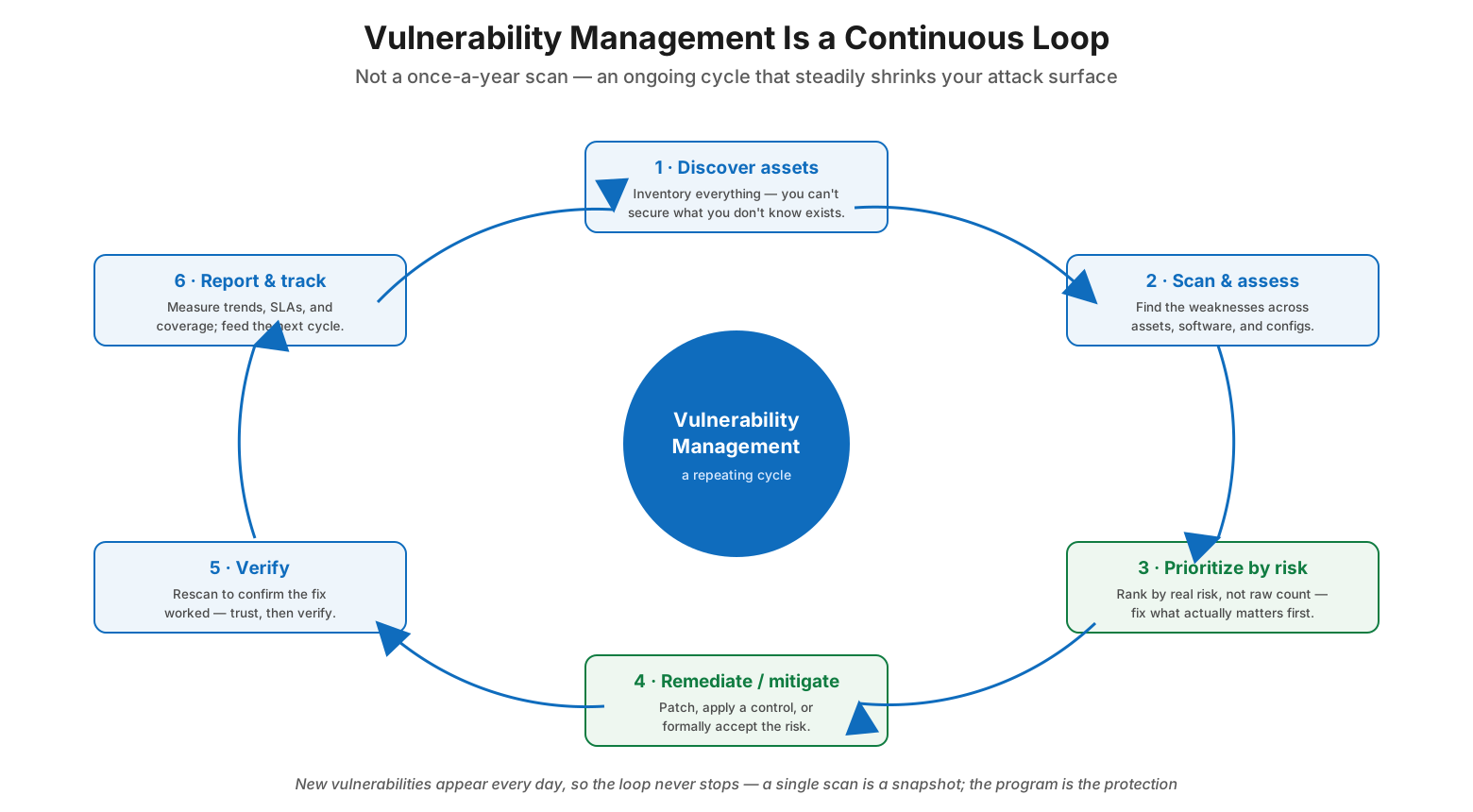
The single most important reframing is from event to process. A scan is a moment in time; vulnerability management is an ongoing cycle that repeats because the environment and the threat landscape never stand still.
Vulnerability management is a continuous loop
The lifecycle runs through six repeating stages. It begins with discover assets — building and maintaining an inventory of everything, because you cannot secure what you do not know exists. Then scan and assess to find the weaknesses across assets, software, and configurations. Next, prioritize by risk, ranking findings by their real danger rather than by raw count, so effort goes to what actually matters. Then remediate or mitigate — patch the issue, apply a control, or formally accept the risk. Follow that with verify, rescanning to confirm the fix genuinely worked, on the principle of trust but verify. Finally, report and track, measuring trends, SLA performance, and coverage, and feeding what you learn into the next cycle. Because new vulnerabilities appear every single day, the loop never stops: a single scan is only a snapshot, while the repeating program is the actual protection. Organizations that treat vulnerability management as an annual event are secure only on the day of the scan; those that run the loop continuously keep their exposure genuinely low.
Risk-Based Prioritization: Fix What Actually Matters First
The moment an organization scans seriously, it confronts an uncomfortable truth: there are far more findings than can ever be fixed at once. How you decide what to fix first is the make-or-break decision of the whole program.
Risk-based prioritization: fix what actually matters first
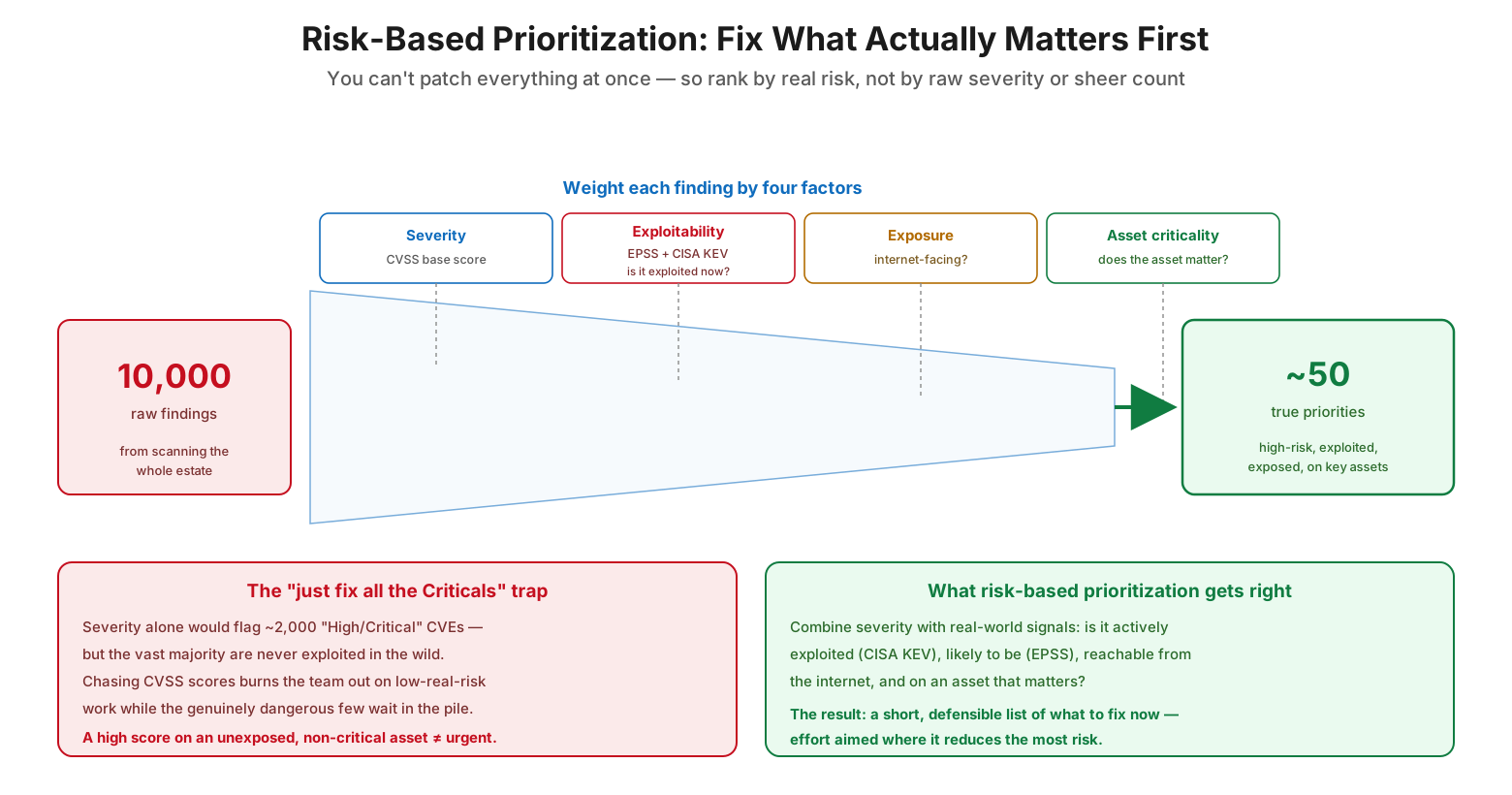
A scan of a typical estate might return ten thousand findings. The naive approach is to sort by CVSS severity and start at the top — but that is a trap. Severity alone would flag perhaps two thousand “High” and “Critical” CVEs, and the vast majority of those are never actually exploited in the wild. Chasing CVSS scores burns the team out on low-real-risk work while the genuinely dangerous few sit waiting in the pile; a high base score on an unexposed, non-critical asset is simply not urgent. Risk-based prioritization does better by weighting each finding on four factors: severity (the CVSS base score), exploitability (is it being actively exploited, per the CISA Known Exploited Vulnerabilities catalog, or likely to be, per an EPSS probability score), exposure (is the asset internet-facing and reachable), and asset criticality (does the affected asset actually matter to the business). Combining these turns ten thousand raw findings into perhaps fifty true priorities — the high-risk, exploited, exposed vulnerabilities on assets that count. The result is a short, defensible list of what to fix now, with effort aimed exactly where it reduces the most risk.
| Factor | Question it answers | Example source |
|---|---|---|
| Severity | How bad is the flaw itself? | CVSS base score |
| Exploitability | Is it being (or likely to be) exploited? | CISA KEV, EPSS |
| Exposure | Can an attacker reach it? | Internet-facing vs internal |
| Asset criticality | Does the affected asset matter? | Business/data classification |
How You Find Vulnerabilities: Coverage Matters
Prioritization is only as good as the data feeding it, and no single scanning method sees everything. A program that relies on one type of scan has blind spots that attackers can occupy freely.
How you find vulnerabilities — coverage matters
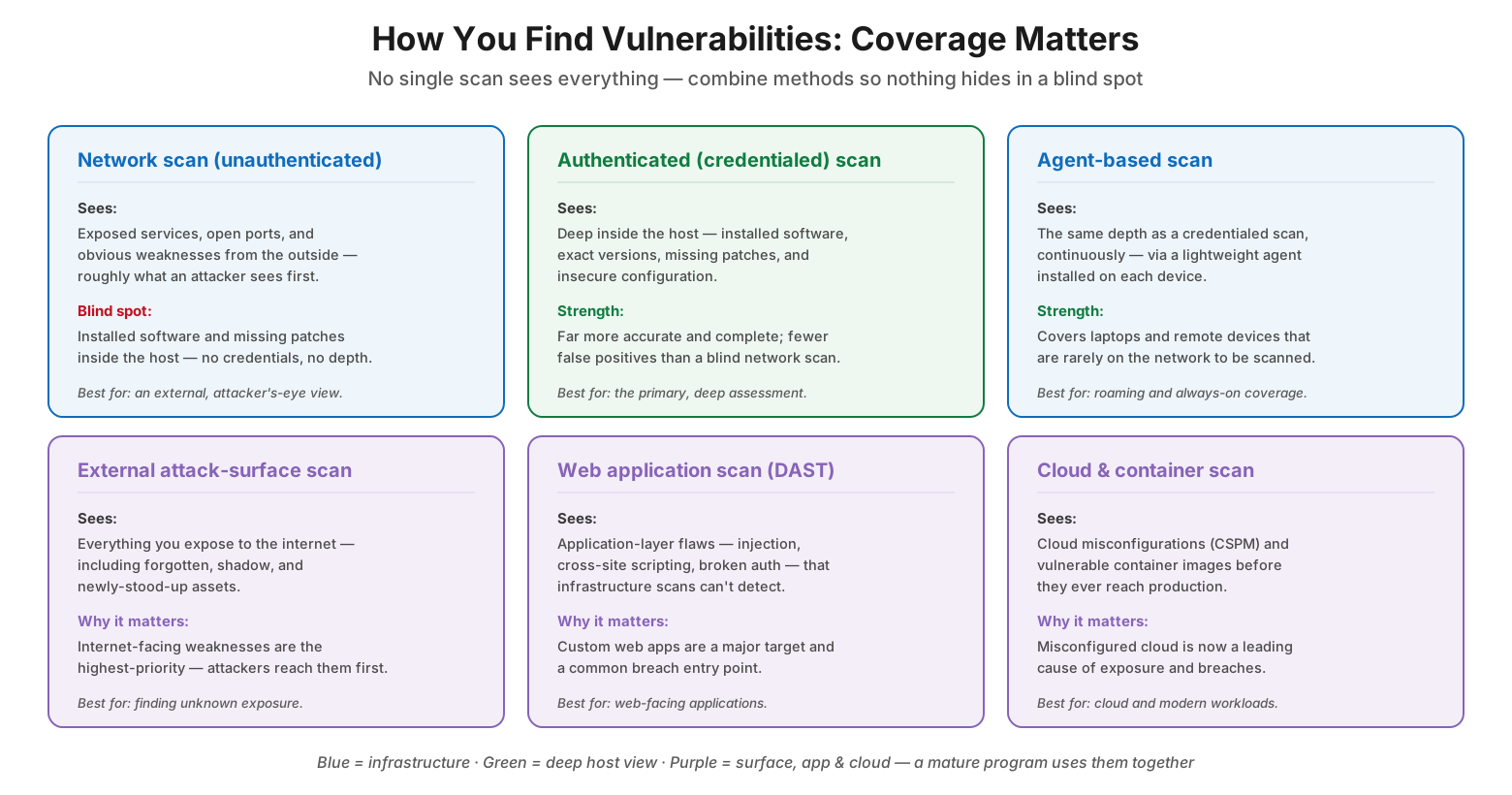
Different scanning methods reveal different things. An unauthenticated network scan sees exposed services, open ports, and obvious weaknesses from the outside — roughly what an attacker sees first — but has no visibility into the software and missing patches inside a host. An authenticated (credentialed) scan logs into the host and sees deep: installed software, exact versions, missing patches, and insecure configuration, with far greater accuracy and fewer false positives, making it the primary deep assessment. An agent-based scan achieves that same depth continuously through a lightweight agent, which is essential for laptops and remote devices that are rarely on the corporate network to be scanned. Beyond these, an external attack-surface scan finds everything exposed to the internet — including forgotten, shadow, and newly-stood-up assets — which matters enormously because internet-facing weaknesses are the highest priority. A web application scan (DAST) detects application-layer flaws like injection and cross-site scripting that infrastructure scanners cannot see, and custom web apps are a common breach entry point. And cloud and container scanning catches cloud misconfigurations and vulnerable container images before they reach production, now a leading cause of exposure. A mature program uses these methods together, because comprehensive coverage is what ensures the prioritization is working from a complete picture.
| Scan type | What it sees best | Key limitation |
|---|---|---|
| Network (unauthenticated) | External, attacker’s-eye view | No inside-host depth |
| Authenticated (credentialed) | Installed software, patches, config | Needs credentials; point-in-time |
| Agent-based | Continuous deep view, roaming devices | Requires agent deployment |
| External attack-surface | Internet exposure, shadow assets | Surface only, not internal |
| Web application (DAST) | Injection, XSS, app-layer flaws | Web apps only |
| Cloud & container | Misconfigurations, image vulns | Cloud/modern workloads only |
Three Ways to Handle a Vulnerability — Not Just “Patch It”
A persistent misconception is that handling a vulnerability always means installing a patch. In reality, a mature program chooses deliberately among three responses, because patching is not always possible, sufficient, or worth it.
Three ways to handle a vulnerability
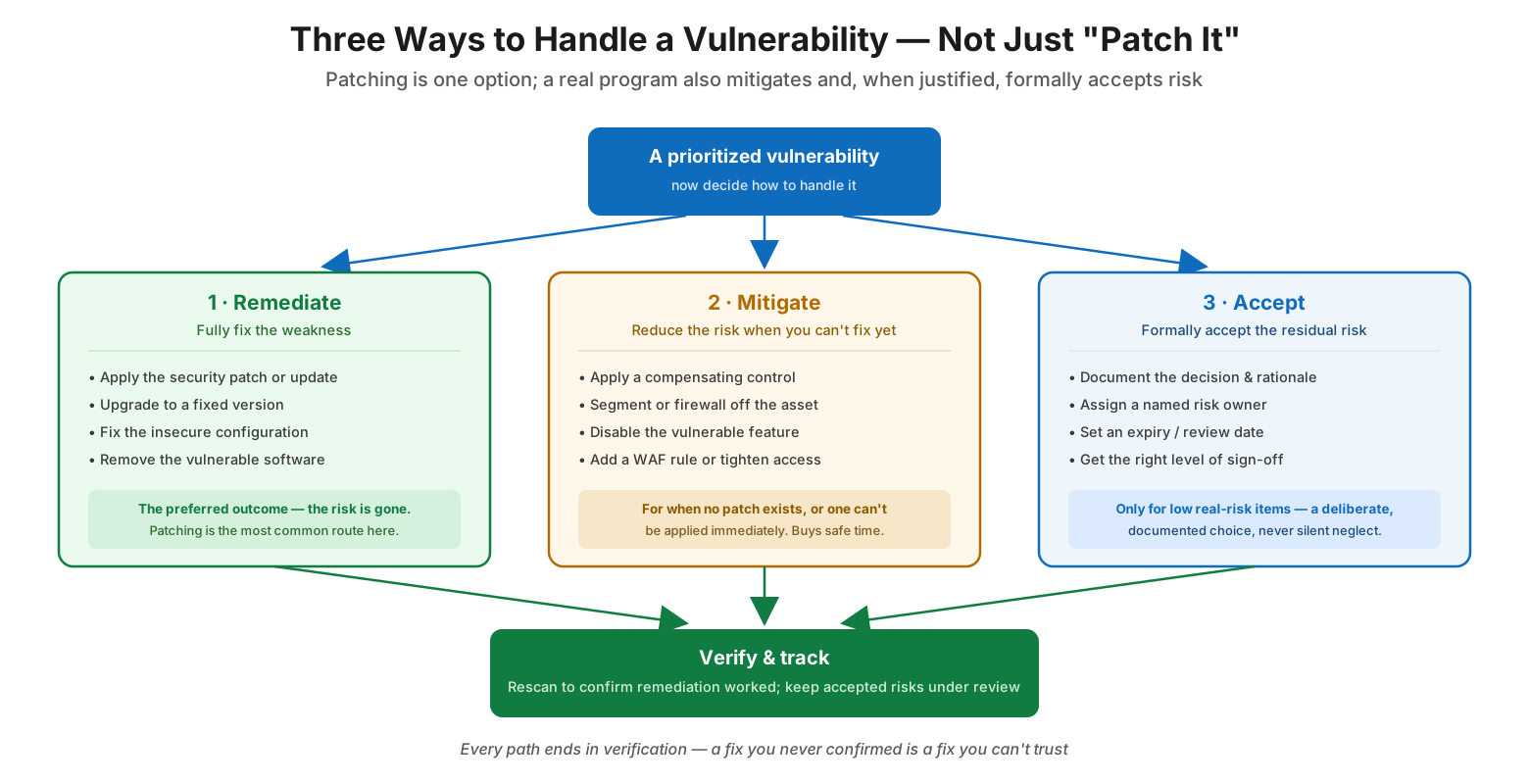
Once a vulnerability is prioritized, there are three legitimate ways to handle it. The first is to remediate — fully fix the weakness by applying the security patch or update, upgrading to a fixed version, correcting the insecure configuration, or removing the vulnerable software. This is the preferred outcome because the risk is genuinely eliminated, and patching is the most common route to it. The second is to mitigate — reduce the risk when you cannot fully fix it yet — by applying a compensating control, segmenting or firewalling off the asset, disabling the vulnerable feature, or adding a WAF rule or tighter access controls. Mitigation is for when no patch exists yet or one cannot be applied immediately, and it buys safe time. The third is to accept — formally accept the residual risk — but only for genuinely low-real-risk items, and only as a deliberate, documented decision: the rationale is recorded, a named risk owner is assigned, an expiry or review date is set, and the appropriate level of sign-off is obtained. Acceptance is a conscious choice, never silent neglect. Whichever path is chosen, all three converge on verification: rescan to confirm remediation worked and keep accepted risks under review. A fix you never confirmed is a fix you cannot trust.
Vulnerability Management Checklist
- Maintain a complete asset inventory; you cannot secure unknown assets.
- Run vulnerability management as a continuous loop, not a once-a-year scan.
- Use multiple scanning methods — authenticated, agent-based, external, web, and cloud.
- Prefer authenticated or agent-based scans for depth and accuracy.
- Prioritize by real risk: severity plus exploitability, exposure, and asset criticality.
- Treat actively-exploited (CISA KEV) vulnerabilities as emergencies.
- Don’t blindly chase CVSS scores — a high score on an unexposed asset isn’t urgent.
- Choose deliberately among remediate, mitigate, and accept for each finding.
- Use mitigations (controls, segmentation) when a patch isn’t yet available.
- Make risk acceptance formal: rationale, owner, expiry, and sign-off — never silent.
- Verify every fix by rescanning; don’t assume remediation succeeded.
- Set remediation SLAs by risk tier and measure MTTR, coverage, and risk trend.
Best Practices
A mature program sets remediation deadlines by risk tier, climbs from reactive scanning to a continuous capability, and measures the trend — not just the raw count.
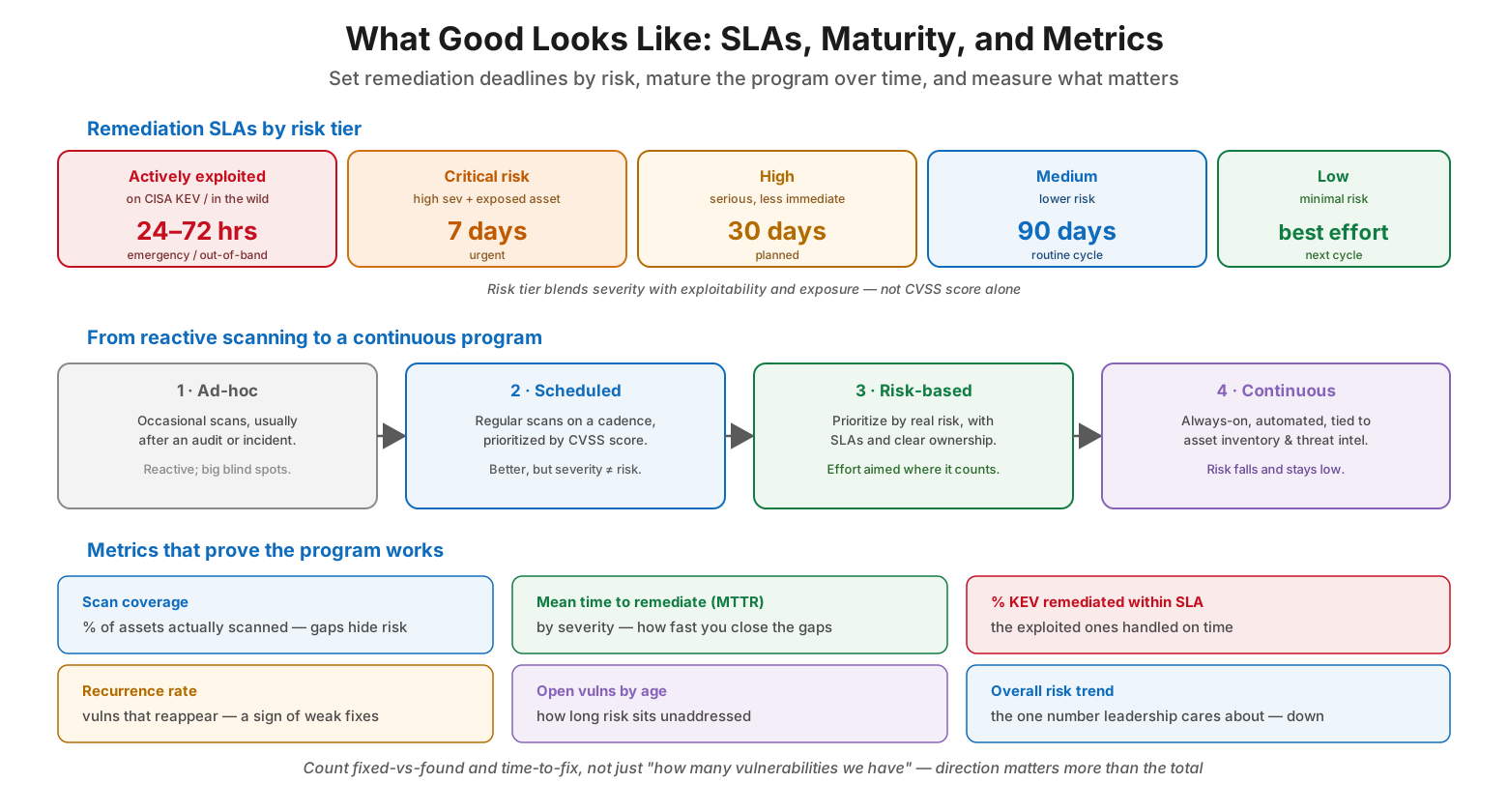
What good looks like — SLAs, maturity, and metrics
| Risk tier | Example criteria | Remediation SLA |
|---|---|---|
| Actively exploited | On CISA KEV / seen in the wild | 24–72 hours (emergency) |
| Critical risk | High severity + exposed asset | 7 days |
| High | Serious, less immediate | 30 days |
| Medium | Lower risk | 90 days |
| Low | Minimal risk | Best effort / next cycle |
Start with an accurate asset inventory. Every unknown asset is an unscanned, unmanaged risk. The discovery step underpins everything else, so invest in knowing what you have — across on-premises, cloud, and remote devices — before worrying about the findings.
Prioritize by risk, not by score. The defining skill of a good program is separating the dangerous few from the noisy many. Combine severity with exploitability, exposure, and asset criticality, and treat anything on the CISA KEV list as urgent regardless of its base score.
Achieve real coverage. Blind spots are where breaches begin. Combine authenticated or agent-based scanning for depth with external attack-surface, web-application, and cloud scanning for breadth, so the whole environment is actually seen.
Remediate, mitigate, or accept — on purpose. Recognize that patching is one option among three. When you cannot patch immediately, mitigate to buy safe time; when a risk is genuinely negligible, accept it formally with an owner and expiry. Avoid the two failure modes of patching-everything-blindly and ignoring-things-silently.
Always verify. Assume nothing about whether a fix worked. Rescan to confirm remediation, and keep accepted risks and mitigations under scheduled review so they don’t quietly become permanent gaps.
Set SLAs and measure trends. Define remediation deadlines by risk tier and track mean time to remediate, scan coverage, KEV-within-SLA, recurrence, and overall risk trend. What gets measured — and reported to leadership — gets fixed.
Common Mistakes
Treating a scan as the whole program. Running a scanner and filing the report is not vulnerability management. Without prioritization, remediation, verification, and repetition, a scan is just an unactioned list that ages into a false sense of security.
Prioritizing by CVSS alone. Sorting purely by severity floods the team with high-scoring but low-real-risk work while genuinely dangerous, actively-exploited flaws wait. Real-world exploitability and exposure must factor into the ranking.
Scanning without full coverage. Relying on a single scan type — say, unauthenticated network scans only — leaves installed-software, web-app, and cloud weaknesses invisible. Attackers find the blind spots you don’t scan.
Assuming everything must be patched. Insisting on patching as the only response paralyzes the program when no patch exists or one can’t be deployed. Mitigation and formal acceptance are legitimate, necessary tools.
Accepting risk silently. Quietly ignoring findings — as opposed to a documented, owned, time-bound acceptance — turns into an invisible backlog of exposure that no one is accountable for.
Never verifying fixes. Marking a vulnerability “remediated” without rescanning means unconfirmed and failed fixes accumulate unnoticed. Verification is what makes remediation trustworthy.
Frequently Asked Questions
What is vulnerability management? It is the continuous process of identifying, assessing, prioritizing, remediating, and verifying security weaknesses across an organization’s systems and software. It is a repeating lifecycle and a program — not a single scan or tool — aimed at steadily reducing real risk over time.
How is it different from patch management? Patch management is one method of remediation — installing updates to fix flaws. Vulnerability management is the broader program that finds and prioritizes weaknesses (including misconfigurations and web-app flaws that patches don’t address) and chooses among remediating, mitigating, or accepting each one. Patching is a tool within vulnerability management, not a synonym for it.
Why not just fix all the ****“Critical” ****vulnerabilities? Because CVSS severity alone doesn’t equal real risk. Most high-scoring vulnerabilities are never exploited, and a critical-rated flaw on an isolated, non-critical asset may be far less urgent than a medium-rated one that is internet-facing and actively exploited. Risk-based prioritization — factoring in exploitability, exposure, and asset criticality — directs effort where it actually reduces risk.
What is the CISA KEV catalog, and why does it matter? The CISA Known Exploited Vulnerabilities catalog lists vulnerabilities confirmed to be actively exploited by attackers. Because these represent proven, real-world danger, they should be treated as emergencies and remediated fastest, regardless of their base severity score.
What if we can’t patch a vulnerability right away? Mitigate it. Apply a compensating control such as network segmentation, disabling the vulnerable feature, tightening access, or adding a WAF rule. Mitigation reduces the risk and buys safe time until a permanent fix can be applied. Formal, documented risk acceptance is a further option for genuinely low-risk items.
How do we know our program is working? Measure it. Track scan coverage (the percentage of assets actually scanned), mean time to remediate by severity, the percentage of KEV items fixed within SLA, recurrence rate, the age of open vulnerabilities, and — most importantly — the overall risk trend, which should be declining. Direction matters more than the raw count of vulnerabilities.
Conclusion
Vulnerability management is where security either quietly succeeds or quietly fails. The weaknesses are always there — in unpatched software, misconfigured cloud services, and aging web applications — and new ones arrive every day. What determines whether they become breaches is not whether an organization owns a scanner, but whether it runs a genuine program: a continuous loop of discovering assets, finding weaknesses, prioritizing by real risk, handling each one deliberately, verifying the result, and measuring the trend. A scan is a snapshot; the program is the protection.
The two ideas that most improve a program are prioritizing by risk rather than by raw severity, and recognizing that handling a vulnerability means choosing thoughtfully among remediation, mitigation, and formal acceptance rather than assuming everything must be patched. Combine those with comprehensive scanning coverage, risk-tiered SLAs, verification of every fix, and metrics that show risk falling over time, and vulnerability management becomes what it should be: not an impossible race to zero vulnerabilities, but a disciplined, continuous reduction of the risks that actually matter — closing the doors that attackers would otherwise walk through, before they do.
References
- NIST SP 800-53 Rev. 5 — RA-5 Vulnerability Monitoring and Scanning
- NIST Cybersecurity Framework 2.0 — Identify and Protect functions
- CISA — Known Exploited Vulnerabilities (KEV) Catalog
- FIRST — Common Vulnerability Scoring System (CVSS)
- FIRST — Exploit Prediction Scoring System (EPSS)
- CIS Critical Security Controls — Control 7: Continuous Vulnerability Management
- NIST National Vulnerability Database (NVD)
On this page
- Executive Summary
- Vulnerability Management Is a Continuous Loop
- Risk-Based Prioritization: Fix What Actually Matters First
- How You Find Vulnerabilities: Coverage Matters
- Three Ways to Handle a Vulnerability — Not Just “Patch It”
- Vulnerability Management Checklist
- Best Practices
- Common Mistakes
- Frequently Asked Questions
- Conclusion
- References