Security Monitoring Best Practices: Turning Logs Into Real Detection
Most organizations collect security data. Far fewer actually detect threats with it.
- Content owner
- Insyto Content Team
- Editorial reviewer
- Ritesh Mhatre
- Technical reviewer
- Navish Ansari
- Next review
- To be scheduled
- Last reviewed
- Review pending
- Technical level
- Intermediate · CISOs, security teams, IT directors
Executive Summary
Most organizations collect security data. Far fewer actually detect threats with it. The gap between the two is where breaches hide — in the difference between a warehouse of logs that nobody analyzes and a disciplined program that turns those logs into timely, high-confidence detections of real attacks. Security monitoring, done well, is not a product you switch on but a set of engineering practices applied end to end: collecting the right data, centralizing and enriching it, building purposeful detections for the behaviors attackers exhibit, tuning those detections so analysts can trust them, and protecting the underlying logs so they hold up when investigation matters. Getting any one of these stages wrong weakens the whole chain.
The single most important shift is from passive logging to active detection engineering. “Log everything and hope we’ll notice” is data hoarding, not security; it produces expensive storage and a false sense of safety while nobody is genuinely looking for threats. The alternative is to engineer a specific detection for each threat the organization cares about — brute-force attacks, privilege escalation, persistence, lateral movement, credential theft, exfiltration, ransomware, cloud abuse — and to map that coverage against a framework like MITRE ATT&CK so the blind spots become visible and measurable. Equally decisive is the relentless pursuit of signal over noise: detections that are too sensitive drown analysts in false positives until they tune out the real alerts, while detections that are too loose miss attacks silently. And underpinning all of it is unglamorous log hygiene — integrity, retention, secure centralization, and time synchronization — without which detection and investigation simply fall apart.
This vendor-neutral guide sets out how to do security monitoring well. It walks the end-to-end monitoring pipeline and the best practice at each stage, explains detection engineering with a catalog of high-value use cases, shows how to map detection coverage to the attack lifecycle and find the gaps, describes how to tune detections for the sweet spot between noise and blindness, and covers the log-management practices that make everything else possible. The throughline is that effective security monitoring is a discipline of quality, not quantity — fewer, better detections and cleaner, better-protected data beat more logs and more alerts every time.
Effective Security Monitoring: Get Every Stage Right
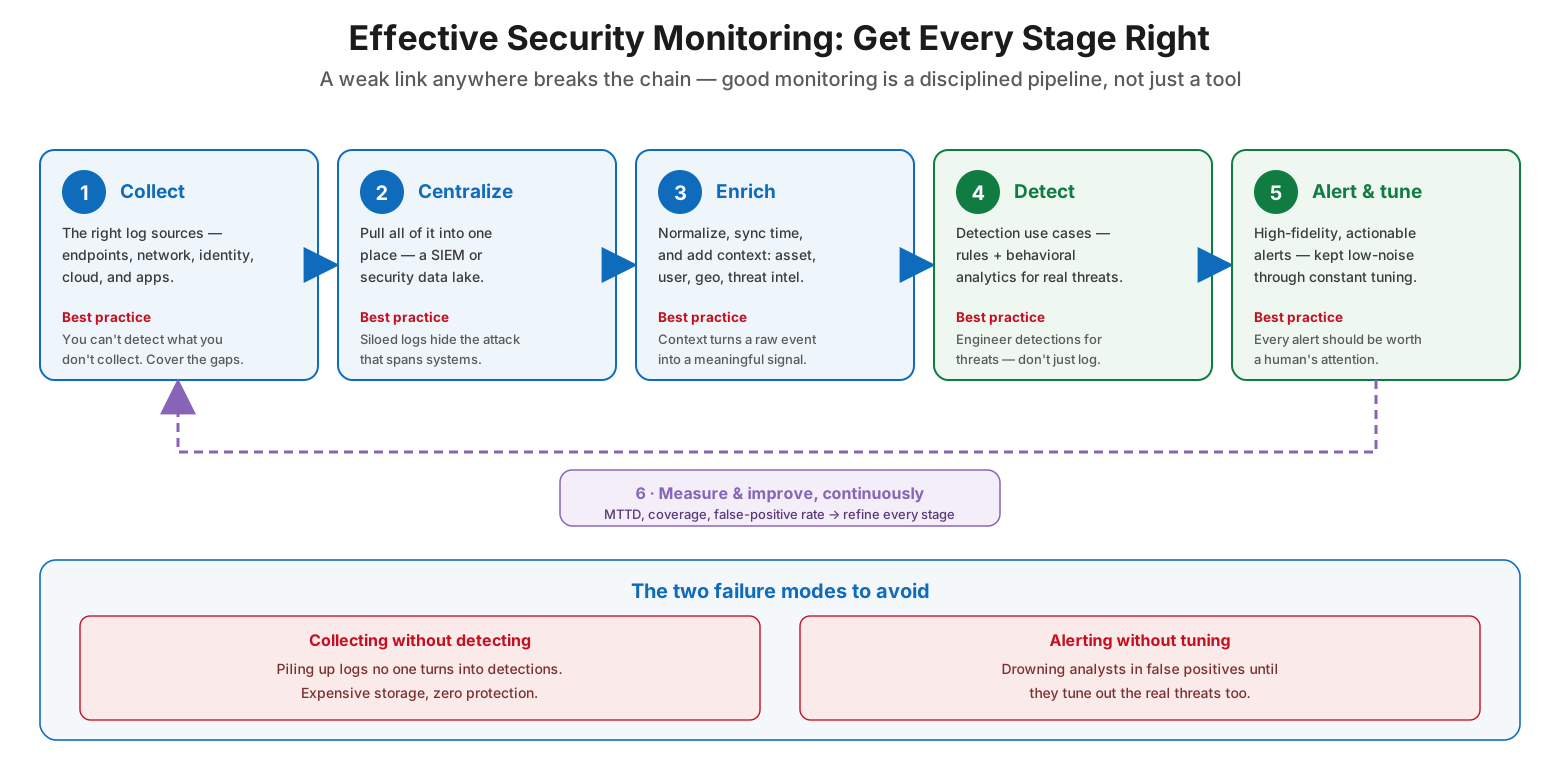
Security monitoring is best understood as a pipeline, where the output is only as good as the weakest stage. Applying best practice at each step is what separates a program that detects threats from one that merely accumulates data.
Effective security monitoring: get every stage right
The pipeline runs through several stages, each with its own discipline. Collect the right log sources — endpoints, network, identity, cloud, and applications — because you cannot detect what you do not collect, so covering the gaps comes first. Centralize all of it into one place, a SIEM or security data lake, since siloed logs hide the attack that spans multiple systems. Enrich the data: normalize it, synchronize time, and add context such as asset, user, geography, and threat intelligence, because context turns a raw event into a meaningful signal. Detect using purposeful detection use cases — rules plus behavioral analytics for real threats — rather than merely logging and hoping. Alert and tune so that alerts are high-fidelity and actionable, kept low-noise through constant tuning, with every alert worth a human’s attention. And measure and improve continuously, tracking metrics like mean time to detect, coverage, and false-positive rate to refine every stage. Two failure modes bracket this pipeline and must be avoided: collecting without detecting — piling up logs no one turns into detections, which is expensive storage with zero protection — and alerting without tuning, which drowns analysts in false positives until they tune out the real threats too.
Detection Engineering: From Logging to Detecting
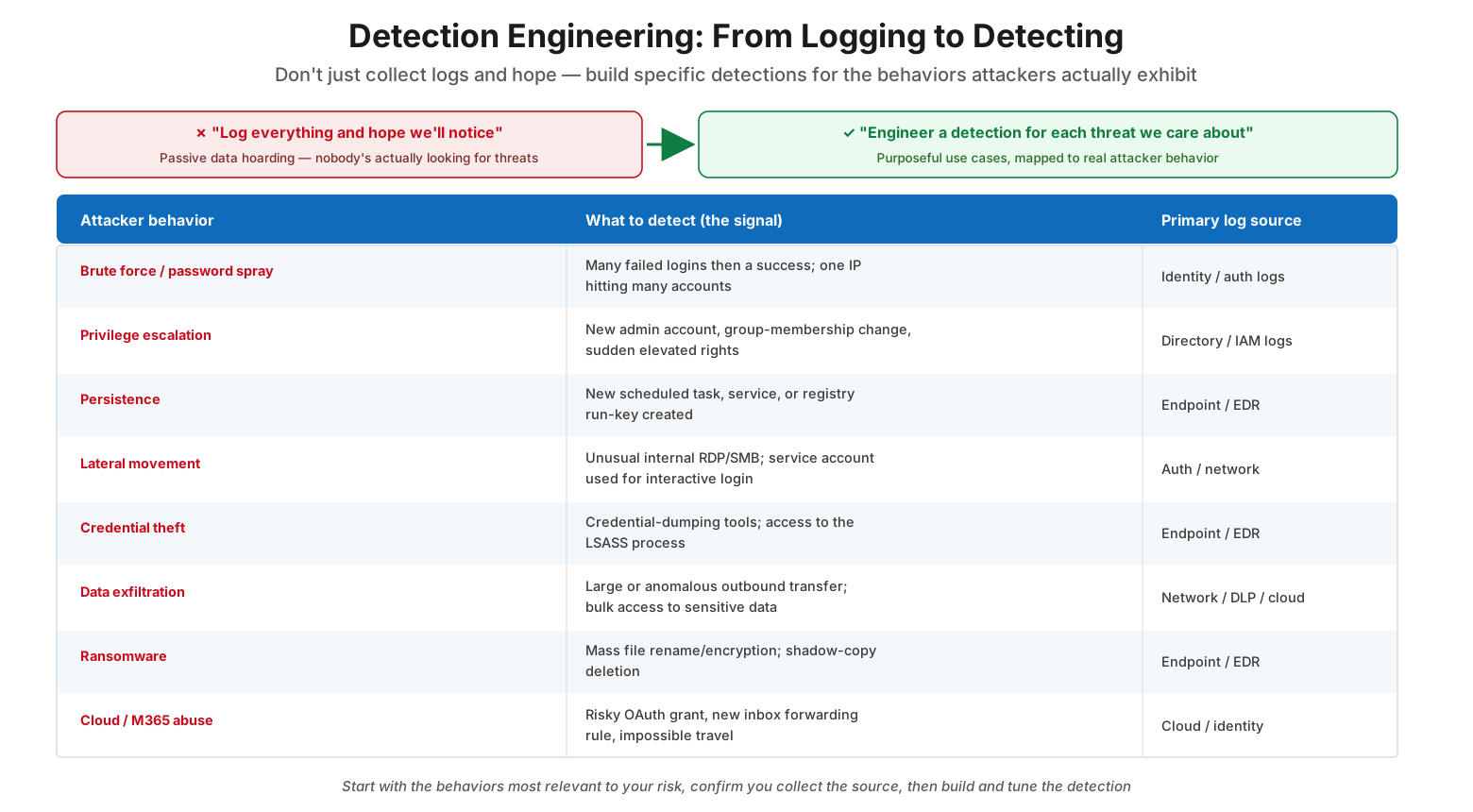
The heart of good monitoring is detection engineering — the deliberate practice of building detections for specific threats. Reframing monitoring from data collection to threat detection is what makes it effective.
Detection engineering: from logging to detecting
The mindset shift is from “log everything and hope we’ll notice” — passive data hoarding where nobody is actually looking for threats — to “engineer a detection for each threat we care about,” building purposeful use cases mapped to real attacker behavior. A useful way to design these is to work from attacker behavior to the signal that reveals it to the log source that carries it. Brute force or password spray shows up as many failed logins followed by a success, or one IP hitting many accounts, in identity and authentication logs. Privilege escalation appears as a new admin account, a group-membership change, or suddenly elevated rights, in directory and IAM logs. Persistence surfaces as a new scheduled task, service, or registry run-key, in endpoint and EDR data. Lateral movement looks like unusual internal RDP or SMB activity, or a service account used for interactive login, in authentication and network logs. Credential theft manifests as credential-dumping tools or access to the LSASS process, on the endpoint. Data exfiltration is a large or anomalous outbound transfer, or bulk access to sensitive data, in network, DLP, and cloud logs. Ransomware shows as mass file rename and encryption or shadow-copy deletion, on the endpoint. And cloud or Microsoft 365 abuse appears as a risky OAuth grant, a new inbox forwarding rule, or impossible travel, in cloud and identity logs. The practical approach is to start with the behaviors most relevant to your risk, confirm you actually collect the required source, and then build and tune the detection.
| Attacker behavior | What to detect | Primary log source |
|---|---|---|
| Brute force / password spray | Many failed logins then success; one IP, many accounts | Identity / auth |
| Privilege escalation | New admin, group change, elevated rights | Directory / IAM |
| Persistence | New scheduled task, service, registry run-key | Endpoint / EDR |
| Lateral movement | Unusual RDP/SMB; service account interactive login | Auth / network |
| Credential theft | Credential-dumping tools; LSASS access | Endpoint / EDR |
| Data exfiltration | Large/anomalous outbound; bulk sensitive-data access | Network / DLP / cloud |
| Ransomware | Mass file encryption; shadow-copy deletion | Endpoint / EDR |
| Cloud / M365 abuse | Risky OAuth, new forwarding rule, impossible travel | Cloud / identity |
Map Detections to the Attack Lifecycle
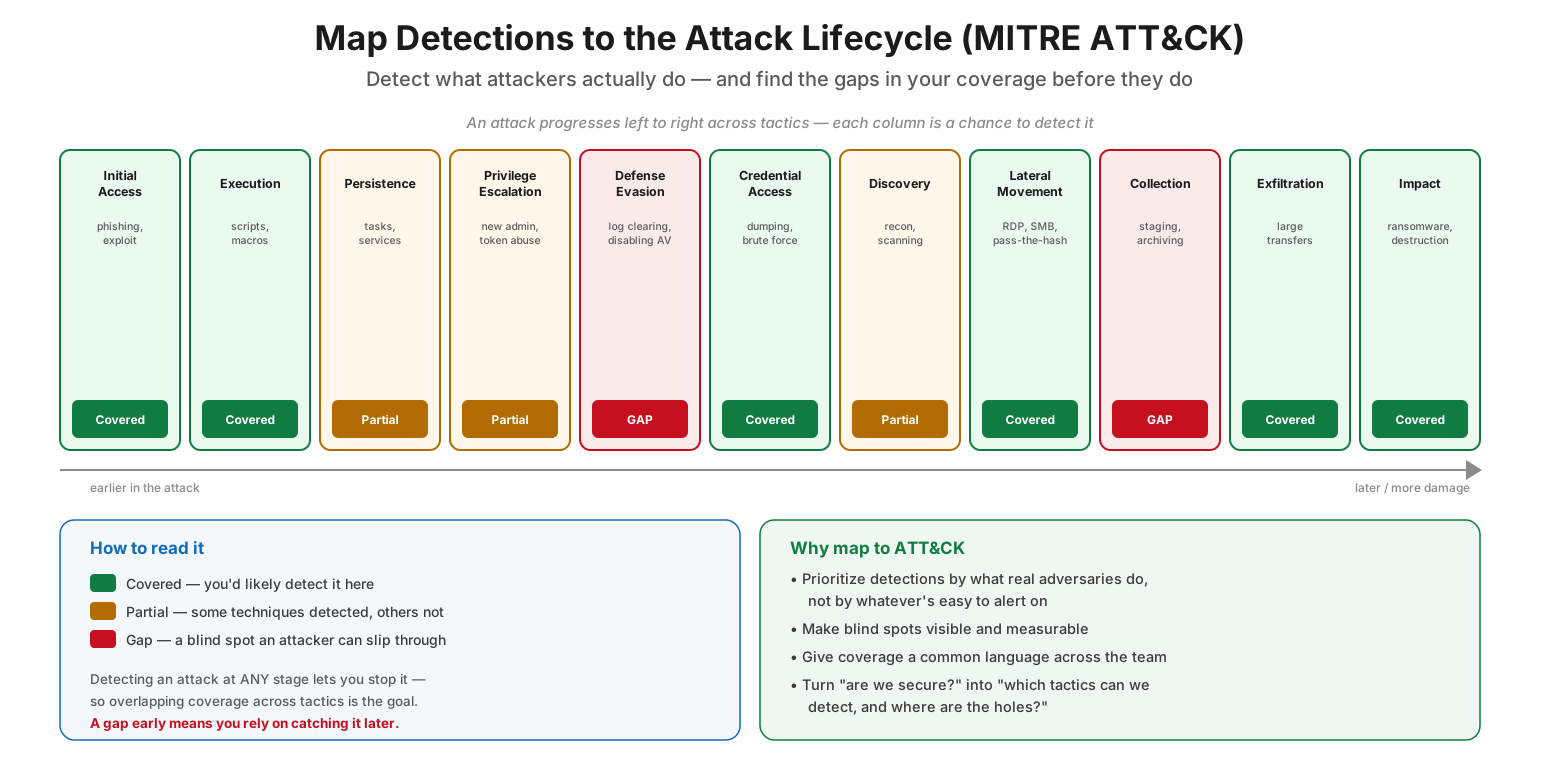
Building detections one at a time is good; knowing whether they add up to real coverage is better. Mapping detections against the MITRE ATT&CK framework turns a scattered collection of rules into a measurable picture of what you can and cannot see.
Map detections to the attack lifecycle (MITRE ATT&CK)
An attack progresses across tactics — from Initial Access and Execution, through Persistence, Privilege Escalation, Defense Evasion, Credential Access, Discovery, and Lateral Movement, to Collection, Exfiltration, and Impact — and each tactic is a chance to detect the intrusion. Mapping your detections to these tactics reveals coverage as a spectrum: some tactics are well covered (you’d likely catch an attack there), some are only partially covered (you detect certain techniques but not others), and some are outright gaps — blind spots an attacker can slip through. Because detecting an attack at any stage lets you stop it, overlapping coverage across tactics is the goal, and a gap early in the lifecycle means you’re relying on catching the intrusion later, after more damage is done. The value of mapping to ATT&CK is fourfold: it lets you prioritize detections by what real adversaries actually do rather than by whatever is easy to alert on; it makes blind spots visible and measurable; it gives coverage a common language across the team; and it turns the vague question “are we secure?” into the concrete one “which tactics can we detect, and where are the holes?” That reframing is what makes monitoring improvement systematic rather than ad hoc.
Signal Over Noise: Tune for the Sweet Spot
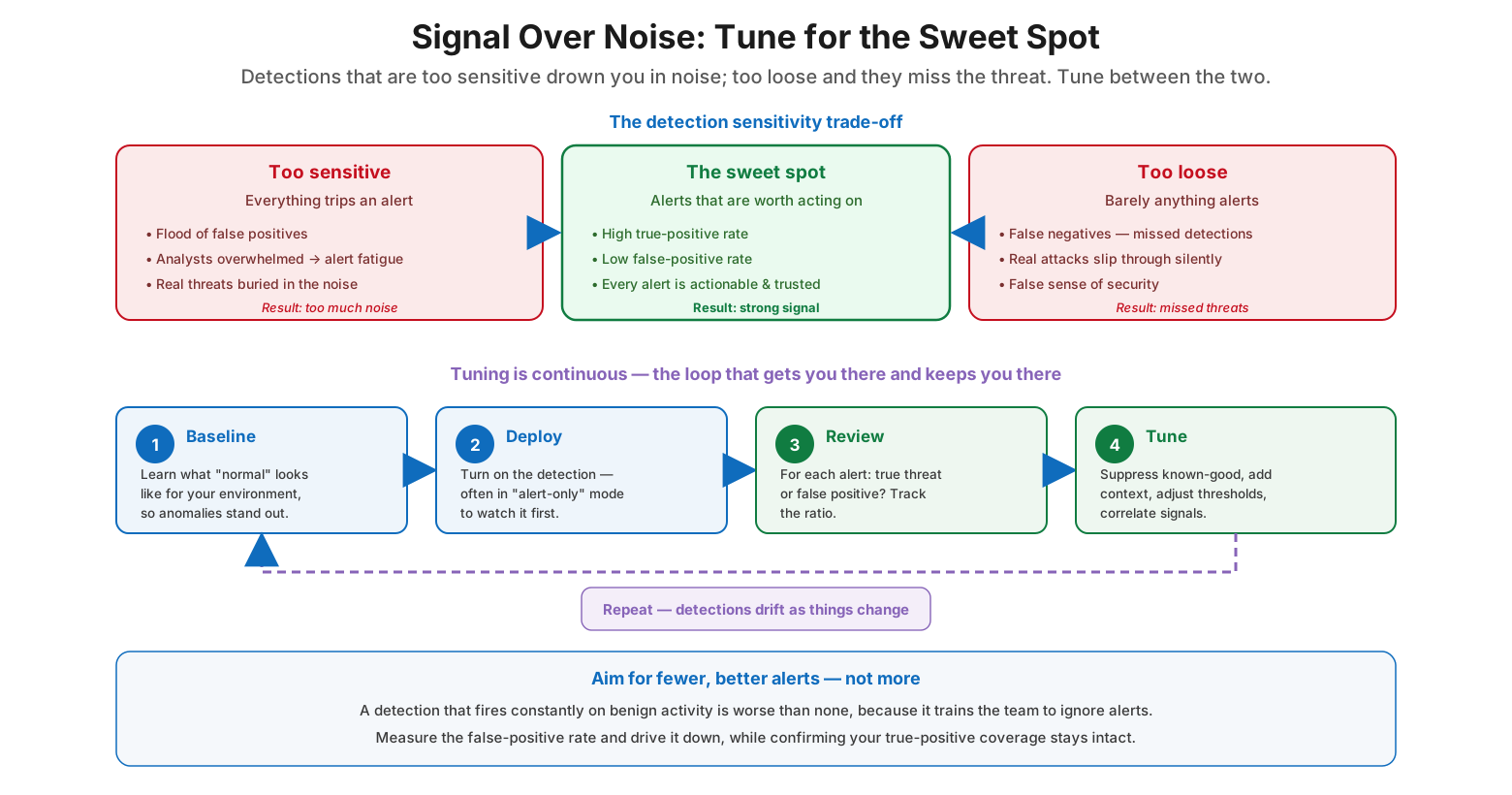
A detection is only as valuable as it is trustworthy, and trust is destroyed by noise. Tuning detections to the balance point between too much noise and too little sensitivity is one of the most important — and most neglected — monitoring practices.
Signal over noise: tune for the sweet spot
Every detection sits on a sensitivity trade-off. A detection that is too sensitive trips on everything, producing a flood of false positives that overwhelms analysts, causes alert fatigue, and buries real threats in the noise — too much noise. A detection that is too loose barely fires at all, producing false negatives where real attacks slip through silently and leave a false sense of security — missed threats. The sweet spot in between produces alerts that are worth acting on: a high true-positive rate, a low false-positive rate, and every alert actionable and trusted. Reaching and holding that sweet spot is a continuous loop. First, baseline what “normal” looks like for your environment so anomalies stand out. Second, deploy the detection, often in alert-only mode to watch it before acting. Third, review each alert as a true threat or a false positive and track the ratio. Fourth, tune — suppress known-good activity, add context, adjust thresholds, and correlate signals — then repeat, because detections drift as the environment changes. The governing principle is to aim for fewer, better alerts, not more: a detection that fires constantly on benign activity is worse than none, because it trains the team to ignore alerts. Measure the false-positive rate and drive it down while confirming your true-positive coverage stays intact.
| Tuning step | What you do | Purpose |
|---|---|---|
| Baseline | Learn what’s normal for your environment | Make anomalies stand out |
| Deploy | Turn on the detection (often alert-only first) | Observe before acting |
| Review | Judge each alert: true threat or false positive | Track the signal ratio |
| Tune | Suppress known-good, add context, adjust, correlate | Raise fidelity; repeat |
The Logs Themselves: Protect, Retain, and Time-Sync
Detection engineering gets the attention, but it rests on a foundation of log hygiene that quietly determines whether any of it works when it counts. These practices are unglamorous and frequently overlooked — and decisive.
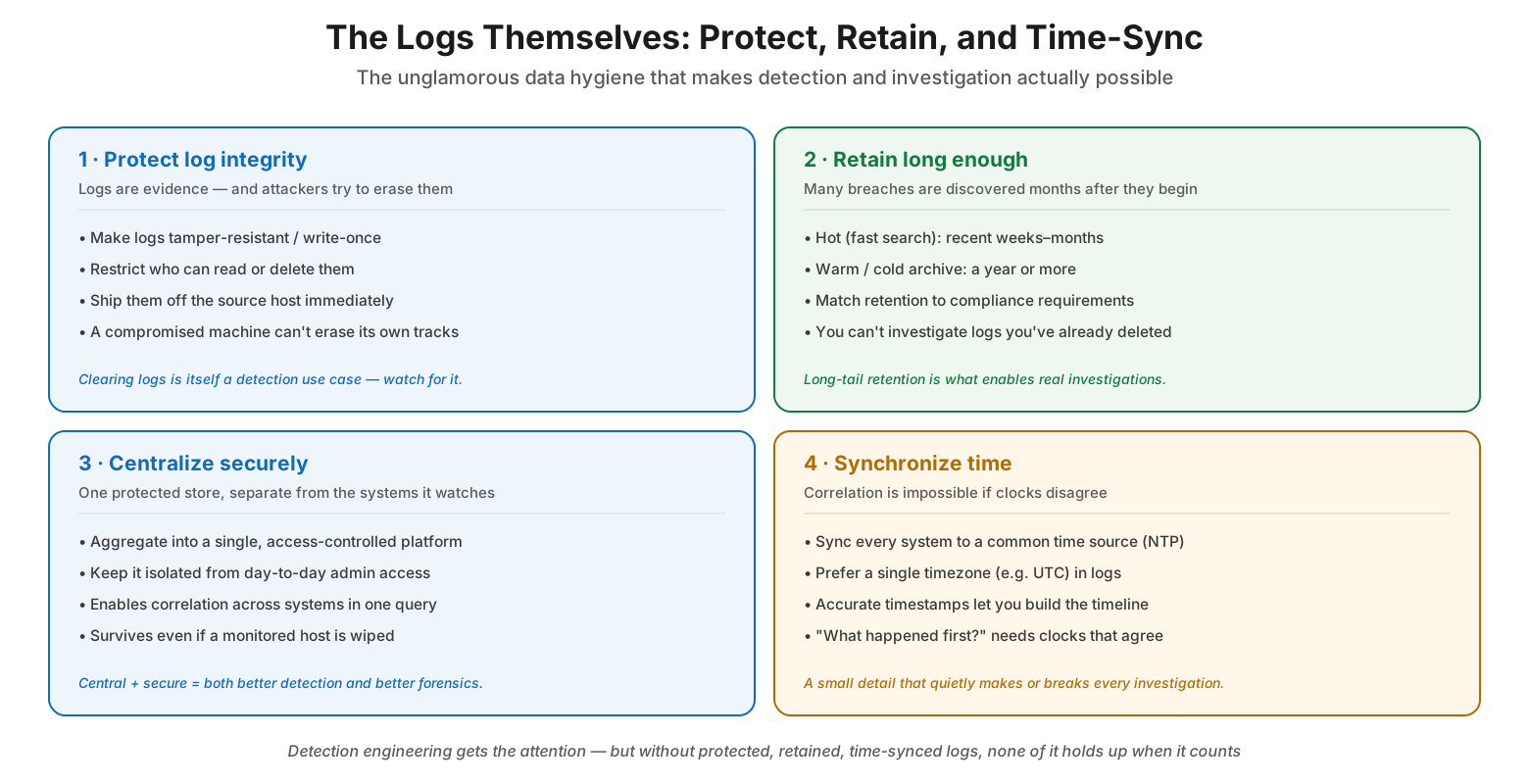
The logs themselves: protect, retain, and time-sync
Four practices protect the data that everything else depends on. First, protect log integrity: logs are evidence, and attackers actively try to erase them, so make logs tamper-resistant or write-once, restrict who can read or delete them, and ship them off the source host immediately, since a compromised machine must not be able to erase its own tracks — indeed, log clearing is itself a detection use case worth watching for. Second, retain long enough: because many breaches are discovered months after they begin, keep recent logs “hot” for fast search over weeks to months, archive them “warm” or “cold” for a year or more, and match retention to compliance requirements, remembering that you cannot investigate logs you’ve already deleted. Third, centralize securely: aggregate everything into a single, access-controlled platform kept isolated from day-to-day admin access, which both enables correlation across systems in one query and ensures the logs survive even if a monitored host is wiped. Fourth, synchronize time: sync every system to a common time source via NTP and prefer a single timezone such as UTC in logs, because accurate, agreeing timestamps are what let you build a coherent timeline — answering “what happened first?” is impossible if clocks disagree. Detection engineering may be the headline, but without protected, retained, time-synced logs, none of it holds up.
Security Monitoring Best-Practices Checklist
- Collect the right log sources across endpoints, network, identity, cloud, and apps.
- Centralize all logs into one platform; don’t leave them siloed.
- Enrich events with context and threat intelligence, and normalize formats.
- Engineer specific detections for real threats — don’t just collect and hope.
- Design detections from attacker behavior to signal to log source.
- Map detection coverage to MITRE ATT&CK and close the gaps.
- Prioritize detections by what adversaries actually do, not by what’s easy.
- Tune detections continuously toward high true-positive, low false-positive.
- Aim for fewer, better, trusted alerts — not more.
- Protect log integrity: tamper-resistant, restricted, and off the source host.
- Retain logs long enough (hot + archive) for investigation and compliance.
- Synchronize time across all systems so events can be correlated.
Best Practices
Detection gets the attention, but it rests on log hygiene — protect, retain, centralize, and time-sync the data, or none of it holds up when it counts.
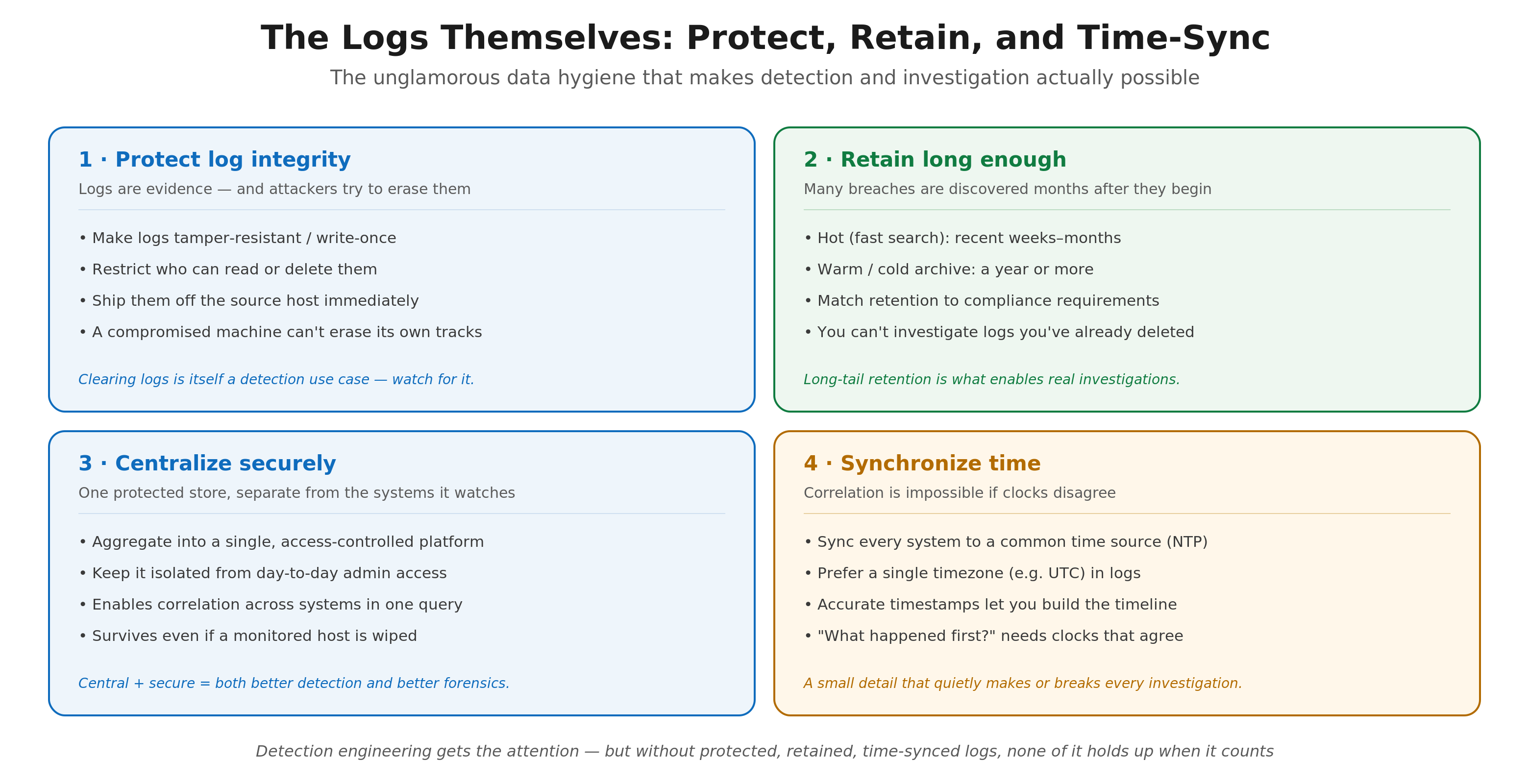
The logs themselves: protect, retain, and time-sync
| Log practice | What to do | Why it matters |
|---|---|---|
| Protect integrity | Tamper-resistant, restricted, off-host | Attackers try to erase logs |
| Retain long enough | Hot weeks–months; archive a year+ | Breaches found months later |
| Centralize securely | One access-controlled store, isolated | Correlation + survives host wipe |
| Synchronize time | Common NTP source, single timezone | Timelines need clocks that agree |
Engineer detections, don’t just log. The defining practice of effective monitoring is building purposeful detections for specific threats rather than passively collecting data. Work from the attacker behaviors you care about to the signals and sources that reveal them.
Measure coverage against ATT&CK. Map your detections to the attack lifecycle so you can see, in concrete terms, which tactics you can detect and where the blind spots are. This turns monitoring improvement into a prioritized, measurable activity.
Tune relentlessly for signal. Treat noise as the enemy. Continuously baseline, review, and tune detections toward a high true-positive and low false-positive rate, because a flood of false alerts destroys the very trust that makes monitoring work.
Aim for quality over quantity. Fewer, better detections and alerts beat more of them. A handful of high-fidelity detections analysts trust protects far more than hundreds of noisy rules everyone ignores.
Protect and retain your logs. Ship logs off their source hosts to a secure central store, make them tamper-resistant, and retain them long enough to investigate breaches discovered months later. Logs are both your detection fuel and your forensic evidence.
Synchronize time everywhere. Ensure all systems share an accurate, common time source and timezone. Correlation and timeline reconstruction — the backbone of investigation — depend entirely on timestamps that agree.
Common Mistakes
Collecting logs without detecting. Aggregating vast quantities of logs while building no detections is data hoarding, not security. It costs money for storage and provides essentially no protection, because nobody is actually hunting for threats.
Chasing volume over quality. Adding ever more log sources and alert rules without tuning them creates a flood of noise that buries real threats. More data and more alerts are not the same as better detection.
Ignoring detection gaps. Alerting only on the threats that are easy to detect, without mapping coverage against what attackers actually do, leaves systematic blind spots. Unmeasured coverage means unknown exposure.
Never tuning detections. Deploying detections and leaving them untouched guarantees either an unmanageable false-positive rate or silent false negatives as the environment drifts. Tuning is a continuous requirement, not a one-time task.
Leaving logs on the source host. Storing logs only where they’re generated lets an attacker who compromises a system delete the evidence of their intrusion. Centralize logs off-host and protect their integrity.
Neglecting time synchronization and retention. Mismatched clocks make correlation impossible, and short retention means the logs are gone before a slow-burning breach is discovered. Both quietly cripple investigations.
Frequently Asked Questions
What’s the difference between logging and security monitoring? Logging is collecting and storing event data. Security monitoring is actively analyzing that data to detect threats. Many organizations log extensively but monitor poorly — they have the data but build few detections and rarely investigate. Effective monitoring is about turning logs into timely, trustworthy detections, not just accumulating them.
What is detection engineering? Detection engineering is the discipline of designing, building, testing, and tuning detections for specific threats. Instead of hoping to notice something in the logs, you deliberately create a detection for each attacker behavior you care about — mapping the behavior to the signal that reveals it and the log source that carries it.
Why map detections to MITRE ATT&CK? ATT&CK is a catalog of real adversary tactics and techniques. Mapping your detections to it shows which parts of the attack lifecycle you can detect and where the gaps are, lets you prioritize by what attackers actually do, and gives your team a common language for coverage. It turns “are we secure?” into a measurable question.
How do we reduce false positives without missing real threats? Through continuous tuning: baseline what’s normal, deploy detections in alert-only mode first, review each alert as true or false positive, then suppress known-good activity, add context, adjust thresholds, and correlate signals. The goal is the sweet spot — high true-positive and low false-positive — reached by iterating, not by turning detections off.
How long should we keep security logs? Keep recent logs readily searchable (“hot”) for weeks to months, and archive them for a year or more, guided by your compliance requirements and the reality that many breaches are discovered long after they start. You can only investigate incidents using logs you still have, so under-retaining is a common and costly mistake.
Why does time synchronization matter so much? Investigating an incident means reconstructing a timeline across many systems. If those systems’ clocks disagree, you cannot reliably tell what happened first or correlate related events. Synchronizing all systems to a common time source and timezone is a small step that underpins every investigation.
Conclusion
Security monitoring succeeds or fails on quality, not quantity. Collecting more logs and generating more alerts feels like progress but often produces the opposite: expensive storage that detects nothing, and a flood of noise that trains analysts to ignore the very alerts that matter. The organizations that actually catch attacks are the ones that treat monitoring as an engineering discipline — collecting the right data, centralizing and enriching it, and above all building purposeful detections for the specific behaviors that attackers exhibit, rather than hoarding data and hoping.
The best practices reinforce one another. Detection engineering gives monitoring a purpose; mapping coverage to the attack lifecycle makes its blind spots visible and prioritizes the work; relentless tuning keeps the signal strong and the analysts’ trust intact; and disciplined log hygiene — integrity, retention, secure centralization, and synchronized time — ensures the data holds up when detection and investigation depend on it. None of these are glamorous, and several are routinely neglected, which is exactly why doing them well is such an advantage. Aim for fewer and better detections, measure coverage against what adversaries really do, tune toward the sweet spot, and protect the logs beneath it all — and security monitoring becomes what it is meant to be: not a warehouse of data, but a reliable early-warning system that sees an attack in time to stop it.
References
- NIST SP 800-92 — Guide to Computer Security Log Management
- NIST Cybersecurity Framework 2.0 — Detect function
- MITRE ATT&CK — Adversary Tactics and Techniques
- CIS Critical Security Controls — Control 8: Audit Log Management
- SANS — Security Operations and Detection resources
- CISA — Cyber Threats and Advisories
- MITRE Engenuity — Center for Threat-Informed Defense
On this page
- Executive Summary
- Effective Security Monitoring: Get Every Stage Right
- Detection Engineering: From Logging to Detecting
- Map Detections to the Attack Lifecycle
- Signal Over Noise: Tune for the Sweet Spot
- The Logs Themselves: Protect, Retain, and Time-Sync
- Security Monitoring Best-Practices Checklist
- Best Practices
- Common Mistakes
- Frequently Asked Questions
- Conclusion
- References