Hybrid Infrastructure Management: Running On-Premises and Cloud as One Estate
Almost no organization of any size runs its technology in a single place anymore.
- Content owner
- Insyto Content Team
- Editorial reviewer
- Ritesh Mhatre
- Technical reviewer
- Navish Ansari
- Next review
- To be scheduled
- Last reviewed
- Review pending
- Technical level
- Intermediate · IT directors, network and infrastructure teams
Executive Summary
Almost no organization of any size runs its technology in a single place anymore. There is a data center or a server room, some workloads in one or more public clouds, a growing list of software-as-a-service applications, and increasingly compute pushed out to the edge — branches, stores, factories, and remote sites. This mixed environment is not a transitional state on the way to being “all cloud”; for the vast majority of organizations it is the permanent, deliberate reality, because each part exists for a good reason. Regulation keeps some data on-premises, latency and legacy systems resist migration, existing hardware still has value, and the cloud is genuinely better for elastic and new workloads. The result is a hybrid estate, and the central question is no longer “cloud or on-premises?” but “how do we manage all of it as one coherent environment?”
That question matters because the default answer — managing each environment separately with its own tools, teams, and rules — is where cost overruns and security breaches quietly accumulate. Every platform added multiplies complexity: a different console for on-premises, another for each cloud, inconsistent security policies, fragmented identity, no single view of what is running or what it costs, and skills split across teams that do not talk to each other. The gaps between these silos are exactly where problems hide. Managing hybrid infrastructure well means the opposite: applying consistent identity, security, networking, observability, and automation across every environment so that the organization runs one estate rather than four disconnected ones.
This vendor-neutral guide sets out how to do that. It explains why hybrid is the norm and what keeps each environment in the mix, contrasts the silo trap with the goal of unified management, lays out the five pillars of consistency, shows how to place workloads deliberately in the environment that fits them, and covers the cost governance and operating model that keep a hybrid estate from becoming expensive and fragmented. Grounded in established definitions of cloud and hybrid deployment, the goal is an estate that is consistently secured, fully visible, and no more costly than it needs to be — regardless of where any given workload happens to run.
Hybrid Is the Reality
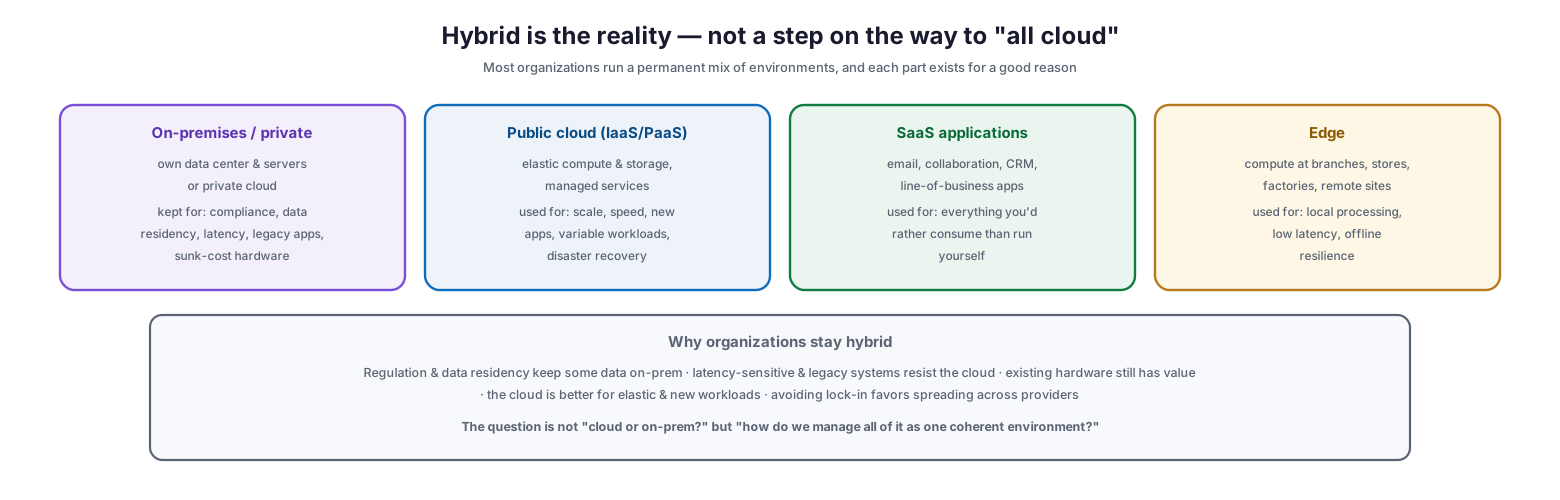
Before managing a hybrid estate, it helps to be clear about what it comprises and why each piece persists. Hybrid infrastructure spans on-premises and private cloud, public cloud services, SaaS applications, and edge computing, and organizations keep this mix intentionally.
Hybrid is the reality — not a step on the way to “all cloud”
On-premises and private cloud environments — an organization’s own data center, servers, or private cloud — are retained for compliance, data residency, latency, legacy applications, and the value of hardware already paid for. Public cloud, in its infrastructure and platform forms, provides elastic compute and storage and managed services, and is used for scale, speed, new applications, variable workloads, and disaster recovery. SaaS applications cover the email, collaboration, CRM, and line-of-business systems an organization would rather consume than run itself. And the edge places compute at branches, stores, factories, and remote sites for local processing, low latency, and offline resilience. The forces that keep this mix in place are durable: regulation and data residency anchor some data on-premises, latency-sensitive and legacy systems resist migration, existing hardware retains value, the cloud is better for elastic and new workloads, and spreading across providers avoids lock-in. Given all that, the practical question is simply how to manage the whole thing coherently.
| Environment | Typical use | Why it stays in the mix |
|---|---|---|
| On-premises / private cloud | Regulated data, legacy apps, steady workloads | Compliance, residency, latency, sunk-cost hardware |
| Public cloud (IaaS/PaaS) | Scale, new apps, variable load, DR | Elasticity, speed, managed services |
| SaaS applications | Email, collaboration, CRM, LOB apps | Consume rather than operate |
| Edge | Branches, stores, factories, remote sites | Local processing, low latency, offline resilience |
The Silo Trap and the Goal
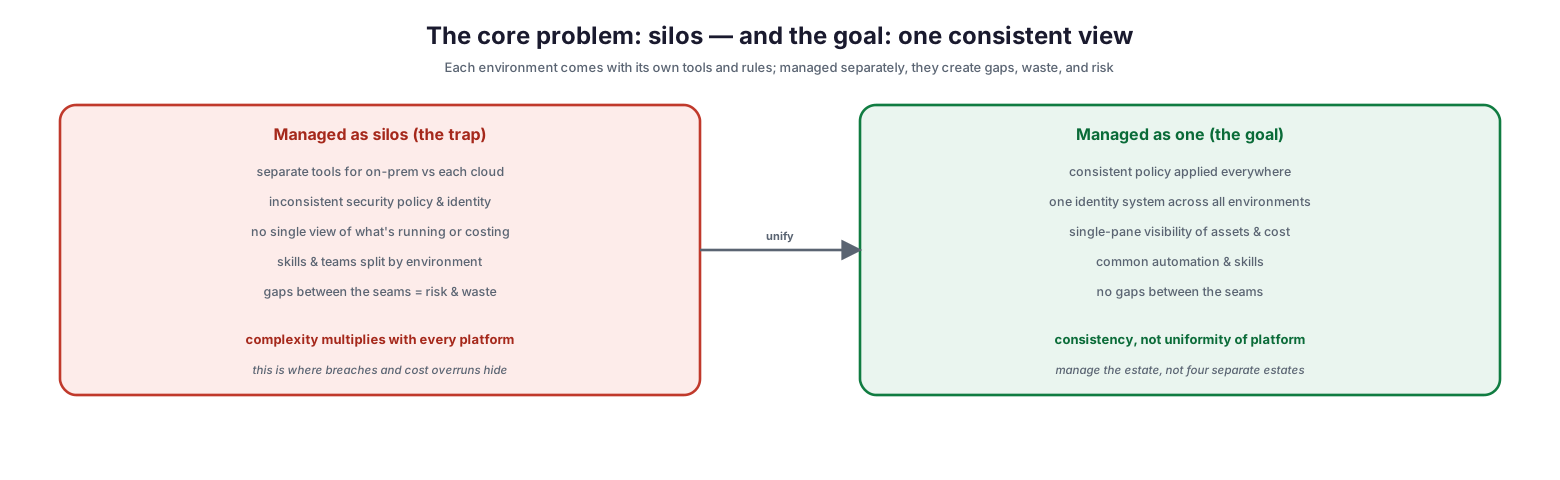
The defining challenge of hybrid infrastructure is not any single environment but the seams between them. Each platform arrives with its own management tools and its own way of doing things, and the tempting path is to manage each one on its own terms.
The core problem: silos — and the goal: one consistent view
Managed as silos, a hybrid estate becomes a trap: separate tools for on-premises and each cloud, inconsistent security policy and identity, no single view of what is running or what it is costing, and skills and teams split by environment — with the gaps between the seams becoming the places where risk and waste accumulate. Complexity multiplies with every platform added, and that complexity is precisely where breaches and cost overruns hide. The goal is to manage the estate as one: consistent policy applied everywhere, one identity system across all environments, single-pane visibility of assets and cost, common automation and skills, and no gaps between the seams. The crucial nuance is that the aim is consistency, not uniformity of platform. The organization does not need the same technology everywhere — it needs the same identity, policy, visibility, and process everywhere, so that it is managing one estate rather than four separate ones.
The Five Pillars of Consistency
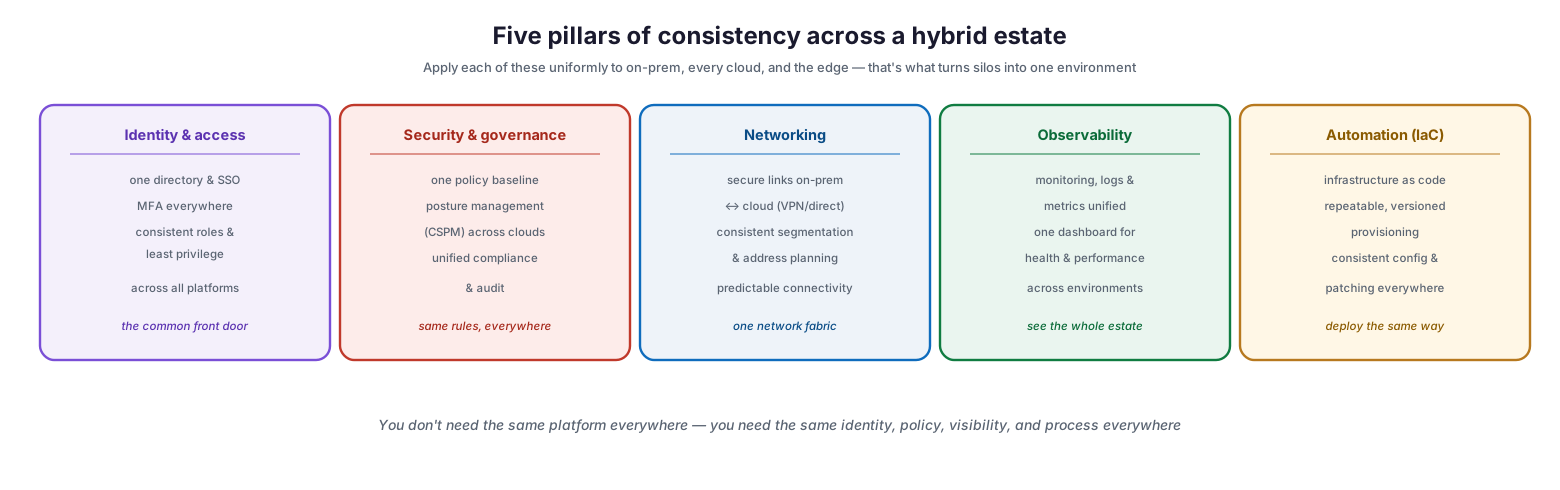
Turning a set of silos into one managed estate rests on applying five things uniformly — to on-premises, to every cloud, and to the edge. These pillars are what consistency actually means in practice.
Five pillars of consistency across a hybrid estate
Identity and access is the common front door: one directory and single sign-on, multi-factor authentication everywhere, and consistent roles and least-privilege access across all platforms, so a person’s access is governed the same way regardless of where the resource lives. Security and governance means one policy baseline, cloud security posture management across the clouds, and unified compliance and audit — the same rules enforced everywhere rather than reinvented per environment. Networking connects on-premises to cloud with secure links and applies consistent segmentation and address planning, so connectivity is predictable across the estate. Observability unifies monitoring, logs, and metrics into one view of health and performance, so the whole estate can be seen at once rather than through separate dashboards. And automation through infrastructure as code makes provisioning repeatable and versioned, applying consistent configuration and patching everywhere so environments are deployed and maintained the same way. Together these mean that although the underlying platforms differ, the way the organization secures, sees, connects, and operates them does not.
| Pillar | What consistency looks like |
|---|---|
| Identity & access | One directory, SSO, MFA, and roles across all environments |
| Security & governance | One policy baseline, posture management, unified compliance |
| Networking | Secure on-prem to cloud links, consistent segmentation |
| Observability | Unified monitoring, logs, and metrics in one view |
| Automation (IaC) | Repeatable, versioned provisioning and config everywhere |
Placing Workloads Deliberately
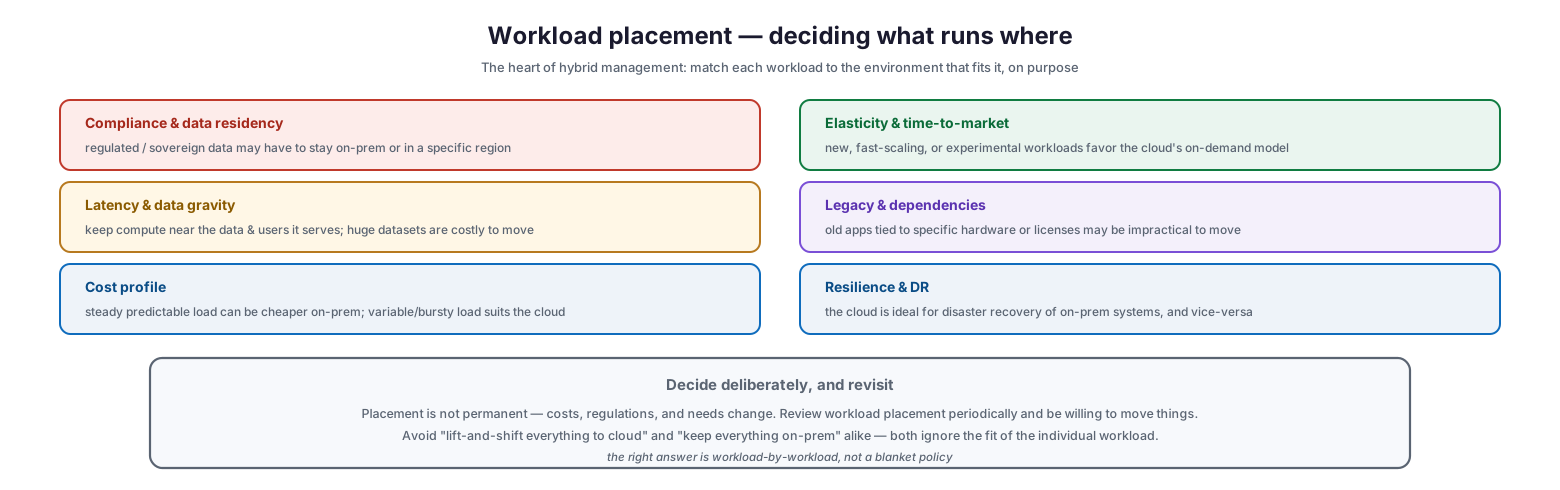
If consistency is how a hybrid estate is managed, workload placement is the decision at its heart: matching each workload to the environment that genuinely fits it, on purpose rather than by habit or blanket policy.
Workload placement — deciding what runs where
Several factors drive the decision. Compliance and data residency may require regulated or sovereign data to remain on-premises or within a specific region. Latency and data gravity argue for keeping compute near the data and users it serves, because moving large datasets is slow and costly. The cost profile matters: steady, predictable load can be cheaper on-premises, while variable or bursty load suits the cloud’s pay-for-use model. Elasticity and time-to-market favor the cloud for new, fast-scaling, or experimental workloads. Legacy applications and dependencies tied to particular hardware or licenses may be impractical to move. And resilience and disaster recovery often pair the two, with the cloud serving as recovery for on-premises systems and vice versa. The essential discipline is to decide deliberately and revisit regularly, because costs, regulations, and needs change — placement is not permanent. Both extremes are mistakes: “lift-and-shift everything to the cloud” and “keep everything on-premises” alike ignore the fit of the individual workload. The right answer is workload-by-workload, not a blanket rule.
| Factor | Points toward |
|---|---|
| Compliance / data residency | On-premises or specific cloud region |
| Latency / data gravity | Near the data and users it serves |
| Steady, predictable load | Often on-premises (cheaper at scale) |
| Variable / bursty load | Cloud (pay for what you use) |
| New / fast-scaling workloads | Cloud (elasticity, speed) |
| Legacy dependencies | Wherever they can realistically run |
Governing Cost and Running It as One
The flexibility of hybrid infrastructure is also its danger: without discipline, it becomes expensive and fragmented. Two things keep that from happening — cost governance and a unified operating model.
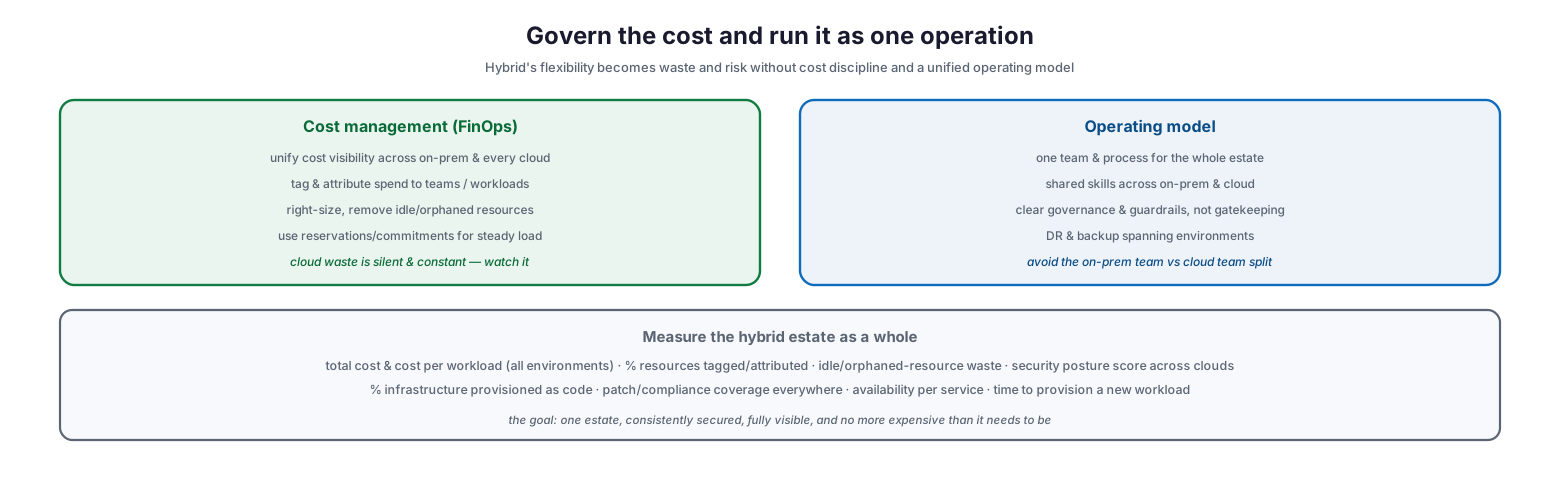
Govern the cost and run it as one operation
Cost management, often practiced as FinOps, starts with unifying cost visibility across on-premises and every cloud, then tagging and attributing spend to teams and workloads so it is clear who is spending what. From there it means right-sizing resources, removing idle and orphaned assets, and using reservations or commitments for steady load. The reason this matters is that cloud waste is silent and constant — resources left running, over-provisioned, or forgotten accrue cost every hour without anyone noticing until the bill arrives. The operating model is the other half: one team and process for the whole estate, shared skills across on-premises and cloud, clear governance and guardrails rather than gatekeeping, and disaster recovery and backup that span environments. The failure mode to avoid is the organizational split of an “on-premises team” against a “cloud team,” each optimizing its own domain while the estate as a whole goes unmanaged. Measured as a whole — total and per-workload cost across all environments, tagging coverage, waste, security posture, infrastructure-as-code adoption, patch and compliance coverage, and availability — the estate can be run as what it is: one thing.
Hybrid Infrastructure Management Checklist
- Treat the estate as one environment, not a collection of separately managed silos.
- Establish one identity system with SSO and MFA applied consistently across on-prem and every cloud.
- Define a single security policy baseline and enforce it everywhere, with posture management across clouds.
- Connect environments with secure links and apply consistent network segmentation and address planning.
- Unify monitoring, logs, and metrics into a single view of the whole estate.
- Adopt infrastructure as code so provisioning, configuration, and patching are repeatable everywhere.
- Place each workload deliberately based on compliance, latency, cost, elasticity, and dependencies.
- Revisit workload placement periodically; be willing to move workloads as conditions change.
- Unify cost visibility, tag and attribute spend, and eliminate idle and orphaned resources.
- Use commitments for steady load and right-size continuously to control cost.
- Run the estate with one team, shared skills, and clear governance guardrails.
- Ensure disaster recovery and backup span environments, and measure the estate as a whole.
Best Practices
Manage for consistency, not uniformity. You will never run the same platform everywhere, and you do not need to. Standardize the things that matter — identity, security policy, visibility, and process — and let each environment use its native tools underneath.
Make identity the unifying layer. A single identity system with universal MFA is the one control that spans every environment cleanly and the foundation for consistent access and security across the estate.
Place workloads on their merits. Resist both cloud-everything and on-premises-everything dogma. Evaluate each workload against compliance, latency, cost, and elasticity, and put it where it genuinely fits — then review that decision over time.
Automate with infrastructure as code. Manual provisioning across multiple environments is slow and inconsistent. Codifying infrastructure makes deployments repeatable, auditable, and uniform, and is the practical backbone of consistency.
Watch the money continuously. Cloud waste accrues silently. Unify cost visibility, attribute spend with tagging, right-size relentlessly, and use commitments for steady workloads. FinOps is an ongoing practice, not an annual review.
Run it as one team. Do not let on-premises and cloud become rival fiefdoms. Shared skills, a common operating model, and governance guardrails keep the estate coherent and prevent the seams from becoming gaps.
Common Mistakes
Managing each environment in isolation. Separate tools, policies, and teams per platform create gaps where risk and cost hide. Unify identity, policy, visibility, and process across the whole estate.
Inconsistent security across clouds. Applying strong controls in one environment and weak ones in another leaves the estate only as secure as its weakest platform. Enforce one policy baseline everywhere.
Blanket placement decisions. Moving everything to the cloud, or refusing to move anything, ignores the fit of individual workloads and leads to wasted spend and poor performance. Decide workload by workload.
Ignoring cloud cost. Untagged, over-provisioned, and orphaned cloud resources accumulate cost invisibly. Without active FinOps, the bill grows unchecked.
No unified visibility. Without a single view of assets, health, and cost, problems and waste go unnoticed until they become incidents or budget shocks. Consolidate observability.
Splitting the team by environment. An on-premises team and a cloud team optimizing separately leaves the estate as a whole unmanaged. Run it with shared skills and one operating model.
Frequently Asked Questions
What is hybrid infrastructure? It is an environment that combines on-premises or private cloud with public cloud services, SaaS applications, and often edge computing, managed together. Hybrid cloud is one of the recognized cloud deployment models, and for most organizations it is a permanent, deliberate architecture.
Why not just move everything to the cloud? Because some workloads should not or cannot move. Regulation and data residency keep certain data on-premises, latency-sensitive and legacy systems resist migration, and steady predictable workloads can be cheaper to run on owned hardware. Hybrid lets each workload live where it fits best.
What is the hardest part of hybrid management? The seams between environments. Each platform has its own tools and rules, and managing them separately creates inconsistency in security, identity, visibility, and cost. The discipline is to apply consistency across all of them.
How do we decide where a workload should run? Weigh compliance and data residency, latency and data gravity, cost profile, need for elasticity, legacy dependencies, and resilience requirements. Steady regulated workloads often stay on-premises; variable, new, or fast-scaling ones suit the cloud. Revisit the decision as conditions change.
How do we control hybrid cloud costs? Through FinOps practices: unify cost visibility across all environments, tag and attribute spend, right-size resources, remove idle and orphaned assets, and use reservations or commitments for steady load. Cloud waste is silent, so cost management must be continuous.
What is the role of infrastructure as code? It makes provisioning and configuration repeatable, versioned, and consistent across every environment, which is the practical mechanism for applying the same process and standards to on-premises and cloud alike. It is central to managing hybrid as one estate.
Conclusion
Hybrid infrastructure is the settled shape of enterprise technology, not a waypoint. On-premises systems, multiple clouds, SaaS, and the edge each persist for sound reasons, so the task is not to eliminate the mix but to manage it as a single, coherent estate. The failure mode is silos — separate tools, policies, and teams whose seams become the gaps where risk and cost hide. The answer is consistency: one identity system, one security baseline, connected networking, unified observability, and infrastructure as code applied uniformly, so the organization runs one estate rather than four.
On that foundation, the two decisions that most shape outcomes are workload placement and cost governance. Place each workload where it genuinely fits — weighing compliance, latency, cost, and elasticity — and revisit as conditions change. Govern spend continuously so the flexibility of hybrid does not decay into waste. And run the whole thing with one team and one operating model rather than rival on-premises and cloud fiefdoms. Do that, and hybrid stops being a source of complexity and becomes what it should be: a flexible, well-governed estate where every workload runs in the right place, consistently secured and fully visible, at a cost the business can see and control.
References
- NIST SP 800-145 — The NIST Definition of Cloud Computing (hybrid deployment model)
- NIST SP 500-292 — NIST Cloud Computing Reference Architecture
- NIST SP 800-207 — Zero Trust Architecture
- NIST SP 800-210 — General Access Control Guidance for Cloud Systems
- NIST SP 800-146 — Cloud Computing Synopsis and Recommendations
- FinOps Foundation — FinOps Framework
- CISA — Cloud Security guidance