Threat Intelligence for SMBs: Practical Defense Without an Enterprise Budget
Threat intelligence often sounds like something only large enterprises with dedicated intelligence teams can afford, but that impression is both wrong and dangerous.
- Content owner
- Insyto Content Team
- Editorial reviewer
- Ritesh Mhatre
- Technical reviewer
- Navish Ansari
- Next review
- To be scheduled
- Last reviewed
- Review pending
- Technical level
- Intermediate · CISOs, security teams, IT directors
Executive Summary
Threat intelligence often sounds like something only large enterprises with dedicated intelligence teams can afford, but that impression is both wrong and dangerous. Attackers use the same tools and techniques against small and mid-sized businesses as they do against large ones — and frequently target smaller firms more, seeing them as softer, less-defended targets. Threat intelligence is simply evidence-based knowledge about threats — who is attacking, how, and why — that helps an organization make better, faster security decisions. For a small business with a lean team and limited budget, that ability to focus scarce effort on the threats that actually apply is not a luxury; it is one of the highest-leverage things security can do.
The key to using threat intelligence well, especially with limited resources, is understanding what it actually is and avoiding the common trap of confusing raw data with intelligence. A feed of two million IP addresses is data, not intelligence. Intelligence is what you get after that data has been given context, analyzed for relevance, and turned into something you can act on — “this ransomware group is targeting our sector, so block these indicators and watch for this behavior.” The value lies entirely in relevance and action, not in the sheer volume of indicators. This means an SMB does not need to buy expensive commercial feeds to benefit. It can start with free, authoritative sources, filter ruthlessly for what is relevant and actionable, and wire the results into the security tools it already owns — blocking known-bad indicators automatically, tuning detections to attacker behavior, and prioritizing patches for vulnerabilities that are actually being exploited.
This vendor-neutral guide makes threat intelligence practical for smaller organizations. It explains what intelligence is and why SMBs need it, breaks down the four levels, introduces the Pyramid of Pain, walks through the intelligence lifecycle, and lays out a concrete playbook for doing all of this without an enterprise budget. The throughline is that relevant and actionable beats big and expensive — and that a modest, well-aimed threat-intelligence practice is well within reach of any small business.
Threat Intelligence: Turning Data Into Decisions
The most important concept to grasp first is the difference between data and intelligence, because confusing the two is what leads organizations to overspend and under-act. Intelligence is the end product of a refinement process.
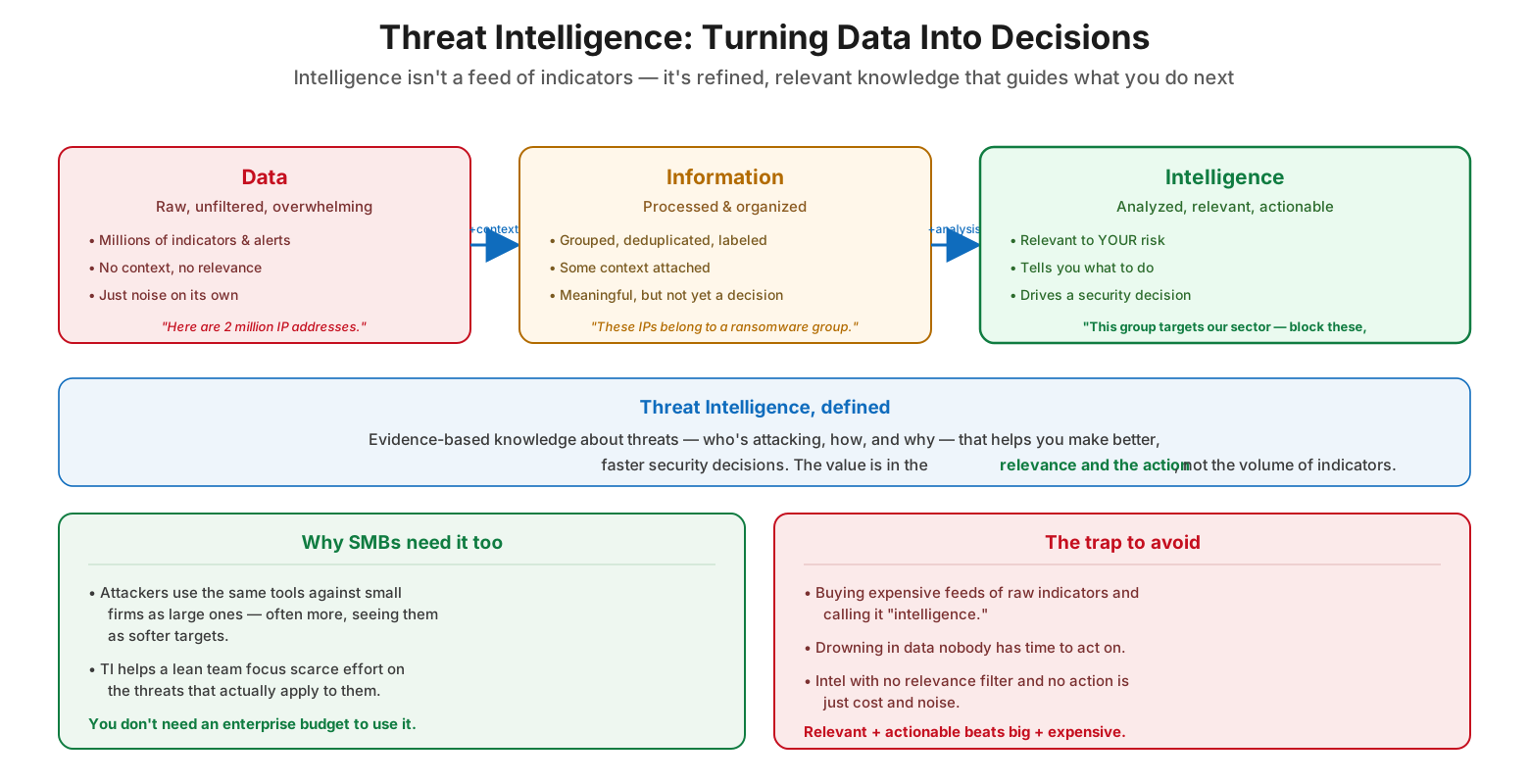
Threat intelligence: turning data into decisions
Raw data is unfiltered and overwhelming — millions of indicators and alerts with no context and no relevance, just noise on its own (“here are two million IP addresses”). Add context and it becomes information: processed and organized, grouped and labeled, meaningful but not yet a decision (“these IPs belong to a ransomware group”). Add analysis and it becomes intelligence: relevant to your specific risk, telling you what to do, and driving an actual security decision (“this group targets our sector, so block these and watch for their techniques”). That is the essence of the definition — threat intelligence is evidence-based knowledge about threats that helps you make better, faster security decisions, and its value is in the relevance and the action, not the volume of indicators. SMBs need this as much as anyone, because attackers use the same tools against small firms as large ones, often seeing them as softer targets, and intelligence helps a lean team aim its scarce effort at the threats that genuinely apply — all without an enterprise budget. The trap to avoid is buying expensive feeds of raw indicators and calling it “intelligence,” then drowning in data nobody has time to act on. Intel with no relevance filter and no action is just cost and noise; relevant plus actionable beats big plus expensive.
The Four Levels of Threat Intelligence
Threat intelligence is not one thing but four, each serving a different audience and decision. Recognizing the levels helps an SMB match its (limited) effort to the decisions it actually needs to make.
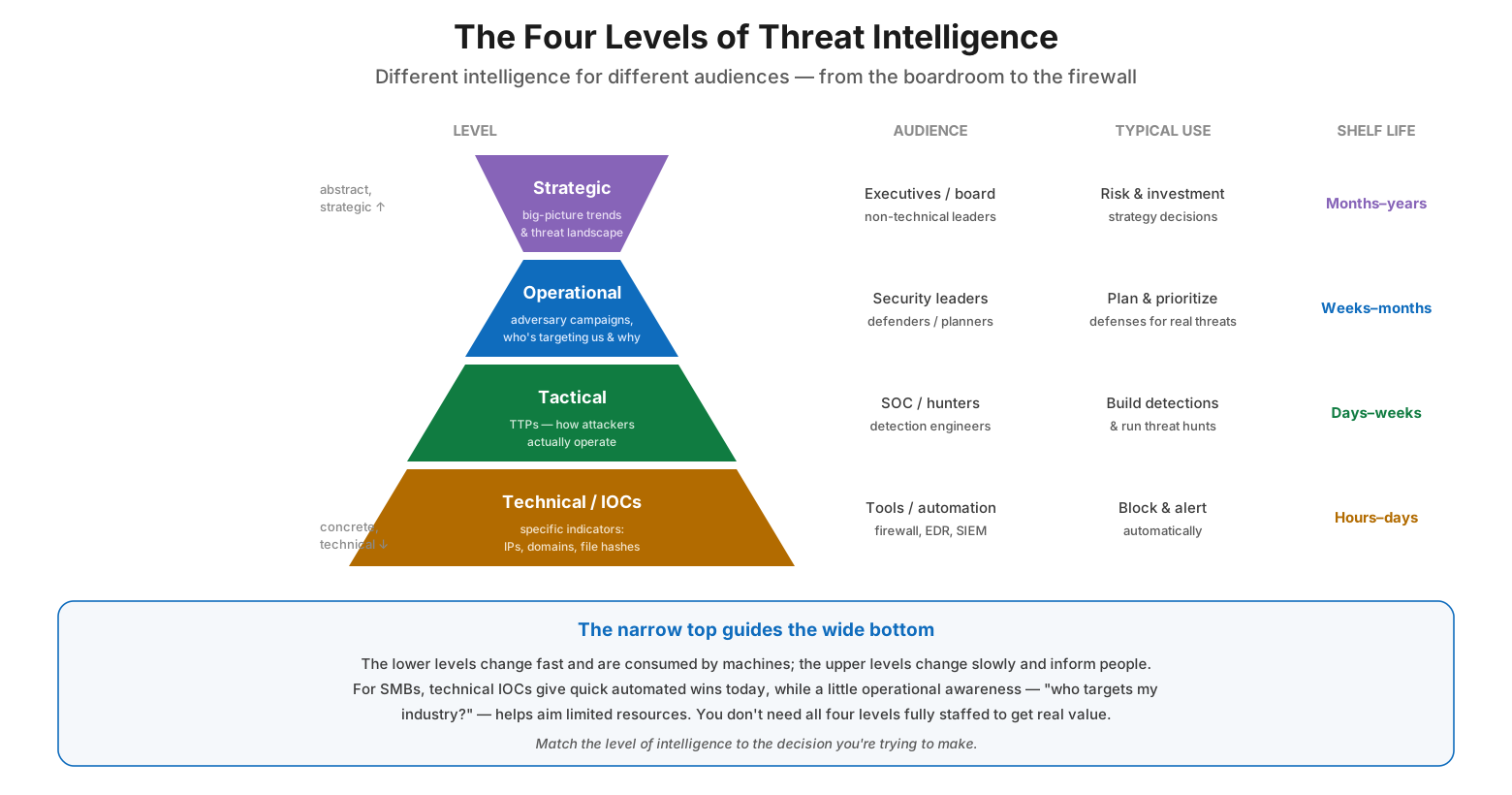
The four levels of threat intelligence
At the top and narrowest is strategic intelligence: big-picture trends and the threat landscape, aimed at executives and the board, used to inform risk and investment decisions, with a shelf life of months to years. Below it is operational intelligence: information about adversary campaigns and who is targeting your sector and why, aimed at security leaders and planners, used to plan and prioritize defenses against real threats, changing over weeks to months. Next is tactical intelligence: the tactics, techniques, and procedures (TTPs) that describe how attackers actually operate, aimed at the SOC, threat hunters, and detection engineers, used to build detections and run hunts, with a shelf life of days to weeks. At the bottom and widest is technical intelligence, the indicators of compromise (IOCs) — specific IPs, domains, and file hashes — consumed by tools and automation like the firewall, EDR, and SIEM to block and alert automatically, but changing fast over hours to days. The narrow top guides the wide bottom: the lower levels change quickly and are consumed by machines, while the upper levels change slowly and inform people. For an SMB, technical IOCs give quick automated wins today, while a little operational awareness — “who targets my industry?” — helps aim limited resources. You do not need all four levels fully staffed to get real value; match the level of intelligence to the decision you are trying to make.
| Level | Audience | Typical use | Shelf life |
|---|---|---|---|
| Strategic | Executives / board | Risk and investment decisions | Months–years |
| Operational | Security leaders / planners | Plan and prioritize defenses | Weeks–months |
| Tactical | SOC / hunters / detection engineers | Build detections, run hunts | Days–weeks |
| Technical (IOCs) | Tools / automation | Block and alert automatically | Hours–days |
The Pyramid of Pain: Not All Indicators Are Equal
A crucial insight for spending limited effort wisely is that different indicators impose very different costs on an attacker when you detect them. The Pyramid of Pain makes this concrete and reshapes where an SMB should invest.
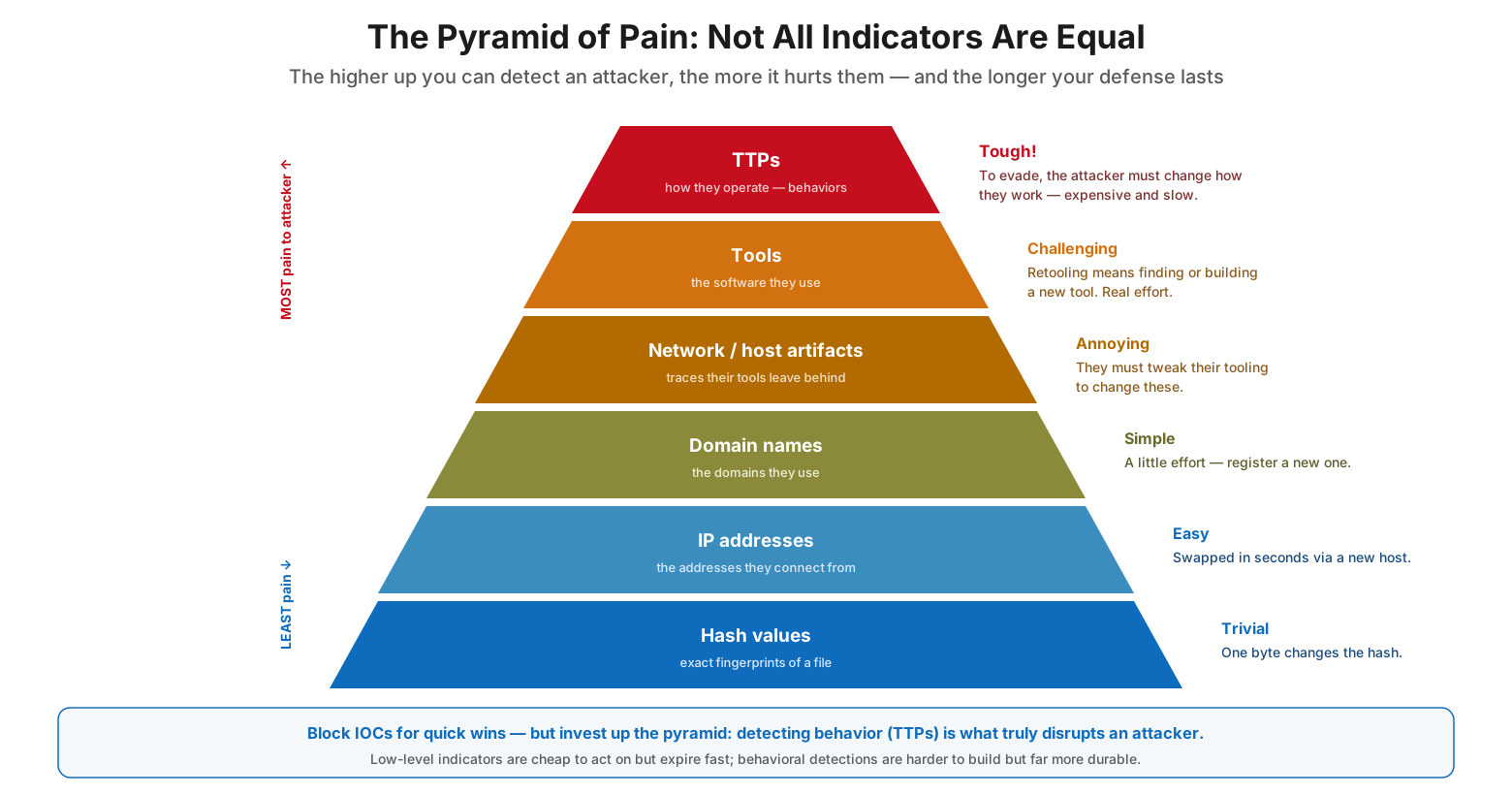
The Pyramid of Pain: not all indicators are equal
At the base of the pyramid are the indicators that are trivial or easy for an attacker to change, and therefore cause them the least pain when blocked. Hash values are the exact fingerprint of a file — but one changed byte produces a new hash, so blocking them is trivial to evade. IP addresses are easy for an attacker to swap in seconds via a new host. Domain names are simple to change by registering a new one. Moving up, network and host artifacts — the traces an attacker’s tools leave behind — are annoying to change, requiring them to tweak their tooling. Tools, the software they use, are challenging to change, since retooling means finding or building something new. And at the peak are TTPs — how attackers actually operate, their behaviors — which are tough to change, because evading detection at this level forces the attacker to fundamentally alter how they work, which is expensive and slow. The practical lesson is to block IOCs for quick, automated wins, but to invest upward: detecting behavior (TTPs) is what truly disrupts an attacker. Low-level indicators are cheap to act on but expire fast, while behavioral detections are harder to build but far more durable. For an SMB, this means starting with automated IOC blocking for immediate value, then gradually building a few behavior-based detections for the techniques most relevant to its risk.
| Indicator (bottom → top) | Pain to attacker | Why |
|---|---|---|
| Hash values | Trivial | One byte changes the hash |
| IP addresses | Easy | Swapped in seconds via a new host |
| Domain names | Simple | Register a new one |
| Network / host artifacts | Annoying | Must tweak their tooling |
| Tools | Challenging | Must find or build a new tool |
| TTPs (behaviors) | Tough | Must change how they operate |
The Threat Intelligence Lifecycle
Even for an organization that mostly consumes intelligence rather than producing it, understanding how intelligence is made helps it consume wisely and judge the quality of any provider or feed. That process is the intelligence lifecycle.
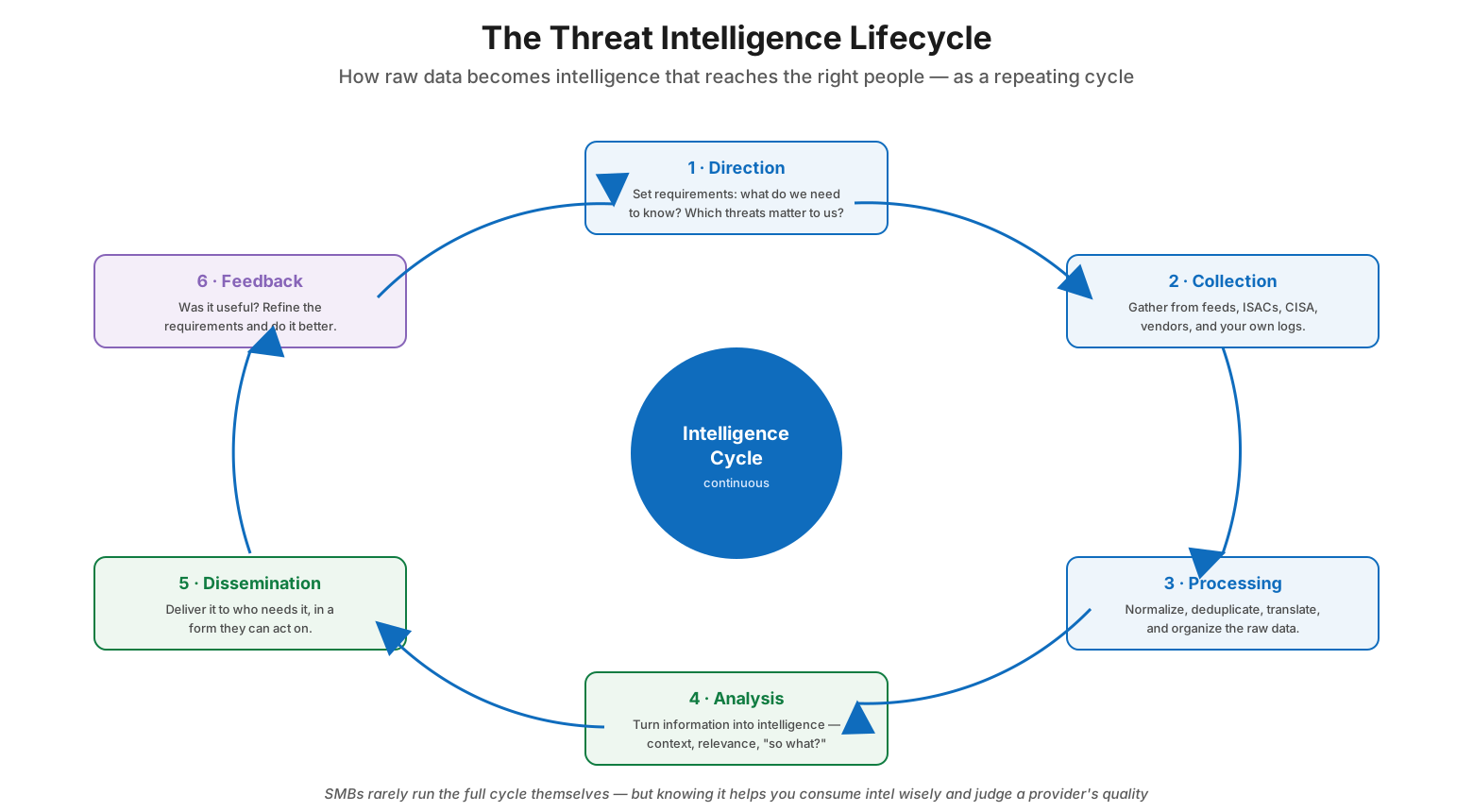
The threat intelligence lifecycle
The lifecycle is a continuous cycle of six stages. It begins with direction: setting requirements by asking what you need to know and which threats matter to you — without this, everything downstream is unfocused. Then comes collection: gathering data from feeds, industry sharing groups (ISACs), government sources like CISA, security vendors, and your own logs. Next is processing: normalizing, deduplicating, translating, and organizing the raw data so it can be analyzed. Then analysis: the crucial step of turning information into intelligence by adding context and relevance and answering the “so what?” — what does this mean for us and what should we do. Then dissemination: delivering the finished intelligence to whoever needs it, in a form they can actually act on. And finally feedback: asking whether it was useful and refining the requirements so the next cycle is better. SMBs rarely run the full cycle themselves, and they don’t need to — but knowing it helps them consume intel wisely and judge a provider’s quality. A good intelligence source or managed provider visibly does the analysis step, delivering relevant, contextualized guidance rather than a raw dump of the collection stage.
| Stage | What happens | Why it matters |
|---|---|---|
| Direction | Set requirements — what do we need to know? | Focuses everything downstream |
| Collection | Gather from feeds, ISACs, CISA, vendors, own logs | Raw material for intelligence |
| Processing | Normalize, deduplicate, organize | Makes data analyzable |
| Analysis | Turn information into intelligence; “so what?” | The step that creates real value |
| Dissemination | Deliver to who needs it, in an actionable form | Intel unused is intel wasted |
| Feedback | Assess usefulness; refine requirements | Improves the next cycle |
Threat Intelligence for SMBs — Without an Enterprise Budget
Bringing it together, the practical question for a small business is how to get real value from threat intelligence with limited money and people. The answer is a simple three-step playbook backed by discipline about what to ignore.
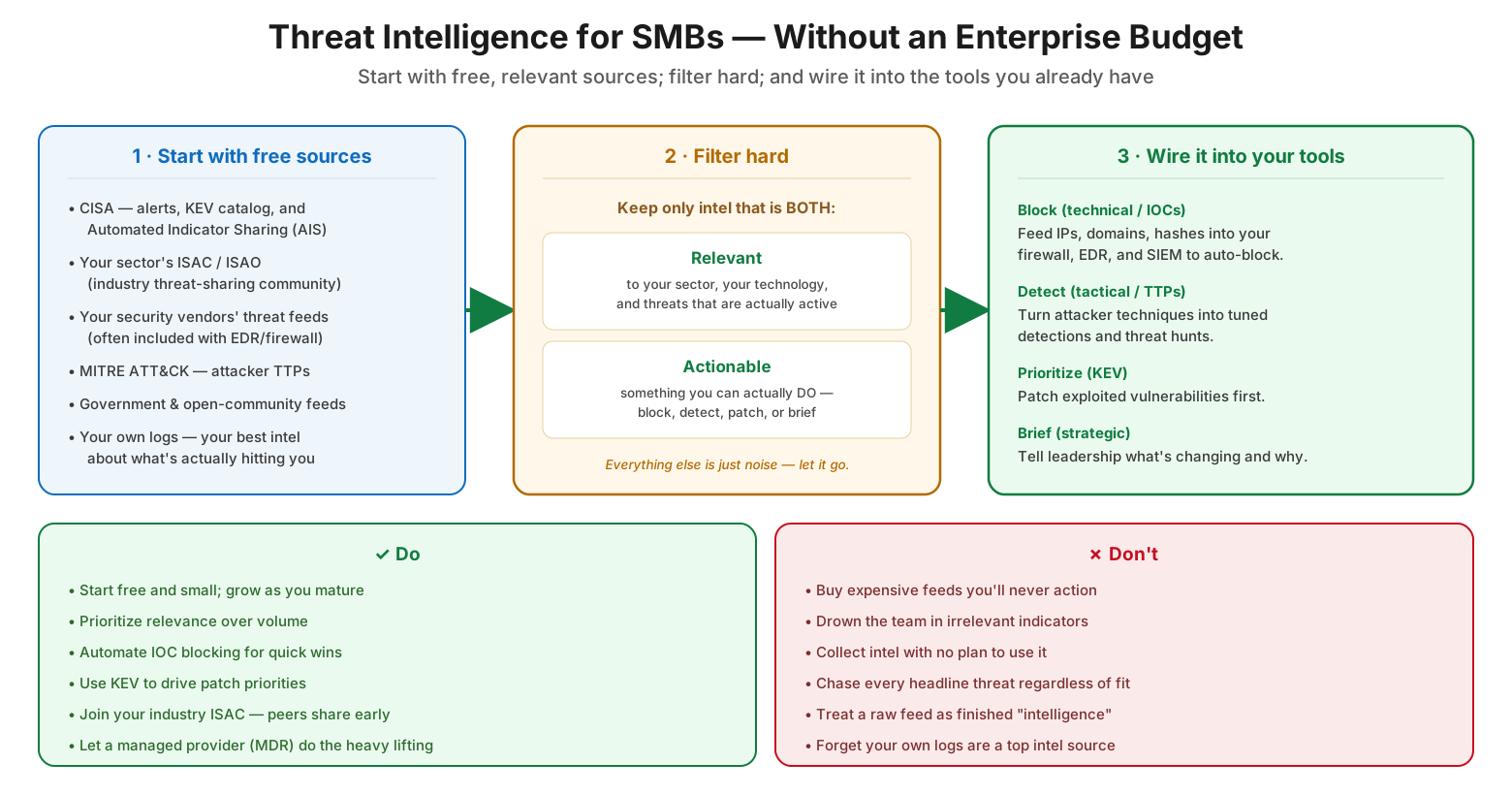
Threat intelligence for SMBs — without an enterprise budget
First, start with free sources. CISA provides alerts, the Known Exploited Vulnerabilities (KEV) catalog, and Automated Indicator Sharing; your sector’s ISAC or ISAO is an industry threat-sharing community where peers share threats early; your security vendors’ threat feeds often come included with your EDR or firewall; MITRE ATT&CK catalogs attacker TTPs; government and open-community feeds add more; and your own logs are your best intelligence about what is actually hitting you. Second, filter hard: keep only intelligence that is both relevant — to your sector, your technology, and threats that are actually active — and actionable — something you can genuinely do, whether block, detect, patch, or brief. Everything else is noise; let it go. Third, wire it into the tools you already have: feed technical IOCs into your firewall, EDR, and SIEM to auto-block; turn tactical TTPs into tuned detections and threat hunts; use the KEV catalog to patch exploited vulnerabilities first; and brief leadership on the strategic trends that matter. The dos are clear — start free and small and grow as you mature, prioritize relevance over volume, automate IOC blocking, drive patching with KEV, join your industry ISAC, and let a managed provider (such as MDR) do the heavy lifting. The don’ts are just as important — don’t buy expensive feeds you’ll never action, drown the team in irrelevant indicators, collect intel with no plan to use it, chase every headline threat regardless of fit, treat a raw feed as finished intelligence, or forget that your own logs are a top intelligence source.
Threat Intelligence Checklist for SMBs
- Understand the difference between raw data and actionable intelligence.
- Start with free, authoritative sources — CISA, your ISAC, vendor feeds, ATT&CK.
- Filter ruthlessly: keep only intel that is both relevant and actionable.
- Use your own logs — they’re your best intel on what’s actually targeting you.
- Feed IOCs into your firewall, EDR, and SIEM to block and alert automatically.
- Use the CISA KEV catalog to prioritize which vulnerabilities to patch first.
- Build a few behavior-based (TTP) detections for your most relevant threats.
- Invest up the Pyramid of Pain over time — behavior beats brittle indicators.
- Join your industry’s ISAC/ISAO to get early, sector-specific warnings.
- Don’t buy expensive feeds you have no plan or capacity to act on.
- Match the level of intelligence (strategic to technical) to the decision at hand.
- Consider a managed provider (MDR/SOC) to do the heavy lifting affordably.
Best Practices
Treat relevance and action as the whole point. The value of threat intelligence is not the number of indicators but whether it applies to you and whether you do something with it. Before ingesting any feed or report, ask: is this relevant to our risk, and can we act on it? If not, skip it.
Start free and grow deliberately. You do not need a commercial platform to begin. CISA, your sector ISAC, vendor feeds, and MITRE ATT&CK provide substantial value at no cost. Prove value with these before spending, and add paid sources only when you have the capacity to action them.
Mine your own logs. Your own environment is your most relevant intelligence source — it tells you exactly what is targeting you. Combine internal observations with external intelligence for context, rather than relying on external feeds alone.
Automate the low-level, invest in the high-level. Push IOCs into your tools for automated blocking to get quick wins cheaply, then gradually build behavior-based detections for the TTPs most relevant to your risk, because those are far more durable and disruptive to attackers.
Prioritize patching with exploitation intelligence. Use the CISA KEV catalog and similar sources to focus patching on vulnerabilities that are actually being exploited. This is one of the most immediately valuable and low-effort uses of threat intelligence for an SMB.
Lean on managed services when it makes sense. A managed detection and response or SOC provider consumes, analyzes, and applies threat intelligence on your behalf, giving a small business enterprise-grade use of intelligence without building the capability internally.
Common Mistakes
Confusing feeds with intelligence. Subscribing to raw indicator feeds and assuming that constitutes threat intelligence is the most common error. Without analysis, relevance filtering, and action, a feed is just data — often noise.
Buying more than you can action. Purchasing expensive intelligence products that the team has no time or process to use wastes money and creates a false sense of security. Capacity to act should drive acquisition, not the other way around.
Ignoring relevance. Chasing every headline threat and every indicator, regardless of whether it applies to your sector, technology, or risk, overwhelms a lean team and buries the intelligence that actually matters. Filter for relevance ruthlessly.
Focusing only on IOCs. Relying entirely on blocking IPs, domains, and hashes gives short-lived protection because attackers change these easily. Failing to invest in any behavior-based detection leaves you perpetually one step behind.
Neglecting your own data. Overlooking internal logs as an intelligence source means missing the most relevant signal of all — what is actually happening in your environment. Your own telemetry is prime intelligence.
Collecting with no plan to use it. Gathering intelligence without a defined way to apply it — to block, detect, patch, or brief — means it accumulates unused. Every piece of intelligence should map to an action.
Frequently Asked Questions
What is threat intelligence? It is evidence-based knowledge about threats — who is attacking, how, and why — that helps an organization make better, faster security decisions. Crucially, it is the analyzed, relevant, actionable product, not a raw feed of indicators. The value is in relevance and action, not volume.
Do small businesses really need threat intelligence? Yes. Attackers use the same tools against SMBs as against large enterprises, and often target smaller firms as softer targets. Threat intelligence helps a lean team focus its limited effort on the threats that genuinely apply, making it one of the highest-leverage security activities for a small business.
Can we do threat intelligence without a big budget? Absolutely. Start with free, authoritative sources like CISA (alerts, KEV, Automated Indicator Sharing), your industry’s ISAC, threat feeds included with your security tools, and MITRE ATT&CK. Filter for what is relevant and actionable, and wire it into the tools you already own. Paid feeds are optional and should only be added when you can act on them.
What’s the difference between IOCs and TTPs? IOCs (indicators of compromise) are specific technical artifacts like IPs, domains, and file hashes — easy to block but also easy for attackers to change. TTPs (tactics, techniques, and procedures) describe how attackers behave — much harder for them to change, so detecting TTPs is more durable and disruptive, as illustrated by the Pyramid of Pain.
What is the Pyramid of Pain? It’s a model showing how much “pain” you cause an attacker by detecting different types of indicators. Blocking hashes or IPs (the base) barely inconveniences them, while detecting their behaviors/TTPs (the top) forces them to fundamentally change how they operate. It guides you to invest detection effort where it hurts attackers most.
How do we start using threat intelligence practically? Begin by feeding free IOCs (for example, from CISA) into your firewall and EDR to block known-bad automatically, and use the KEV catalog to prioritize patching exploited vulnerabilities. Join your sector’s ISAC for relevant early warnings. Then, over time, build a few behavior-based detections and consider a managed provider to handle the analysis for you.
Conclusion
Threat intelligence is not the exclusive preserve of large enterprises, and treating it that way leaves small businesses defending themselves blind against attackers who target them precisely because they seem easier to hit. The reframing that makes intelligence accessible is simple: it is not a feed of indicators to buy, but relevant, analyzed knowledge that guides a decision. Once an organization sees intelligence that way, the path forward is affordable and clear — because the most valuable intelligence often comes from free, authoritative sources and from the organization’s own logs, not from the most expensive product.
For an SMB, the winning approach is disciplined rather than expansive. Understand the four levels and match intelligence to the decision at hand. Use the Pyramid of Pain to spend limited detection effort where it hurts attackers most, automating the cheap low-level indicators while gradually building durable behavior-based detections. Know the intelligence lifecycle well enough to judge the quality of any source or provider. And above all, follow the practical playbook: start free, filter ruthlessly for relevance and action, and wire the results into the tools you already have. Relevant and actionable beats big and expensive every time — and a modest, well-aimed threat-intelligence practice puts genuinely enterprise-grade focus within reach of any small business.
References
- CISA — Automated Indicator Sharing (AIS)
- CISA — Known Exploited Vulnerabilities (KEV) Catalog
- NIST SP 800-150 — Guide to Cyber Threat Information Sharing
- MITRE ATT&CK — Adversary Tactics and Techniques
- FIRST — Traffic Light Protocol (TLP)
- National Council of ISACs — Member ISACs
- David Bianco — The Pyramid of Pain
On this page
- Executive Summary
- Threat Intelligence: Turning Data Into Decisions
- The Four Levels of Threat Intelligence
- The Pyramid of Pain: Not All Indicators Are Equal
- The Threat Intelligence Lifecycle
- Threat Intelligence for SMBs — Without an Enterprise Budget
- Threat Intelligence Checklist for SMBs
- Best Practices
- Common Mistakes
- Frequently Asked Questions
- Conclusion
- References