Managed Detection & Response (MDR): When Someone Actually Stops the Attack
Most security tools and services are very good at telling you something is wrong. They generate an alert, drop it into a queue, and consider their job done.
- Content owner
- Insyto Content Team
- Editorial reviewer
- Ritesh Mhatre
- Technical reviewer
- Navish Ansari
- Next review
- To be scheduled
- Last reviewed
- Review pending
- Technical level
- Intermediate · CISOs, security teams, IT directors
Executive Summary
Most security tools and services are very good at telling you something is wrong. They generate an alert, drop it into a queue, and consider their job done. But an alert is only half the job. When a real threat fires at three in the morning on a Sunday, a notification sitting unread in a ticketing system does nothing to stop an attacker who is actively moving through the environment. Someone has to see that alert, decide whether it is real, work out how far the threat has spread, and then take action to contain and remove it — quickly, and at any hour. For most organizations, and especially small and mid-sized ones, that “someone” simply does not exist around the clock. This is the gap that Managed Detection and Response was created to fill.
MDR is a security service defined by its last word: Response. Unlike a tool that only detects, or an alert-forwarding service that only notifies, an MDR provider carries a threat all the way from detection through investigation to active response and remediation — containing the incident on the client’s behalf. The result is that the organization receives a resolved incident and a clear report, rather than a pile of alerts and a pile of homework. To deliver that, MDR combines four things into one managed offering: broad telemetry from EDR and XDR sensors, a 24×7 security operations center staffed by human analysts, current threat intelligence and proactive threat hunting, and the authority and capability to take response actions. It is detection and response delivered as an outcome, not a product to be operated.
This vendor-neutral guide explains MDR without the marketing gloss. It shows why the “R” is the real difference, breaks down the four layers inside an MDR service, clarifies the shared-responsibility model — what the provider does, what is decided jointly, and what always stays with the client — compares MDR against the alternatives of EDR, SIEM, MSSP, and building an in-house SOC, and sets out the questions that separate genuine MDR from repackaged alerting. The governing idea is straightforward: detection is table stakes, and the value an organization is paying for, and must verify, is that when a threat appears, someone competent actually stops it.
The “R” Is the Difference
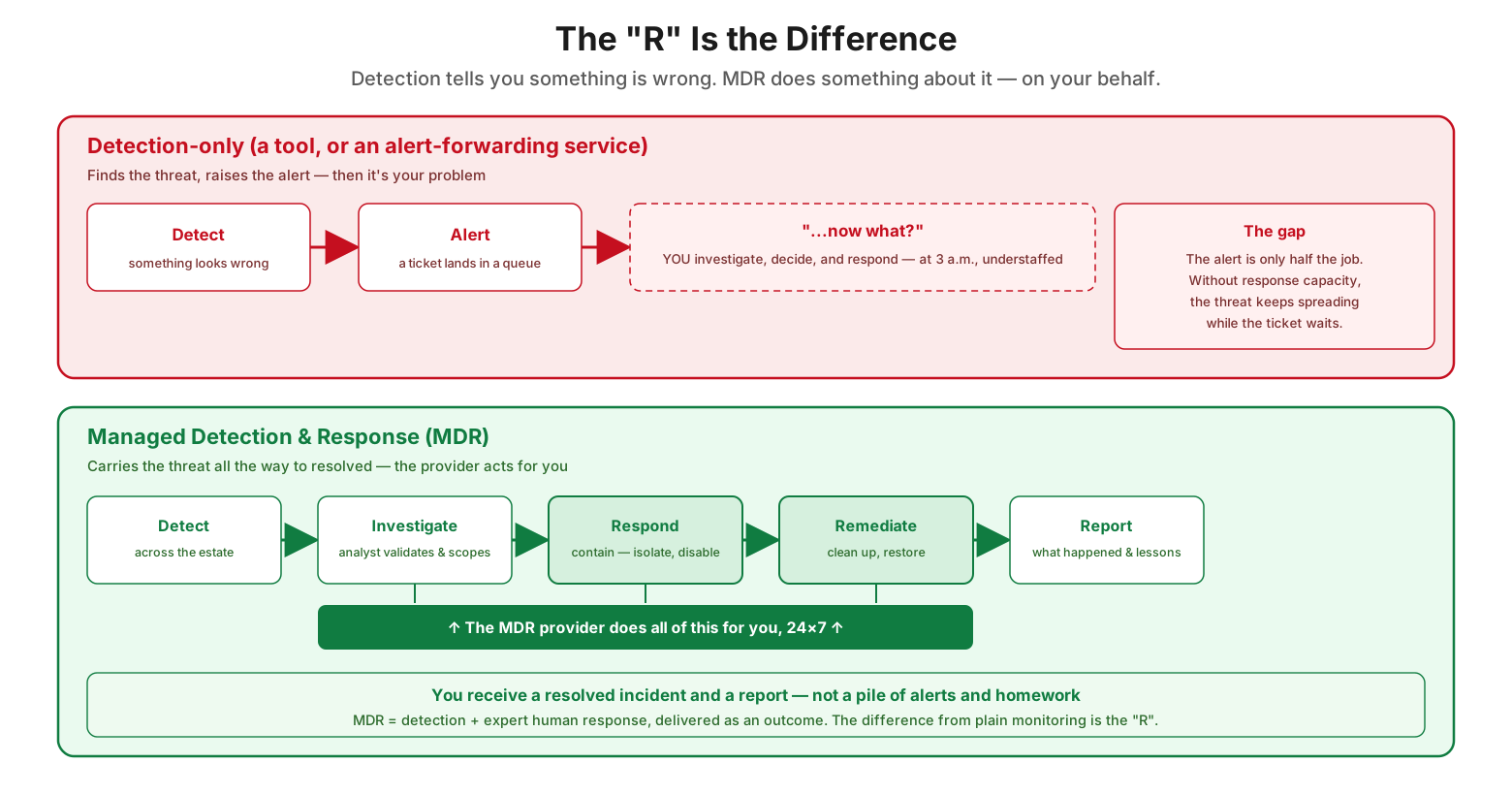
The single most important thing to understand about MDR is what distinguishes it from everything that came before: it does not stop at the alert. Seeing that contrast makes the value obvious.
The “R” is the difference
Detection-only approaches — whether a standalone tool or an alert-forwarding service — follow a familiar path: they detect that something looks wrong, raise an alert into a queue, and then leave the rest to you. That “…now what?” moment is the gap. You have to investigate, decide, and respond yourself, often at 3 a.m. and understaffed, while the threat keeps spreading and the ticket waits. The alert is only half the job; without response capacity, detection alone provides little protection. MDR closes that gap by carrying the threat all the way through: detect across the estate, investigate to validate and scope it, respond by containing it — isolating the host, disabling the account, blocking the address — and remediate by cleaning up and restoring, then report on what happened and what was learned. Every step is performed by the provider, 24×7. The client receives a resolved incident and a report, not a pile of alerts and homework. That is the essence of MDR: detection plus expert human response, delivered as an outcome — and the difference from plain monitoring is entirely in the “R.”
What’s Inside an MDR Service
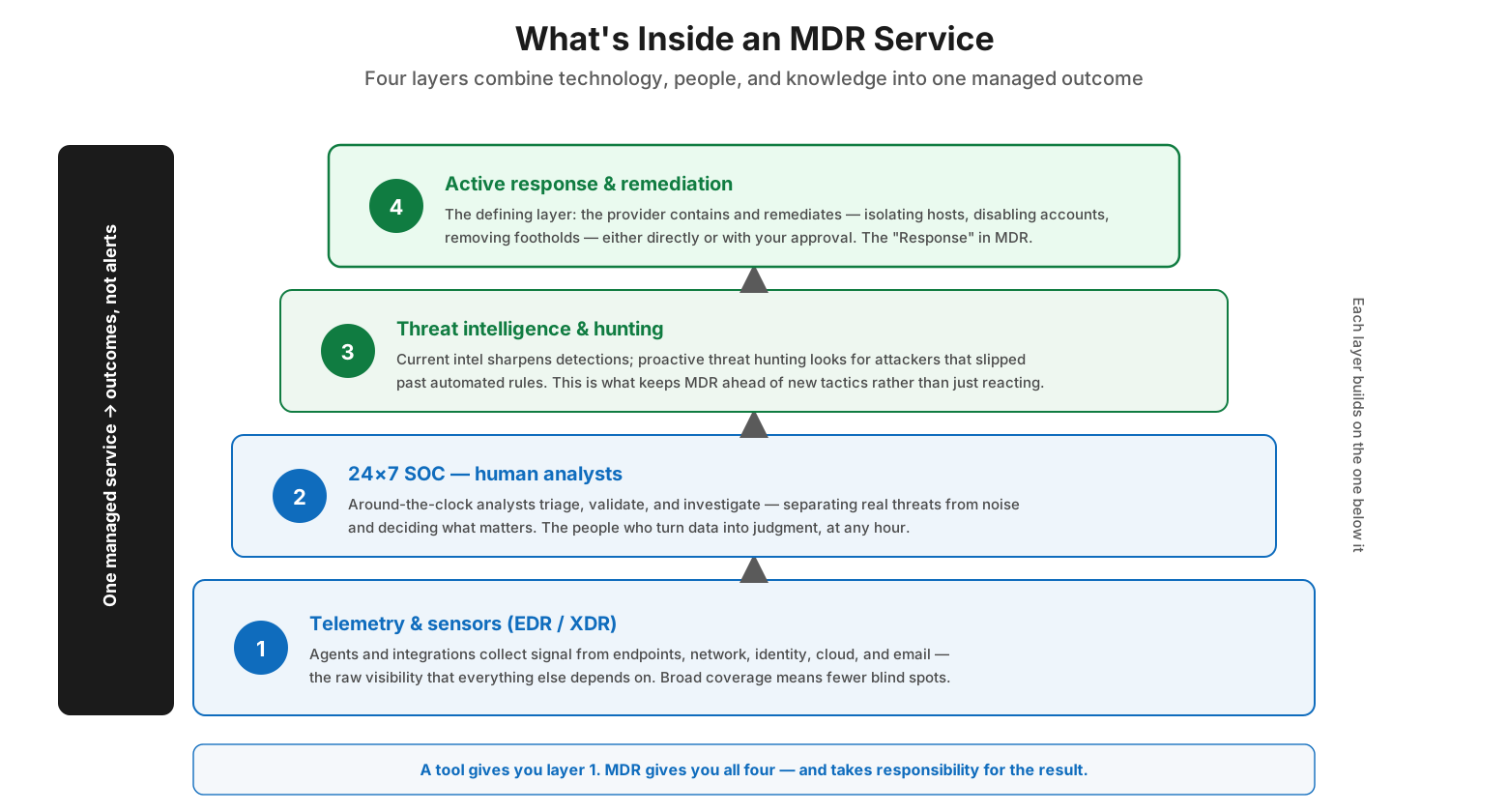
MDR is not a single technology but a combination of capabilities assembled into one service. Understanding its layers clarifies both what you are buying and why a mere tool cannot substitute for it.
What’s inside an MDR service
An MDR service is built in four layers, each depending on the one below. The foundation is telemetry and sensors — EDR and increasingly XDR — where agents and integrations collect signal from endpoints, network, identity, cloud, and email, providing the raw visibility everything else relies on; broad coverage here means fewer blind spots. Above that sits the 24×7 SOC of human analysts who triage, validate, and investigate around the clock, separating real threats from noise and turning data into judgment at any hour. The third layer is threat intelligence and hunting, where current intelligence sharpens detections and proactive hunting looks for attackers who slipped past automated rules — this is what keeps MDR ahead of new tactics rather than merely reacting to them. The top and defining layer is active response and remediation, where the provider contains and remediates — isolating hosts, disabling accounts, removing footholds — either directly or with the client’s approval. This is the “Response” that names the service. A tool gives you only the first layer; MDR gives you all four and takes responsibility for the result.
| Layer | What it provides | Why it matters |
|---|---|---|
| Telemetry & sensors (EDR/XDR) | Signal from endpoints, identity, cloud, email, network | Visibility everything else depends on |
| 24×7 SOC analysts | Around-the-clock triage and investigation | Human judgment at any hour |
| Threat intel & hunting | Current intelligence; proactive hunting | Catches what automation misses |
| Active response & remediation | Containment and cleanup, for you | The defining “R” — threats are stopped |
Who Does What: The Shared-Responsibility Model
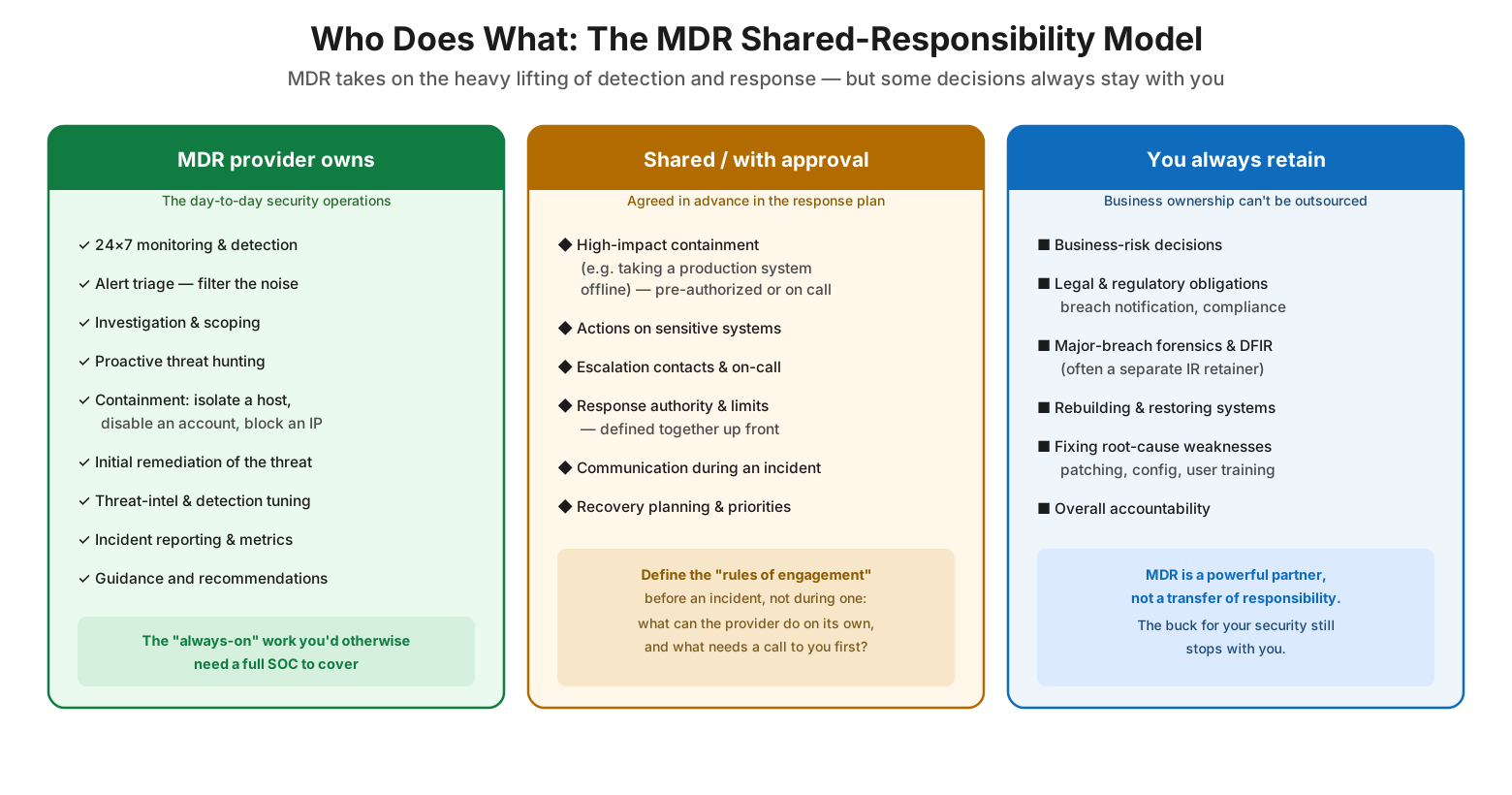
A common misconception is that engaging an MDR provider transfers all security responsibility to them. It does not. MDR is a partnership with a clear division of labor, and getting that division explicit — before an incident — is essential.
The MDR shared-responsibility model
The MDR provider owns the day-to-day security operations: 24×7 monitoring and detection, alert triage to filter the noise, investigation and scoping, proactive threat hunting, containment actions such as isolating a host or disabling an account, initial remediation of the threat, detection tuning, and incident reporting. This is the always-on work that would otherwise require a full in-house SOC. A second set of decisions is shared or requires approval, and these should be agreed in advance in a response plan: high-impact containment such as taking a production system offline, actions on especially sensitive systems, escalation contacts and on-call arrangements, and the precise limits of the provider’s response authority. Defining these “rules of engagement” before an incident — not during one — is what allows fast action without overstepping. Finally, some things always stay with the client because business ownership cannot be outsourced: business-risk decisions, legal and regulatory obligations like breach notification, major-breach forensics (often a separate incident-response retainer), rebuilding and restoring systems, fixing the root-cause weaknesses through patching and training, and overall accountability. MDR is a powerful partner, but the ultimate responsibility for the organization’s security still stops with the organization.
MDR vs. the Alternatives
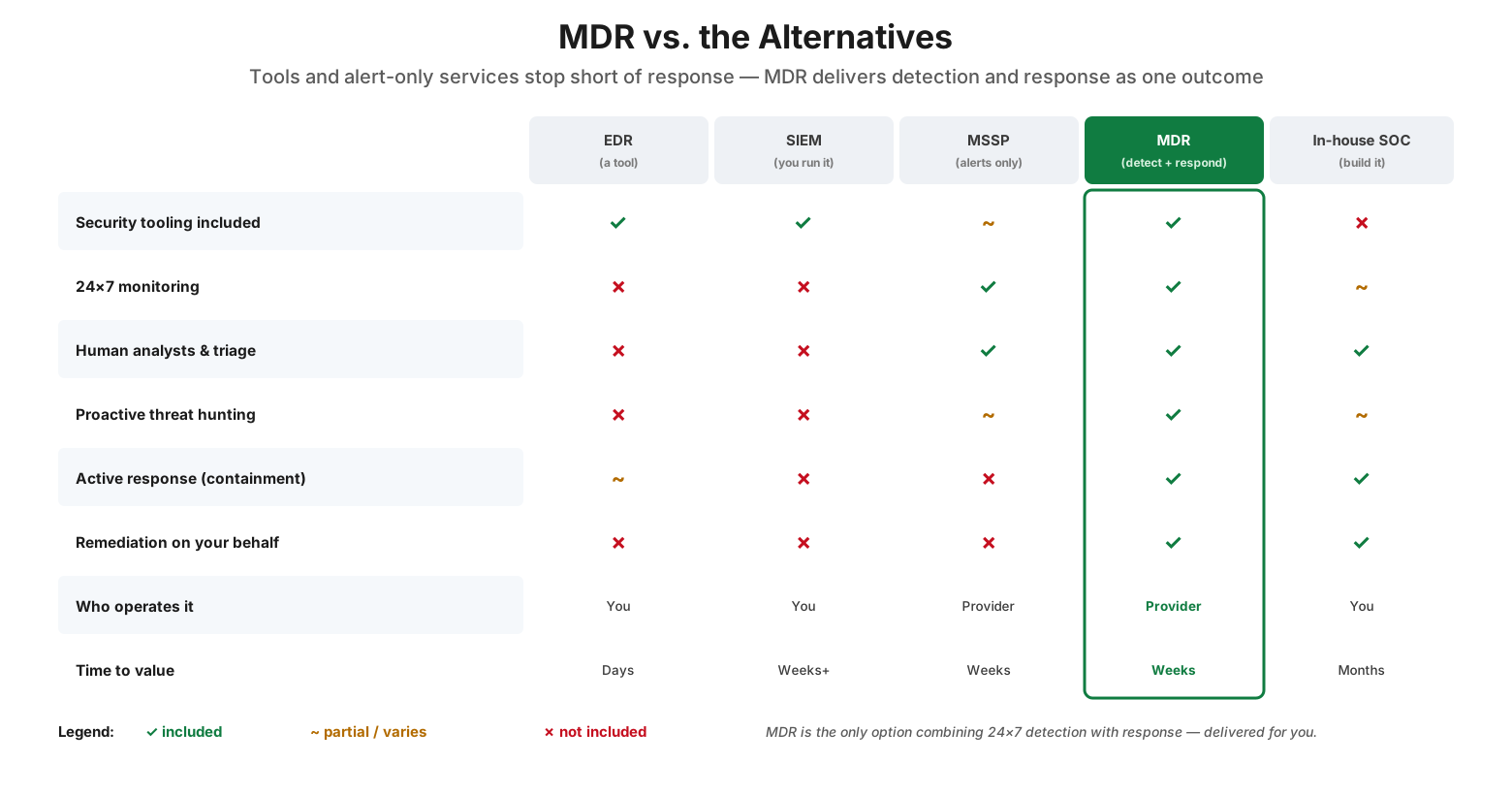
Because “MDR” sits among a crowd of similar-sounding options, it helps to compare it directly against the alternatives an organization might consider. The distinguishing feature is consistent: response.
MDR vs. the alternatives
An EDR is a tool — it provides endpoint telemetry and some automated response capability, but you operate it, and it does not offer 24×7 human monitoring. A SIEM aggregates and correlates logs, but you run it, and on its own it neither monitors around the clock nor responds. An MSSP (traditional managed security service provider) adds 24×7 monitoring and human analysts and forwards you alerts, but classically stops short of taking response actions on your behalf. An in-house SOC can do everything, including response, but you must build and staff it — a months-long, expensive undertaking. MDR is the option that combines 24×7 monitoring, human analysts, proactive threat hunting, active response, and remediation on your behalf, operated by the provider and live in weeks. It is, in short, the only choice that pairs continuous detection with actual response and remediation delivered for you. That combination — not any single feature — is what defines MDR and what an organization is really paying for.
| Capability | EDR | SIEM | MSSP | MDR | In-house SOC |
|---|---|---|---|---|---|
| Tooling included | Yes | Yes | Partial | Yes | No |
| 24×7 monitoring | No | No | Yes | Yes | Partial |
| Human analysts | No | No | Yes | Yes | Yes |
| Threat hunting | No | No | Partial | Yes | Partial |
| Active response | Partial | No | No | Yes | Yes |
| Remediation for you | No | No | No | Yes | Yes |
| Operated by | You | You | Provider | Provider | You |
MDR Selection & Readiness Checklist
- Confirm the provider performs active response — not just alerting or recommendations.
- Define response authority and “rules of engagement” before onboarding, not during an incident.
- Verify coverage spans identity, cloud, and email — not endpoints alone (XDR breadth).
- Require written SLAs for time-to-detect and time-to-respond.
- Confirm real human analysts and proactive threat hunting, not automation alone.
- Ensure transparency: a shared portal, clear reporting, and co-management where wanted.
- Check integration with your existing security stack and identity provider.
- Agree escalation contacts and an on-call path for high-impact decisions.
- Clarify what remains yours: legal/breach notification, forensics, rebuilding, root-cause fixes.
- Consider a separate incident-response retainer for major-breach forensics (DFIR).
- Assign an internal owner to liaise with the provider and act on their recommendations.
- Review reports and metrics regularly; treat MDR as a partnership, not a set-and-forget.
Best Practices
Because “MDR” is used loosely, these selection criteria — and the question behind each — separate genuine response from repackaged alerting.
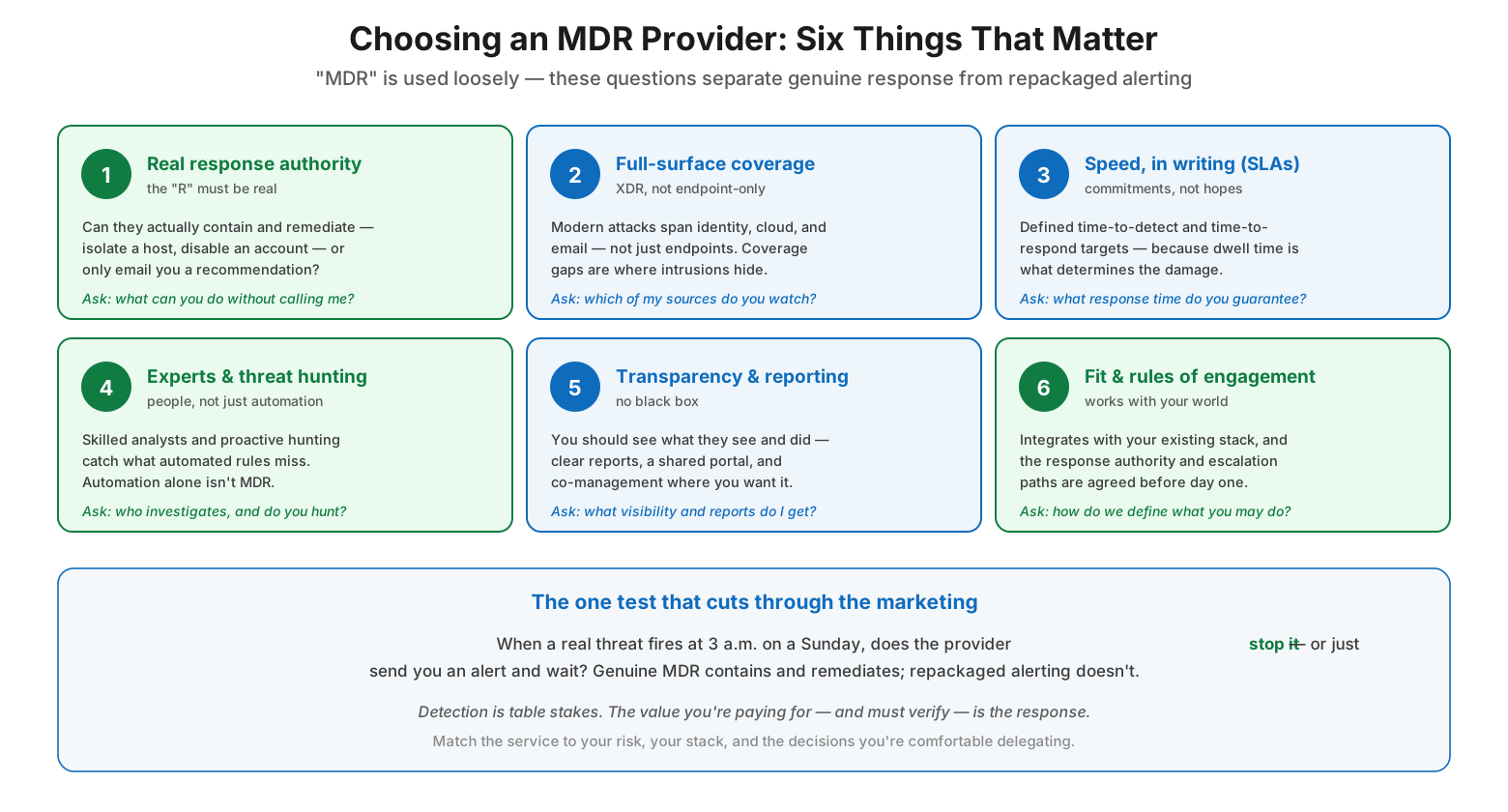
Choosing an MDR provider — six things that matter
| Criterion | What to look for | Question to ask |
|---|---|---|
| Real response authority | Can contain and remediate, not just recommend | “What can you do without calling me?” |
| Full-surface coverage | XDR across identity, cloud, email, endpoints | “Which of my sources do you watch?” |
| Speed in writing | Defined MTTD/MTTR SLAs | “What response time do you guarantee?” |
| Experts & hunting | Skilled analysts and proactive hunting | “Who investigates, and do you hunt?” |
| Transparency | Shared portal and clear reporting | “What visibility and reports do I get?” |
| Fit & rules of engagement | Integrates; authority agreed up front | “How do we define what you may do?” |
Insist that the “R” is real. The entire value of MDR is response, so verify that the provider can and will take containment and remediation actions — not merely send recommendations. Ask specifically what they can do without calling you first.
Define the rules of engagement up front. Agree in advance exactly what response actions the provider may take autonomously, which require your approval, and who to call for high-impact decisions. An incident is the worst possible time to be negotiating authority.
Demand full-surface coverage. Endpoint-only MDR leaves identity, cloud, and email — where many modern attacks live — unwatched. Prefer providers with XDR breadth that correlate across the whole attack surface.
Get speed in writing. Because dwell time drives damage, response speed is the point. Require defined time-to-detect and time-to-respond SLAs so the commitment is measurable, not aspirational.
Keep your own responsibilities in view. MDR handles operations, but breach notification, forensics for major incidents, system rebuilding, and fixing root causes remain yours. Plan for them — including a possible DFIR retainer — rather than assuming the MDR covers everything.
Treat it as a partnership. Assign an internal owner, review the provider’s reports and metrics, and act on their recommendations to fix underlying weaknesses. MDR is most effective when the client engages with it, not when it is treated as a black box.
Common Mistakes
Buying “MDR” that is really just alerting. Some services labeled MDR stop at notification. If the provider does not actually contain and remediate threats, you have bought monitoring, not response — verify the “R” before signing.
Leaving response authority undefined. Without agreed rules of engagement, the provider hesitates to act during an incident, or oversteps. Define autonomy and approval boundaries in advance so response is both fast and safe.
Assuming MDR transfers all responsibility. Legal obligations, breach notification, forensics, and root-cause fixes stay with you. Treating MDR as a complete outsourcing of security accountability leaves dangerous gaps.
Accepting endpoint-only coverage. An MDR that watches only endpoints misses attacks that move through identity and cloud. Insist on coverage that spans the sources where threats actually operate.
Ignoring the reports. MDR surfaces recurring weaknesses and recommended fixes. Organizations that never read the reports keep suffering the same root causes, undermining the value of the service.
Skipping the DFIR plan for major breaches. Routine MDR response is not the same as full digital forensics for a significant breach. Not arranging that capability in advance can slow a serious incident badly.
Frequently Asked Questions
What is MDR? Managed Detection and Response is a security service that combines technology (EDR/XDR), a 24×7 SOC of human analysts, threat intelligence and hunting, and — critically — active response. The provider detects threats and then contains and remediates them on the client’s behalf, delivering resolved incidents rather than just alerts.
How is MDR different from an MSSP? A traditional MSSP monitors and forwards alerts but generally does not take response actions for you. MDR goes further: it actively contains and remediates threats. The distinction is the “Response” — MDR does something about the threat, where an MSSP typically tells you about it.
How is MDR different from EDR? EDR is a tool that provides endpoint detection and some response capability, but you must operate it and it does not include 24×7 human monitoring. MDR is a service that uses EDR/XDR as one input and adds analysts, hunting, and managed response around the clock.
Does MDR mean we no longer need our own security team? No. MDR handles day-to-day detection and response operations, but you retain business-risk decisions, legal and breach-notification obligations, system rebuilding, and fixing root causes. Most organizations keep an internal owner to work with the provider; MDR augments the team rather than replacing accountability.
Can the MDR provider take action on our systems automatically? Within agreed limits, yes — that is the point. Response authority is defined in advance: which actions the provider may take autonomously (like isolating an infected host), which need your approval (like taking a production system offline), and who to call. These rules of engagement are set during onboarding.
How do we choose a good MDR provider? Verify that they perform real response, cover your full attack surface (identity and cloud, not just endpoints), commit to time-to-detect and time-to-respond SLAs, employ skilled analysts who hunt proactively, provide transparent reporting and a shared portal, and integrate with your stack. The decisive test: when a real threat fires at 3 a.m., do they stop it or just alert you?
Conclusion
Detection has become the easy part. Tools and services that can spot suspicious activity are everywhere, and most organizations already generate more alerts than they can handle. The hard part — the part that actually protects a business — is what happens next: someone competent seeing the alert, understanding the threat, and stopping it, quickly and at any hour. Managed Detection and Response exists to deliver exactly that. Its defining characteristic is the “R”: it carries a threat from detection through investigation to containment and remediation, so the organization receives resolved incidents instead of unaddressed alerts.
Choosing MDR well means looking past the label to the substance. Confirm the provider truly responds rather than merely notifies, covers the whole attack surface rather than endpoints alone, commits to response speed in writing, and brings real analysts and threat hunting rather than automation dressed up as a service. Define the rules of engagement before an incident, keep sight of the responsibilities that remain yours, and treat the relationship as a partnership by acting on what the provider surfaces. Do that, and MDR becomes what it should be: the assurance that when an attack comes — including at three in the morning on a Sunday — someone is there not just to notice it, but to end it.
References
- NIST SP 800-61 Rev. 2 — Computer Security Incident Handling Guide
- NIST Cybersecurity Framework 2.0 — Detect and Respond functions
- MITRE ATT&CK — Adversary Tactics and Techniques
- CISA — Cyber Threats and Advisories
- SANS — Security Operations Center (SOC) resources
- CIS Controls — Incident Response Management
- NIST SP 800-53 Rev. 5 — Incident Response (IR) control family