Incident Response Planning: Deciding How You’ll Respond Before You Have To
Sooner or later, most organizations will face a security incident — a ransomware outbreak, a compromised account, a data breach, a business email compromise.
- Content owner
- Insyto Content Team
- Editorial reviewer
- Ritesh Mhatre
- Technical reviewer
- Navish Ansari
- Next review
- To be scheduled
- Last reviewed
- Review pending
- Technical level
- Intermediate · CISOs, security teams, IT directors
Executive Summary
Sooner or later, most organizations will face a security incident — a ransomware outbreak, a compromised account, a data breach, a business email compromise. The question is not whether one will happen but how well the organization will respond when it does. And the uncomfortable reality is that the response is largely determined before the incident ever begins, by the planning that was or was not done in advance. An organization that has decided ahead of time who is in charge, who to call, what steps to take, and what to say will respond quickly and calmly. One that has not will spend the critical early hours improvising under pressure — and the middle of a breach, at two in the morning, is the worst possible time to be making a plan.
Incident response planning is the discipline of making those decisions in advance so that the response itself is fast, calm, and correct. It rests on a well-established lifecycle — preparation, detection and analysis, containment, eradication and recovery, and post-incident learning — that turns a chaotic event into a structured process. It requires a defined team that reaches well beyond IT to include communications, legal, executive leadership, and external partners, because a serious incident is a business event, not merely a technical one. It is captured in a plan that is specific and actionable rather than a binder of theory nobody opens: named roles and contacts, severity classifications, playbooks for the most likely incident types, communication templates, escalation triggers, and legal obligations. And crucially, it is tested — through tabletop exercises, drills, and simulations — because a plan that has never been rehearsed is not a capability but a hope.
This vendor-neutral guide explains how to build that capability. It contrasts a planned response with improvised chaos, walks through the incident response lifecycle and its widely-used variants, describes the roles that make up an effective response team, details what belongs in a practical IR plan, and shows how testing turns a document into genuine readiness. The throughline is simple and durable: you cannot schedule an incident, but you can decide, in advance, exactly how you will handle one — and that preparation is what separates a contained, survivable event from a prolonged, damaging crisis.
The Middle of a Breach Is the Worst Time to Make a Plan
The case for incident response planning is easiest to see by watching the same incident unfold two ways. Preparation does not change whether the incident happens; it changes everything about how it plays out.
The middle of a breach is the worst time to make a plan
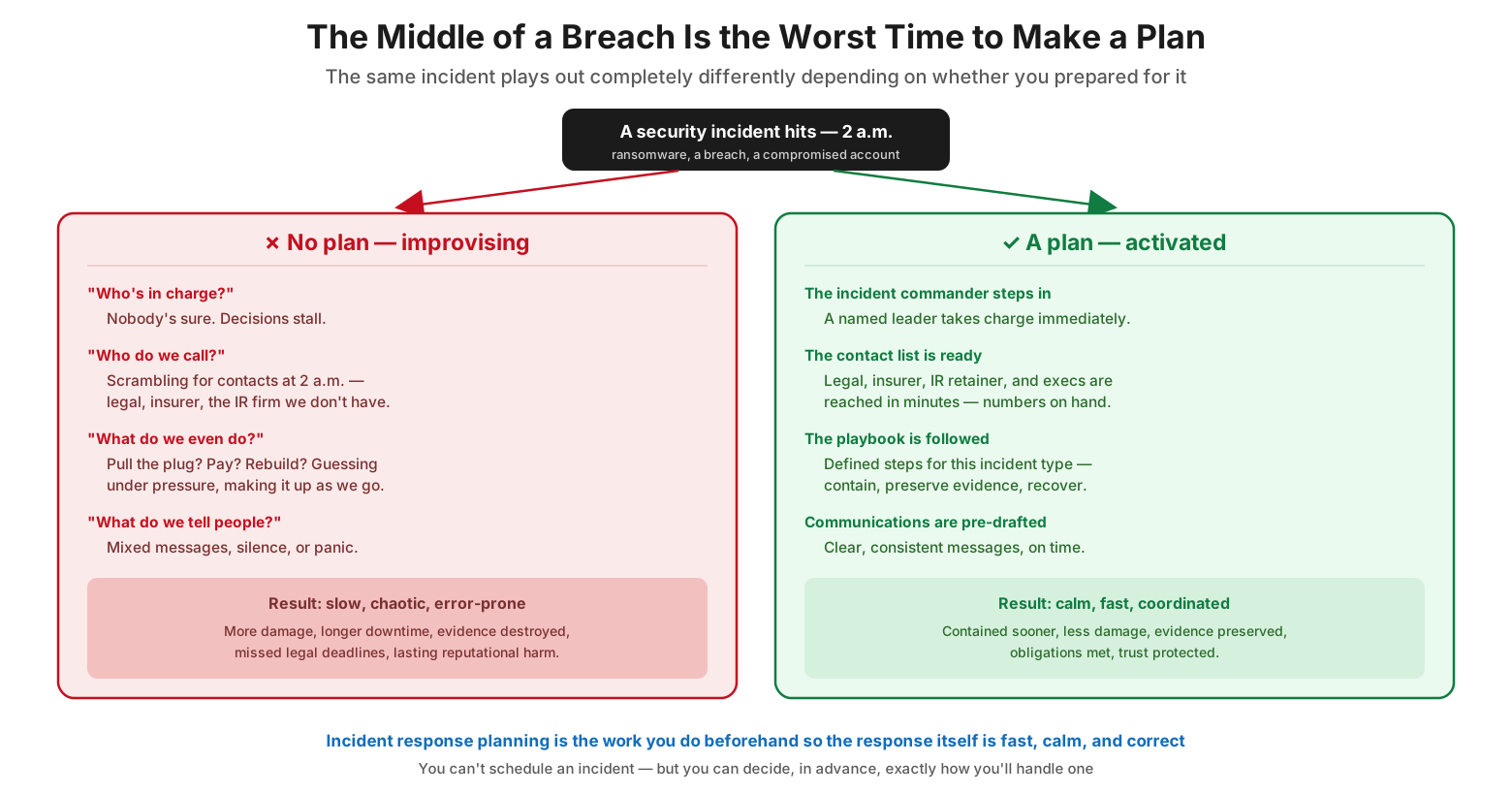
Imagine a security incident hits at two in the morning — ransomware, a breach, a compromised account. In an organization with no plan, the response is improvised. “Who’s in charge?” — nobody’s sure, so decisions stall. “Who do we call?” — people scramble for contacts, discovering they have no incident response firm and can’t reach legal or their insurer. “What do we even do?” — pull the plug, pay, rebuild? — they guess under pressure. “What do we tell people?” — the result is mixed messages, silence, or panic. The outcome is slow, chaotic, and error-prone: more damage, longer downtime, destroyed evidence, missed legal deadlines, and lasting reputational harm. In an organization with a plan, the same incident triggers a rehearsed response. The incident commander steps in and takes charge immediately. The contact list is ready, so legal, the insurer, the IR retainer, and executives are reached in minutes. The playbook for this incident type is followed — contain, preserve evidence, recover. Communications are pre-drafted, so messages are clear, consistent, and on time. The outcome is calm, fast, and coordinated: contained sooner, less damage, evidence preserved, obligations met, and trust protected. Incident response planning is precisely the work done beforehand so that the response is fast, calm, and correct — because you cannot schedule an incident, but you can decide in advance how you will handle one.
The Incident Response Lifecycle
A structured response follows a lifecycle, and understanding its phases keeps a team from skipping the steps that matter under pressure. The most widely used framework comes from NIST, with a close and equally valid variant from SANS.
The incident response lifecycle
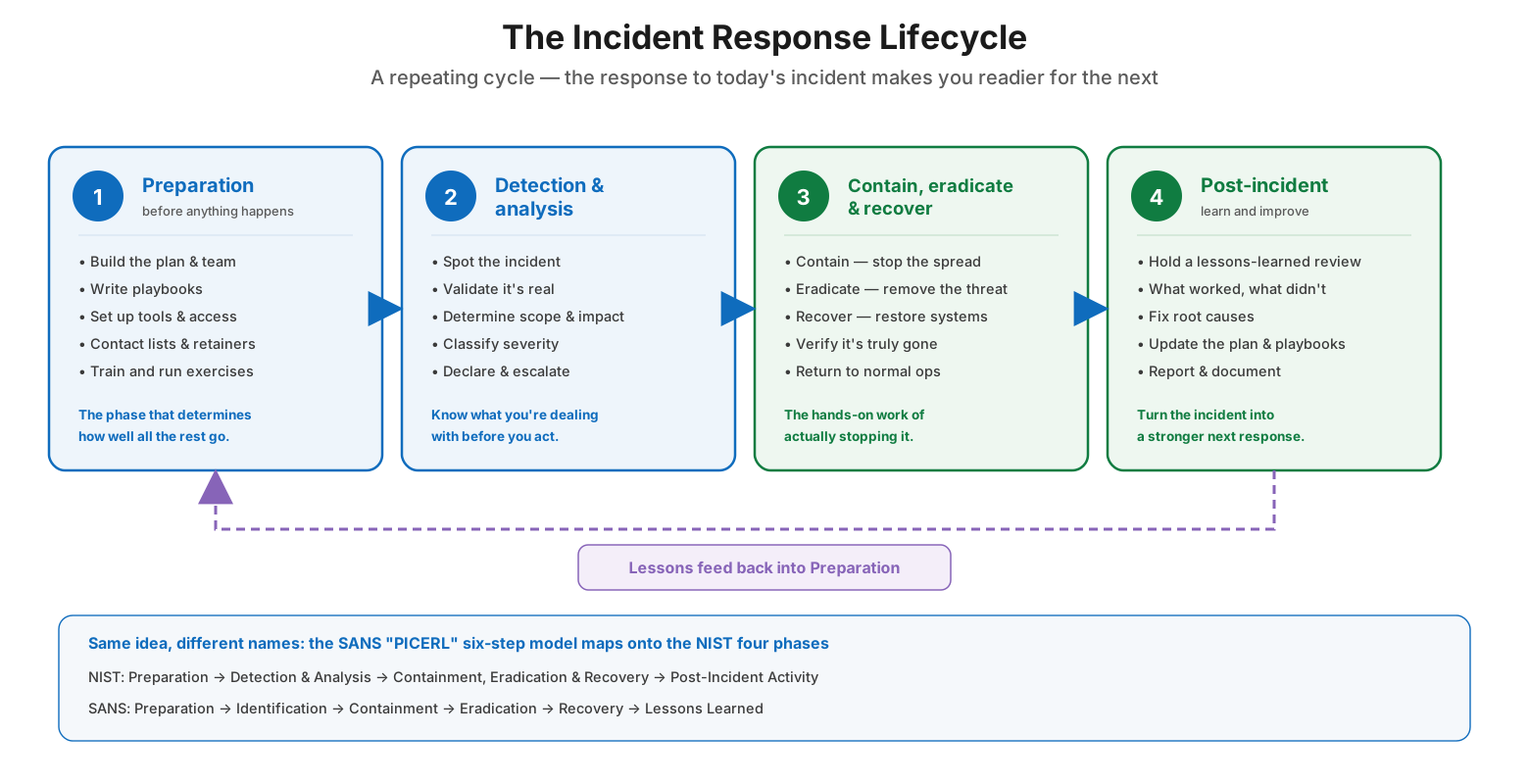
The lifecycle has four phases in the NIST model, and it is a cycle rather than a straight line. The first phase is preparation, done before anything happens: building the plan and team, writing playbooks, setting up tools and access, assembling contact lists and retainers, and training through exercises. This is the phase that determines how well all the others go. The second is detection and analysis: spotting the incident, validating that it’s real, determining its scope and impact, classifying its severity, and formally declaring and escalating it — knowing what you’re dealing with before you act. The third combines containment, eradication, and recovery: containing to stop the spread, eradicating to remove the threat, recovering to restore systems, verifying the threat is truly gone, and returning to normal operations — the hands-on work of actually stopping it. The fourth is post-incident activity: holding a lessons-learned review, assessing what worked and what didn’t, fixing root causes, updating the plan and playbooks, and documenting the event — turning the incident into a stronger next response. Those lessons feed directly back into preparation, closing the loop. The same idea appears under different names in the SANS “PICERL” model — Preparation, Identification, Containment, Eradication, Recovery, and Lessons Learned — which simply subdivides the NIST phases; the underlying discipline is identical.
| NIST phase | Purpose | Key activities |
|---|---|---|
| Preparation | Get ready before it happens | Plan, team, playbooks, tools, exercises |
| Detection & analysis | Understand the incident | Detect, validate, scope, classify, declare |
| Containment, eradication & recovery | Stop it and restore | Contain spread, remove threat, recover, verify |
| Post-incident activity | Learn and improve | Review, fix root causes, update plan, document |
The Incident Response Team: More Than Just IT
A frequent and costly assumption is that incident response is purely an IT job. In reality, a serious incident is a business event, and the response team must span several disciplines with one clear leader.
The incident response team: more than just IT
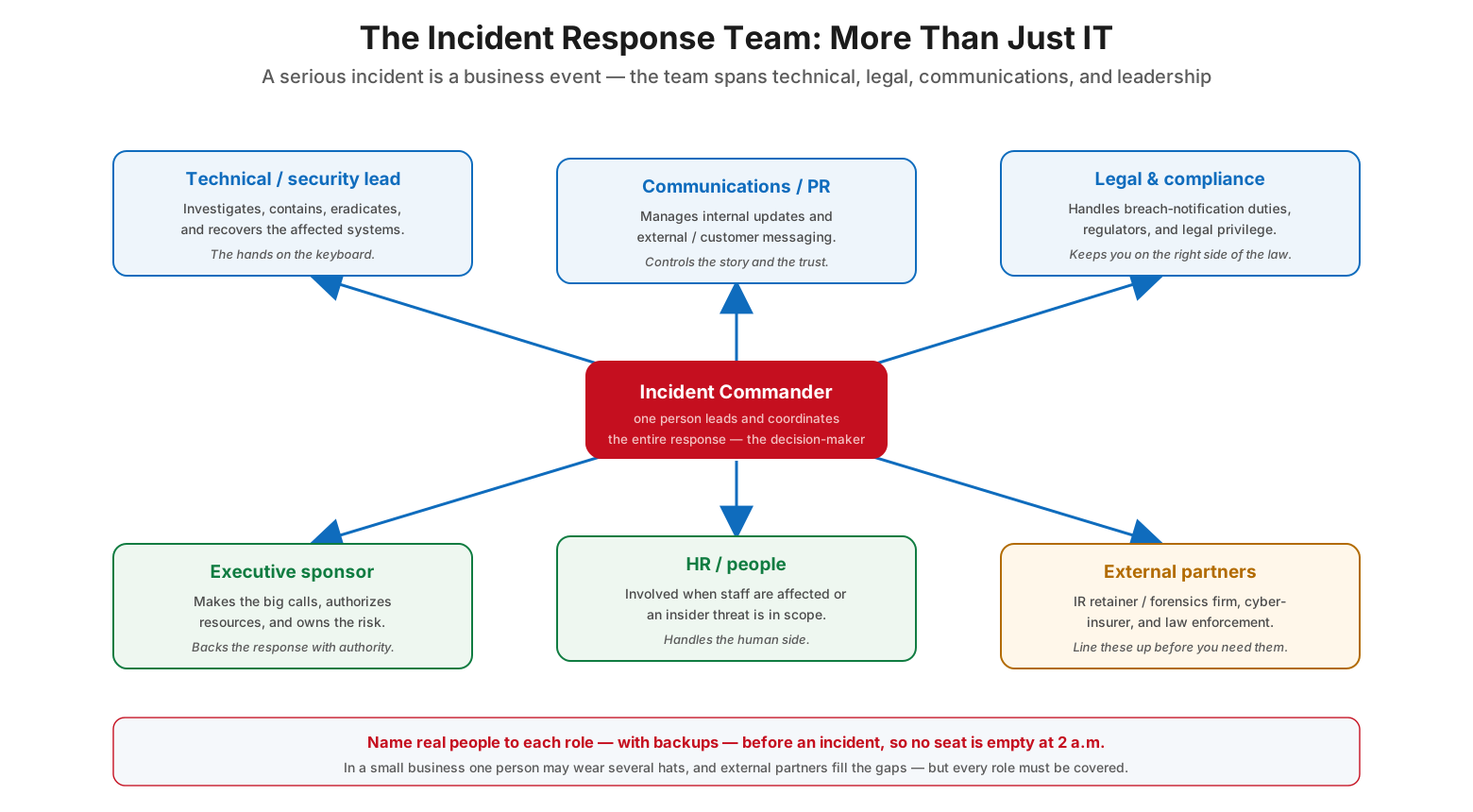
At the center is the incident commander — one person who leads and coordinates the entire response and serves as the decision-maker. Around that role sit the others. The technical or security lead investigates, contains, eradicates, and recovers the affected systems — the hands on the keyboard. Communications and PR manage internal updates and external or customer messaging, controlling the story and protecting trust. Legal and compliance handle breach-notification duties, regulators, and legal privilege, keeping the organization on the right side of the law. The executive sponsor makes the big calls, authorizes resources, and owns the risk, backing the response with real authority. HR or people-team involvement is needed when staff are affected or an insider threat is in scope, handling the human side. And external partners — an incident response retainer or forensics firm, the cyber-insurer, and law enforcement — fill capabilities the organization doesn’t have in-house, and should be lined up before they’re needed. The essential practice is to name real people to each role, with backups, before an incident, so no seat is empty at two in the morning. In a small business one person may wear several hats and external partners fill the gaps, but every role must be covered.
What Goes in an Incident Response Plan
The plan is the artifact that makes all of this executable. A good one is specific, current, and accessible — not a lengthy document that looks impressive on a shelf and helps no one during a crisis.
What goes in an incident response plan
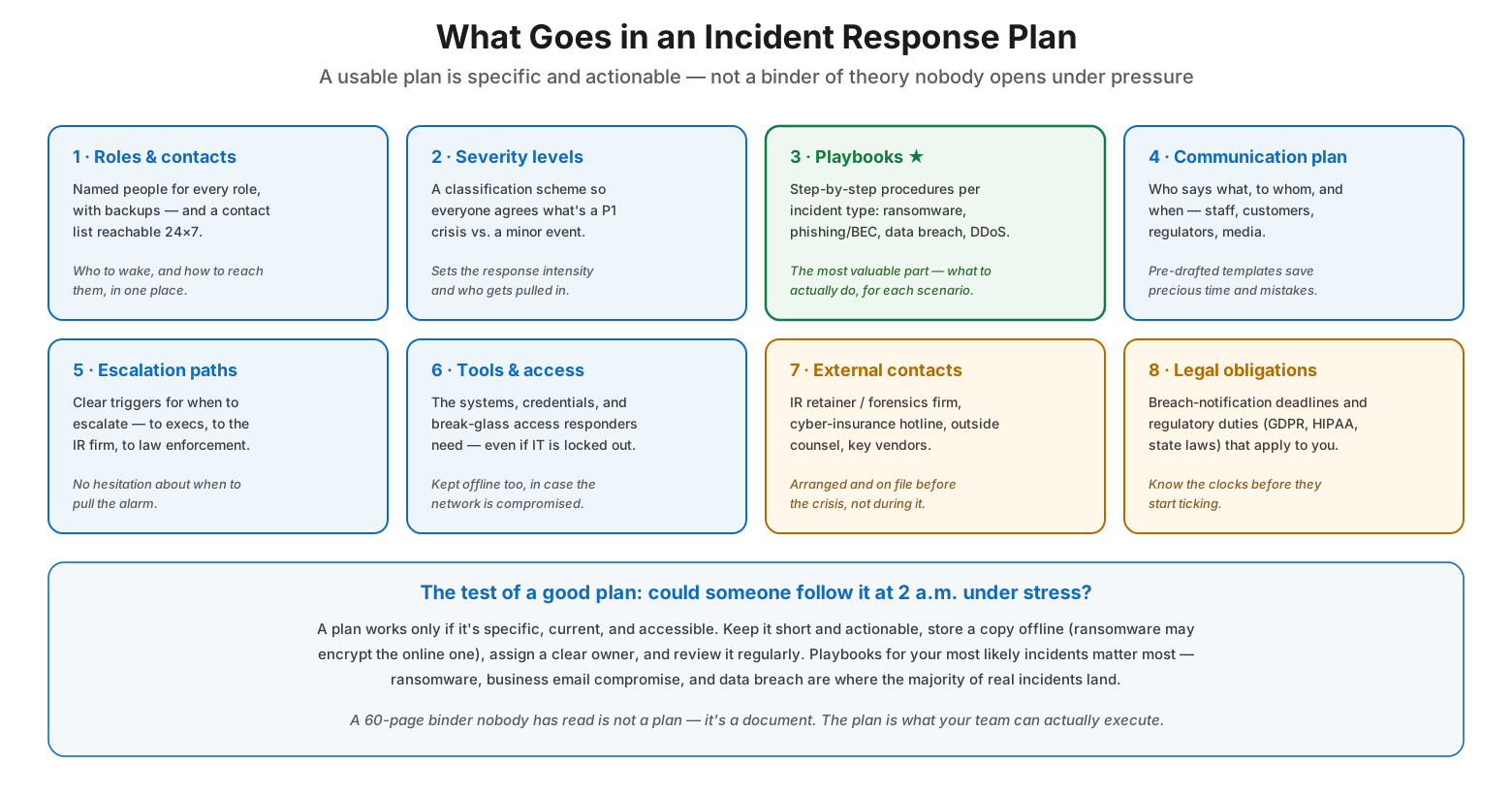
A practical plan contains eight essential components. Roles and contacts name a person for every role, with backups, and a contact list reachable around the clock. Severity levels provide a classification scheme so everyone agrees on what constitutes a top-priority crisis versus a minor event, which sets the response intensity. Playbooks — the most valuable part — give step-by-step procedures for each likely incident type, such as ransomware, phishing and business email compromise, data breach, and denial of service. A communication plan specifies who says what, to whom, and when, across staff, customers, regulators, and media, ideally with pre-drafted templates. Escalation paths define clear triggers for when to escalate to executives, the IR firm, or law enforcement, removing hesitation. Tools and access document the systems, credentials, and break-glass access responders need — kept offline too, in case the network is compromised. External contacts list the IR retainer, cyber-insurance hotline, outside counsel, and key vendors, arranged in advance. And legal obligations capture the breach-notification deadlines and regulatory duties that apply. The test of a good plan is whether someone could follow it at two in the morning under stress: keep it short and actionable, store a copy offline because ransomware may encrypt the online one, assign a clear owner, and prioritize playbooks for your most likely incidents. A sixty-page binder nobody has read is not a plan — it’s a document; the plan is what your team can actually execute.
| Component | What it provides |
|---|---|
| Roles & contacts | Named people and a 24×7 reachable contact list |
| Severity levels | A shared scheme for classifying incidents |
| Playbooks | Step-by-step procedures per incident type |
| Communication plan | Who says what, to whom, and when |
| Escalation paths | Clear triggers for escalating |
| Tools & access | Credentials and break-glass access (kept offline) |
| External contacts | IR firm, insurer, counsel, key vendors |
| Legal obligations | Breach-notification deadlines and duties |
Incident Response Planning Checklist
- Build the plan before you need it — don’t wait for the first incident.
- Name an incident commander and a full team, with backups, for every role.
- Include non-IT roles: communications, legal, executive, HR, and external partners.
- Arrange an IR retainer, cyber-insurance, and outside counsel in advance.
- Follow the lifecycle: preparation, detection/analysis, containment/eradication/recovery, post-incident.
- Write playbooks for your most likely incidents (ransomware, BEC, data breach).
- Define a severity classification scheme and escalation triggers.
- Pre-draft communication templates for staff, customers, and regulators.
- Document tools, credentials, and break-glass access — and keep a copy offline.
- Know your breach-notification deadlines and regulatory obligations.
- Test the plan with tabletop exercises and drills at least annually.
- Run a lessons-learned review after every incident and exercise, and update the plan.
Best Practices
A plan you never rehearse is only a hope. Exercise it at rising levels of realism, and turn every run into fixes that feed back into the plan.
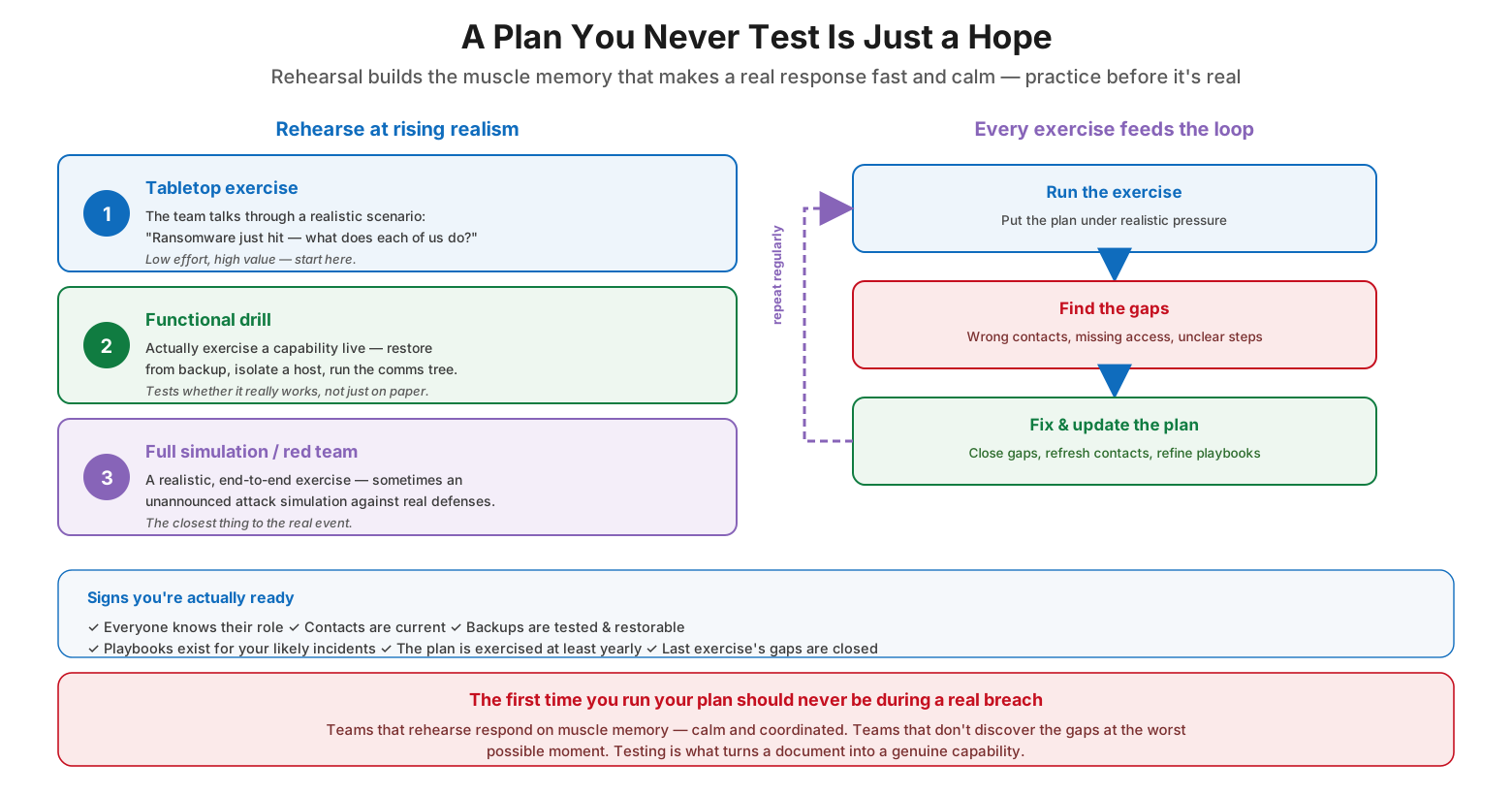
A plan you never test is just a hope
| Exercise type | What it is | Value |
|---|---|---|
| Tabletop | Talk through a scenario as a team | Low effort, high value — start here |
| Functional drill | Live-test one capability (e.g. restore backup) | Proves it works, not just on paper |
| Full simulation / red team | Realistic end-to-end, sometimes unannounced | Closest thing to the real event |
Plan before the incident, not during it. The entire value of incident response planning is front-loading decisions so the response is fast and calm. Decide who leads, who to call, and what to do while you have the luxury of time and clear heads.
Build a cross-functional team with one leader. Assign a single incident commander to coordinate, and staff the surrounding roles across technical, communications, legal, executive, and external partners. Name real people with backups so no role is unfilled when an incident strikes.
Prioritize playbooks for likely incidents. Generic plans help less than specific ones. Write concrete, step-by-step playbooks for the incidents you’re most likely to face — ransomware, business email compromise, and data breach cover the majority of real events.
Keep the plan short, current, and offline. A plan is only useful if it can be followed under stress. Make it concise and actionable, review it regularly, assign an owner, and store a copy offline so a ransomware attack can’t take your response plan with it.
Line up external help in advance. An incident response retainer, cyber-insurance, and outside counsel take time to engage. Establish these relationships before an incident so you’re not negotiating contracts while a breach spreads.
Test relentlessly and learn every time. Run tabletop exercises and drills to expose gaps before a real event does, and hold a lessons-learned review after every incident and exercise. Feed the findings back into the plan so it improves continuously.
Common Mistakes
Having no plan at all. The most damaging mistake is improvising the entire response during the incident. Without a plan, the early hours — when speed matters most — are lost to confusion over roles, contacts, and steps.
Treating it as IT-only. Assigning incident response solely to the IT team ignores the legal, communications, and executive decisions a serious incident demands. A breach is a business event and needs a business-wide team.
Writing a plan and never testing it. An untested plan is full of hidden gaps — wrong contacts, missing access, unclear steps — that surface at the worst possible moment. If the first time you run the plan is during a real breach, you’re not ready.
Making the plan too long to use. A comprehensive binder that no one can navigate under pressure is effectively useless. Brevity and clarity beat completeness when the clock is running.
Keeping the only copy online. Storing the plan and contact lists solely on systems that an attack might encrypt or take offline means losing access to your response plan exactly when you need it. Always keep an offline copy.
Skipping the lessons-learned step. Rushing back to business as usual after an incident without reviewing what happened wastes the most valuable learning opportunity you’ll get. The post-incident review is what makes the next response better.
Frequently Asked Questions
What is incident response planning? It is the process of preparing, in advance, for how an organization will handle a security incident — defining the team and roles, the response lifecycle, playbooks for likely incidents, communication and escalation procedures, and external contacts. The goal is a fast, calm, coordinated response instead of improvisation during a crisis.
Why do we need a plan if we have security tools and monitoring? Detection tells you an incident is happening; a plan tells you what to do about it. Even organizations with strong monitoring benefit enormously from having decided in advance who leads, who to call, and what steps to take. Tools and a plan are complementary, not substitutes.
What framework should we follow? The NIST incident response lifecycle — preparation, detection and analysis, containment/eradication/recovery, and post-incident activity — is the most widely used. The SANS PICERL model (Preparation, Identification, Containment, Eradication, Recovery, Lessons Learned) is an equally valid variant. Either provides a solid structure.
Who should be on the incident response team? More than just IT. Include a single incident commander to lead, a technical/security lead, communications, legal and compliance, an executive sponsor, HR when people are involved, and external partners such as an IR firm and cyber-insurer. In a small business, one person may cover multiple roles, but each function must be assigned.
What are playbooks and why do they matter? Playbooks are step-by-step procedures for handling specific incident types — ransomware, phishing/BEC, data breach, and so on. They’re the most practical part of a plan because they tell responders exactly what to do for the scenario at hand, rather than leaving them to improvise. Focus on the incidents you’re most likely to face.
How often should we test the plan? At least annually, and after any significant change. Start with low-effort tabletop exercises where the team talks through a scenario, then progress to functional drills that test real capabilities (like restoring from backup), and eventually full simulations. Every exercise should surface gaps that you then fix in the plan.
Conclusion
Incidents are, for most organizations, a matter of when rather than if — and the quality of the response is decided long before the incident begins. Incident response planning is the deliberate act of making the hard decisions in advance: who takes charge, who gets called, what steps are taken, and what is communicated. That preparation is what allows a team to respond on rehearsed muscle memory — fast, calm, and coordinated — instead of improvising in the panic of the moment, when confusion costs time, evidence, money, and trust.
A capable program brings together the same durable elements: a structured lifecycle that carries a team from preparation through recovery to lessons learned; a cross-functional team with a clear leader that treats an incident as the business event it is; a plan that is specific, current, offline-available, and above all followable under stress, with playbooks for the incidents most likely to occur; and regular testing that turns the document into a genuine capability. None of this is glamorous, and much of it is never used on any given day — but when the day comes, it is the difference between a contained, survivable event and a prolonged crisis. You cannot schedule an incident. You can decide, right now, exactly how you’ll meet one.
References
- NIST SP 800-61 — Computer Security Incident Handling Guide
- NIST Cybersecurity Framework 2.0 — Respond and Recover functions
- SANS — Incident Handler’s Handbook (PICERL)
- CISA — Incident Response resources
- CISA — Federal Government Cybersecurity Incident and Vulnerability Response Playbooks
- ISO/IEC 27035 — Information security incident management
- CIS Controls — Incident Response Management