IT Operational Excellence: Turning Good Practices Into a Well-Run Machine
Most IT teams know what good looks like in individual disciplines — service management, change control, documentation, monitoring, capacity planning.
- Content owner
- Insyto Content Team
- Editorial reviewer
- Ritesh Mhatre
- Technical reviewer
- Navish Ansari
- Next review
- To be scheduled
- Last reviewed
- Review pending
- Technical level
- Intermediate · IT directors, IT operations managers
Executive Summary
Most IT teams know what good looks like in individual disciplines — service management, change control, documentation, monitoring, capacity planning. Operational excellence is what happens when all of those practices come together, work consistently, and keep getting better. It is not a single technique or tool but a state: the condition in which IT runs predictably rather than heroically, recovers quickly rather than scrambling, gets ahead of problems rather than chasing them, and frees its people to add value rather than firefight. It is the destination that every other operational practice is quietly building toward, and it is what separates an IT function the business merely tolerates from one it genuinely relies on.
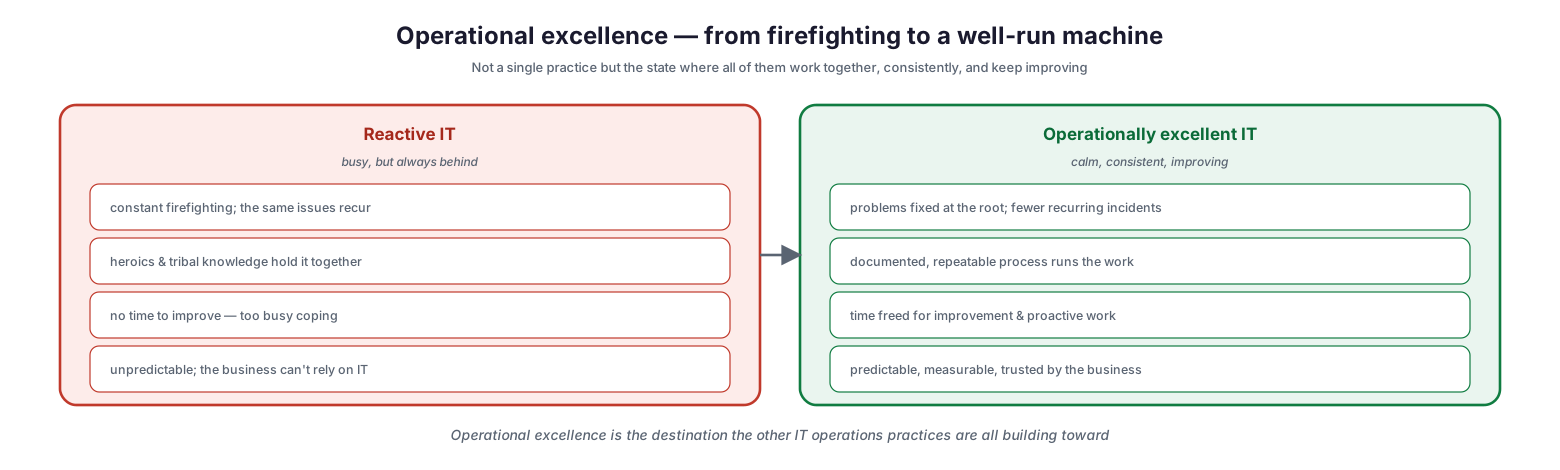
The contrast with the common alternative is stark. Reactive IT is busy but always behind — locked in constant firefighting, with the same issues recurring, held together by heroics and tribal knowledge, and with no time to improve because the team is too busy coping. It is unpredictable, and the business cannot depend on it. Operationally excellent IT is calm, consistent, and improving — problems are fixed at the root so incidents recur less, documented and repeatable processes run the work, time is freed for proactive improvement, and the whole operation is predictable, measurable, and trusted. The difference between the two is rarely talent; it is whether the team has built the mutually reinforcing habits that let it climb out of the reactive trap and stay out.
This vendor-neutral guide describes what operational excellence is and how to build it. It contrasts reactive with excellent IT, sets out the pillars that together produce excellence, presents a maturity model for locating where a team stands and what to do next, explains the continual-improvement engine and the culture that powers it, and covers how to measure excellence without falling for vanity metrics. Grounded in established service-management and reliability practice, the aim is a practical path from firefighting to a well-run machine — advanced one deliberate step at a time, because operational excellence is not a project to complete but a way of working to sustain.
From Firefighting to a Well-Run Machine
The starting point is recognizing the difference between being busy and being excellent, because reactive teams are often extremely busy while going nowhere. Operational excellence is the escape from that trap.
Operational excellence — from firefighting to a well-run machine
Reactive IT is busy but always behind: constant firefighting with the same issues recurring, heroics and tribal knowledge holding things together, no time to improve because the team is too busy coping, and an unpredictability that means the business cannot rely on IT. Operationally excellent IT is calm, consistent, and improving: problems fixed at the root so there are fewer recurring incidents, documented and repeatable processes running the work, time freed for improvement and proactive work, and an operation that is predictable, measurable, and trusted by the business. The crucial insight is that excellence is not a separate initiative bolted on top of daily work — it is the state the other IT operations practices are all designed to produce. Service management brings consistency, change management brings safety, documentation and runbooks capture knowledge, monitoring brings visibility, and capacity planning brings foresight; operational excellence is what emerges when these are all working together and reinforcing one another.
The Pillars of Operational Excellence
Excellence is not one thing but the combination of several, and no single pillar delivers it alone. Understanding the pillars shows why they must be built together.
The pillars of operational excellence
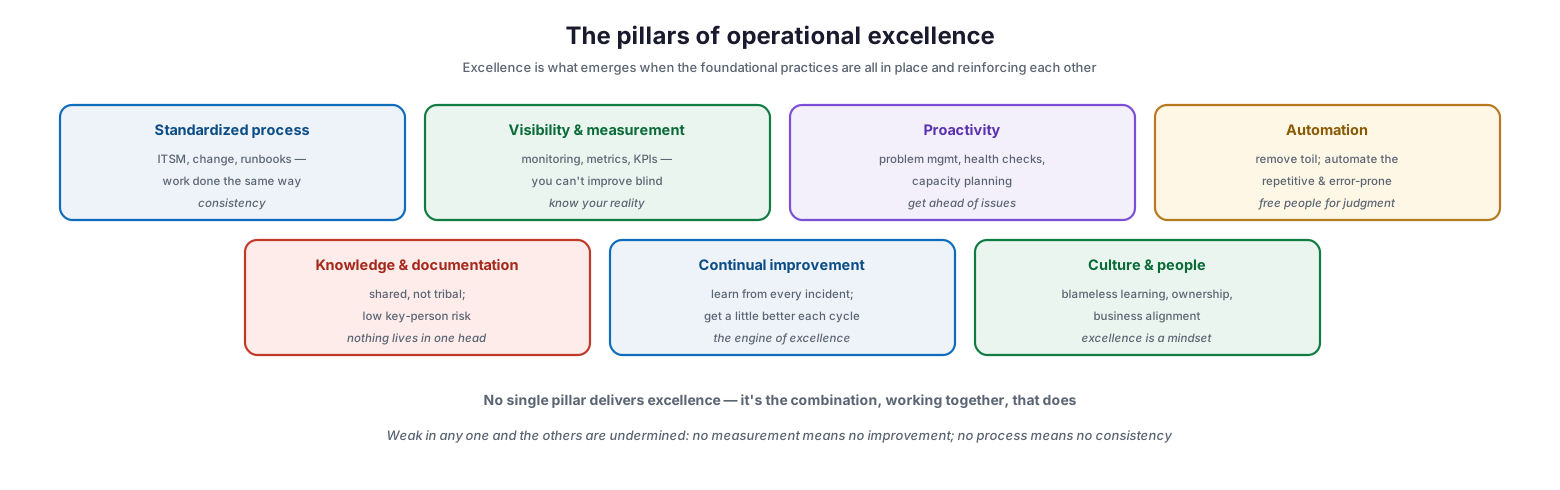
Seven pillars support operational excellence. Standardized process — through service management, change enablement, and runbooks — means work is done the same way, delivering consistency. Visibility and measurement — through monitoring, metrics, and KPIs — provides the reality you cannot improve without. Proactivity — through problem management, health checks, and capacity planning — gets the team ahead of issues rather than chasing them. Automation removes toil, handling the repetitive and error-prone so people are freed for judgment. Knowledge and documentation makes expertise shared rather than tribal, keeping key-person risk low. Continual improvement learns from every incident and gets a little better each cycle — the engine of the whole thing. And culture and people — blameless learning, ownership, and business alignment — provides the mindset that holds it together. The pillars are interdependent: weakness in any one undermines the others. No measurement means no improvement; no process means no consistency; no documentation means every gain is one resignation away from being lost. Excellence is the emergent property of the whole set working together.
| Pillar | What it provides |
|---|---|
| Standardized process | Consistency — work done the same way |
| Visibility & measurement | The reality you can’t improve without |
| Proactivity | Getting ahead of issues |
| Automation | Freeing people from toil |
| Knowledge & documentation | Shared, low-key-person-risk expertise |
| Continual improvement | The engine of getting better |
| Culture & people | The mindset that sustains it all |
The Maturity Climb
Operational excellence is a journey up a maturity curve, and the most useful first step is to locate honestly where a team currently stands. Each rung is a real, recognizable state, and the goal is to advance one level at a time.
The maturity climb — where are you, and what’s next?
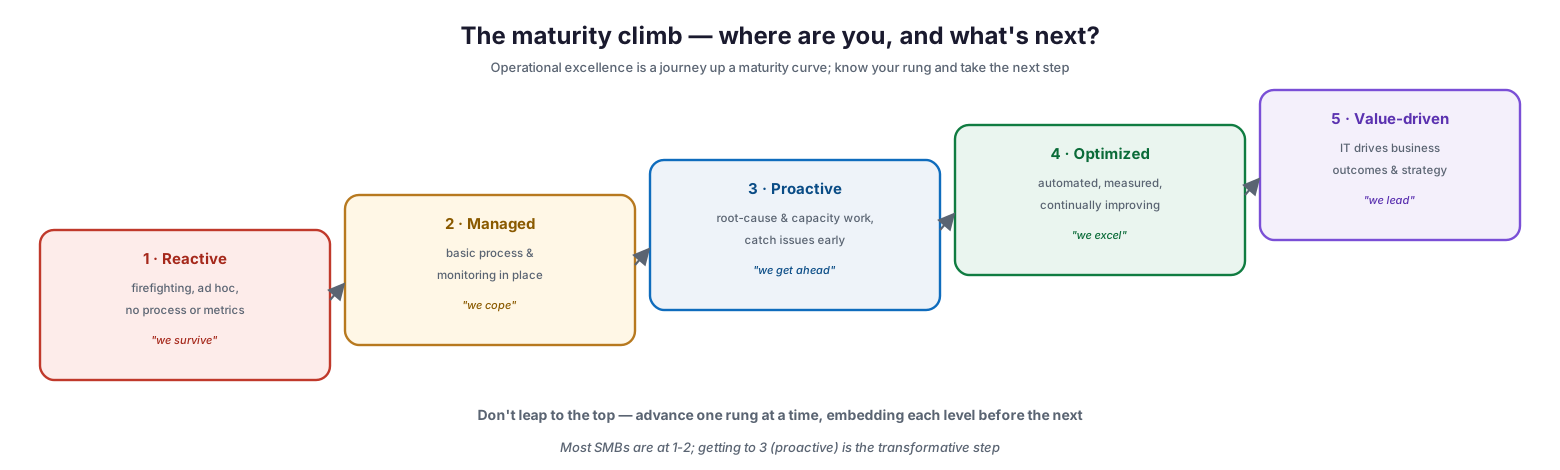
The climb runs through five levels. Reactive is firefighting, ad hoc, with no process or metrics — “we survive.” Managed adds basic process and monitoring — “we cope.” Proactive brings root-cause work and capacity planning so issues are caught early — “we get ahead.” Optimized is automated, measured, and continually improving — “we excel.” And value-driven is where IT actively drives business outcomes and strategy — “we lead.” The most important message about the climb is not to leap to the top: a team advances one rung at a time, embedding each level before reaching for the next, because skipping levels leaves gaps that collapse under pressure. Most small and mid-sized organizations sit at level one or two, and for them the transformative step is reaching level three — becoming proactive — because that is where IT stops being dominated by the work coming at it and starts getting in front of it. Knowing your rung turns “get better” from an aspiration into a concrete next action.
| Level | State | In a phrase |
|---|---|---|
| 1 · Reactive | Firefighting, ad hoc, no metrics | “We survive” |
| 2 · Managed | Basic process and monitoring | “We cope” |
| 3 · Proactive | Root-cause, capacity, catch early | “We get ahead” |
| 4 · Optimized | Automated, measured, improving | “We excel” |
| 5 · Value-driven | Drives business outcomes | “We lead” |
Continual Improvement: The Engine
If excellence has a single beating heart, it is continual improvement — the habit of getting a little better every cycle. It is what turns a static set of practices into a compounding capability, and it never stops.
Continual improvement — the engine that never stops
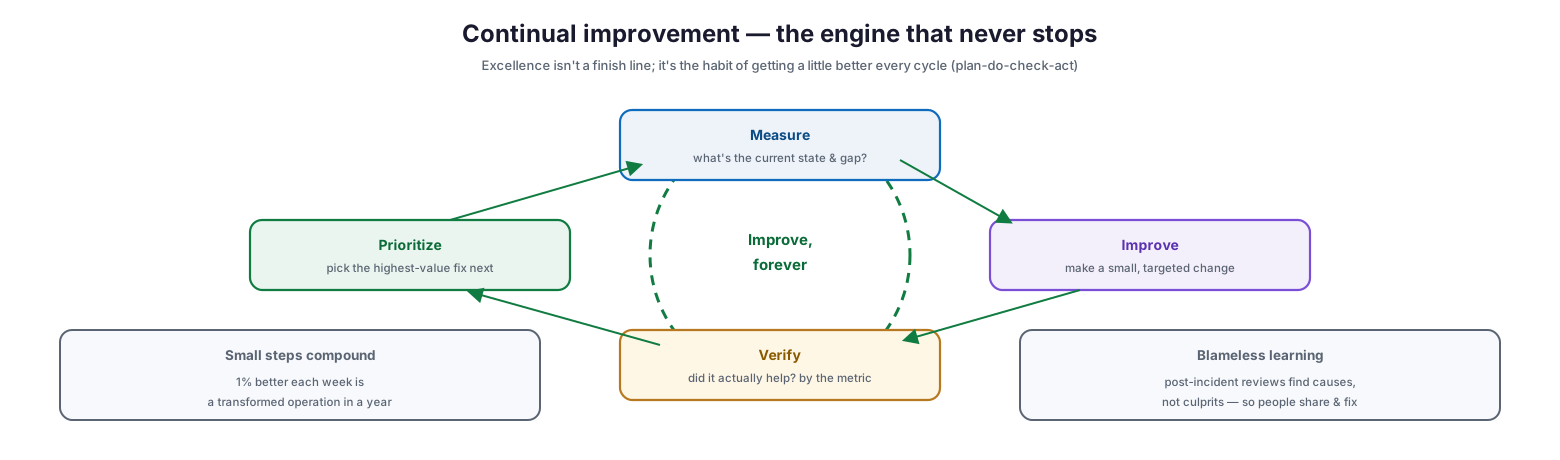
The improvement loop is simple and endless: measure the current state and the gap, prioritize the highest-value fix, improve by making a small targeted change, and verify whether it actually helped by the metric — then go again. Two truths make this powerful. First, small steps compound: improving by a small margin each week produces a transformed operation within a year, which is why excellence favors many small improvements over rare grand overhauls. Second, blameless learning is what makes it possible: post-incident reviews that find causes rather than culprits create the psychological safety for people to share what went wrong and fix it, whereas a blame culture drives problems underground where they cannot be addressed. Continual improvement is not a phase that ends when things are “good enough”; it is the permanent operating mode of an excellent team. The moment improvement stops, decay begins, because systems, demands, and threats keep changing while a static operation stands still.
Measuring Operational Excellence
Excellence must be measured to be managed, but measuring the wrong things is worse than not measuring at all. The discipline is to track outcomes and experience, not mere activity.
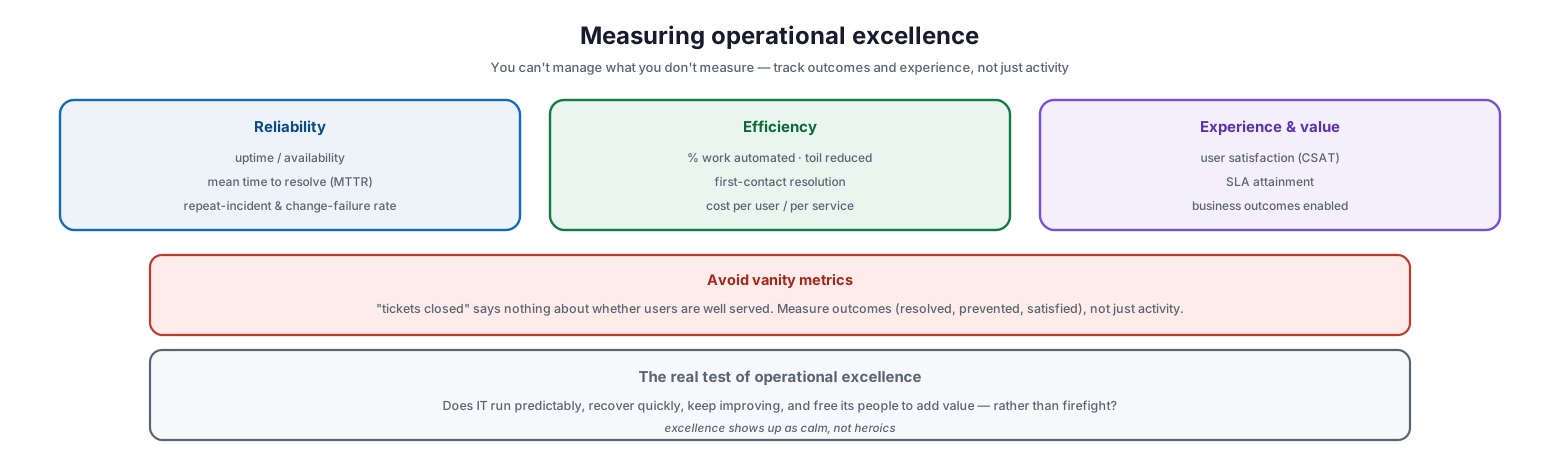
Measuring operational excellence
Good measurement spans three areas. Reliability — uptime and availability, mean time to resolve, and repeat-incident and change-failure rates — shows whether the operation is dependable. Efficiency — the percentage of work automated, toil reduced, first-contact resolution, and cost per user or per service — shows whether it is running lean. Experience and value — user satisfaction, SLA attainment, and business outcomes enabled — shows whether it is actually serving the business. Cutting across all three is a warning: avoid vanity metrics. “Tickets closed” says nothing about whether users are well served; a team can close thousands of tickets while resolving nothing at the root. Measure outcomes — resolved, prevented, satisfied — not just activity. The real test of operational excellence is a set of questions rather than a single number: does IT run predictably, recover quickly, keep improving, and free its people to add value rather than firefight? When the answer is yes, excellence shows up in a distinctive way — as calm, not heroics. The absence of drama is the truest sign that the machine is running well.
| Dimension | Example metrics | Beware |
|---|---|---|
| Reliability | Uptime, MTTR, repeat-incident & change-failure rate | Averages hiding bad tails |
| Efficiency | % automated, first-contact resolution, cost per user | Confusing busy with effective |
| Experience & value | User satisfaction (CSAT), SLA attainment, outcomes enabled | Ignoring the user’s view |
| (Vanity — avoid) | Raw tickets closed, hours logged | Activity ≠ outcomes |
IT Operational Excellence Checklist
- Recognize excellence as the combination of practices working together, not a single tool or project.
- Build all seven pillars: process, measurement, proactivity, automation, knowledge, improvement, and culture.
- Locate your current maturity level honestly, from reactive to value-driven.
- Advance one maturity level at a time; embed each before reaching for the next.
- Prioritize reaching the proactive level — getting ahead of issues is the transformative step.
- Fix problems at the root through problem management, not just repeatedly at the surface.
- Automate repetitive, error-prone work to free people for judgment and improvement.
- Capture knowledge in documentation and runbooks so expertise is shared, not tribal.
- Run a continual-improvement loop: measure, prioritize, improve, verify — forever.
- Foster a blameless culture where post-incident reviews find causes, not culprits.
- Measure reliability, efficiency, and experience — outcomes, not vanity metrics.
- Judge success by calm predictability, fast recovery, and freed capacity, not by heroics.
Best Practices
Treat excellence as a system, not a project. It is the emergent result of many practices reinforcing each other, and it is never “finished.” Build the pillars together and keep them working, rather than chasing a one-off transformation.
Know your maturity level. Locate yourself honestly on the curve and take the next single step. Trying to jump straight to optimized skips the foundations that make it stick, and usually collapses.
Get proactive first. For most teams, the biggest leap is from reacting to getting ahead — through problem management, health checks, and capacity planning. Prioritize the move to proactive above almost everything else.
Make improvement continuous and small. Favor many small improvements over rare big ones. A modest gain every cycle compounds into a transformed operation, and small changes are safer and easier to verify.
Build a blameless culture. Excellence depends on people surfacing problems, which they will only do without fear of blame. Post-incident reviews should hunt causes, not culprits, and celebrate the finding of weaknesses.
Measure outcomes, not activity. Track reliability, efficiency, and user experience, and resist vanity metrics like raw ticket counts. The goal is a business that is well served, not a team that looks busy.
Common Mistakes
Chasing tools over habits. Believing that a new platform will deliver operational excellence ignores that excellence is a way of working. Tools support the practices; they do not create the discipline.
Trying to transform overnight. Attempting to jump from reactive to optimized in one leap overwhelms the team and leaves fragile foundations. Advance one maturity level at a time.
Never leaving firefighting. Staying permanently reactive, with no time carved out for proactive and improvement work, guarantees the same fires keep burning. Breaking the cycle requires deliberately investing in getting ahead.
Improving without measuring. Making changes with no metrics means never knowing whether they helped. Continual improvement depends on measuring the current state and verifying the effect.
Running a blame culture. Punishing people for incidents drives problems into hiding, where they fester. Blameless reviews are what make honest, effective improvement possible.
Measuring activity, not outcomes. Judging IT by tickets closed or hours logged rewards busyness over results. Excellence is measured by reliability, efficiency, and whether users and the business are genuinely well served.
Frequently Asked Questions
What is IT operational excellence? It is the state in which IT operations run predictably, consistently, and efficiently, recover quickly from problems, get ahead of issues rather than reacting to them, and continually improve. It is the combined result of good practices working together, not a single technique.
How is it different from just having good practices? Individual practices — service management, change control, documentation — are necessary but not sufficient. Operational excellence is what emerges when they all work together and reinforce each other, powered by continual improvement and the right culture.
How do we know our maturity level? Assess honestly against the maturity curve: reactive (firefighting, no metrics), managed (basic process and monitoring), proactive (root-cause and capacity work), optimized (automated and continually improving), and value-driven (driving business outcomes). Most smaller organizations are at level one or two.
What is the most important step toward excellence? For most teams, moving from reactive to proactive. Getting ahead of issues — through problem management, health checks, and capacity planning — breaks the firefighting cycle and frees the time needed to improve everything else.
Why does culture matter so much? Because excellence depends on people surfacing problems and improving continually, which they will only do in a blameless environment. A blame culture hides problems; a learning culture fixes them. Culture is the foundation the technical practices stand on.
How do we measure operational excellence? Track reliability (uptime, MTTR, repeat incidents), efficiency (automation, first-contact resolution, cost), and experience (satisfaction, SLA attainment, business outcomes). Avoid vanity metrics like raw ticket counts, and judge success by calm, predictable, improving operations.
Conclusion
Operational excellence is the point at which an IT function stops being defined by the fires it fights and starts being defined by how smoothly it runs. It is not a product to buy or a project to finish, but a state that emerges when standardized process, visibility, proactivity, automation, shared knowledge, continual improvement, and a healthy culture all work together and reinforce each other. The payoff is an operation that is predictable, quick to recover, always improving, and trusted by the business — and a team whose energy goes into adding value rather than surviving the day.
The path there is a deliberate climb, not a leap. Locate your maturity level honestly, advance one rung at a time, and prioritize the transformative move from reacting to getting ahead. Power the whole thing with continual improvement — small, measured, compounding changes — and protect it with a blameless culture where problems are surfaced and solved rather than hidden. Measure outcomes rather than activity, and let the truest sign of success be the one that is easy to overlook: calm. When IT runs so well that heroics are rarely needed, the machine is working as it should — and that quiet, dependable competence is what operational excellence ultimately delivers.
References
- ITIL 4 — Continual Improvement practice (overview)
- Google SRE — The SRE approach to operations and reliability
- Google SRE — Postmortem Culture: Learning from Failure (blameless reviews)
- DORA / Accelerate — capabilities and performance
- ISO/IEC 20000-1 — Service management system requirements
- CMMI — Capability Maturity Model Integration (maturity levels)
- Google SRE — Eliminating Toil (automation and improvement)