IT Roadmap for Growing Businesses
Growing businesses rarely fail because they lack technology; they stumble because their technology grows by accident.
- Content owner
- Insyto Content Team
- Editorial reviewer
- Ritesh Mhatre
- Technical reviewer
- Navish Ansari
- Next review
- To be scheduled
- Last reviewed
- Review pending
- Technical level
- Beginner · CIOs, CTOs, IT directors
Executive Summary
Growing businesses rarely fail because they lack technology; they stumble because their technology grows by accident. Systems are bought to solve today’s problem, tools accumulate without a plan, and IT spending becomes a series of surprises rather than an investment. An IT roadmap fixes this. It is a high-level, strategic plan — typically spanning one to three years — that aligns technology initiatives with business goals, answering the “why” and “what” of IT investment rather than the granular detail of any single project. For a leadership team, it turns IT from an unpredictable cost center into a deliberate enabler of growth.
The discipline of a roadmap is that it starts with the business, not the technology. It begins from where the company is headed — the growth targets, the new markets, the efficiency and risk goals — and works backward to the technology needed to get there. It sequences that technology across horizons so the foundation is solid before the ambitious work begins, prioritizes ruthlessly so scarce budget goes to what matters most, and makes cost predictable by forecasting it over time. Done well, it is the difference between IT that constrains growth and IT that accelerates it.
This guide is a vendor-neutral framework for building an IT roadmap in a growing business. It covers how to align technology to business goals, how to plan across the now-next-later horizons, the layers to build in order, how to prioritize and budget, and how the roadmap is owned and kept alive. It is deliberately technology-agnostic — the method applies whatever platforms a business runs — and is written for the leaders who must fund and govern the plan, not just the technicians who execute it.
Who should read this:
- CIOs, CTOs, and IT directors setting technology direction
- Business owners, CEOs, and boards funding technology investment
- Finance leaders forecasting and governing IT spend
- IT managers translating strategy into delivery
Why does a growing business need a roadmap?
Without a roadmap, IT decisions are made one urgent ticket at a time, and the cumulative result is technical debt, fragile systems, and spending nobody planned. The most common failure mode for a scaling business is exactly this: the IT that got you to twenty people quietly breaks at eighty, and the fix becomes a crisis instead of a plan.
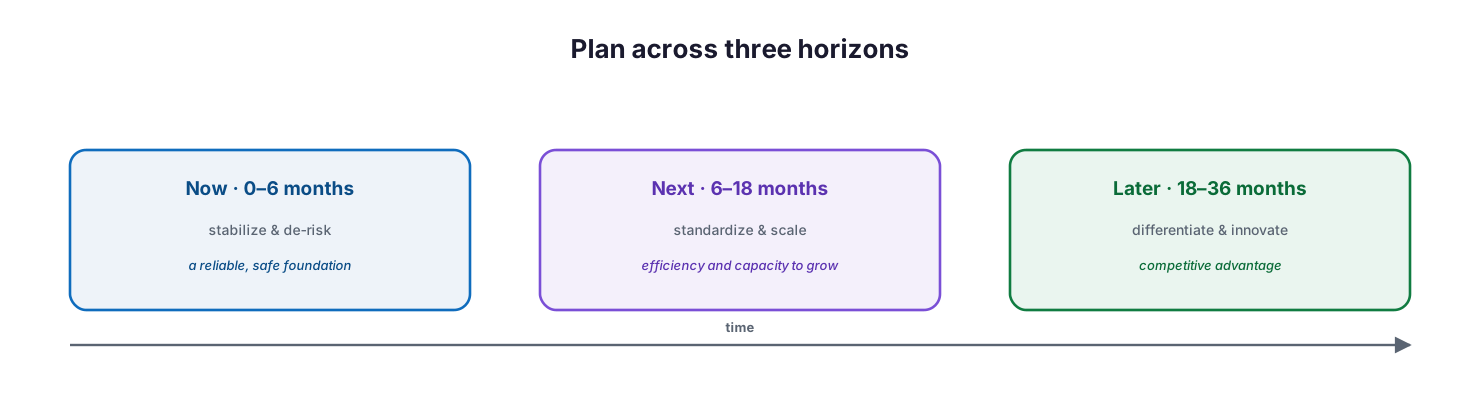
Start with the business, not the technology: business goals — growth, cost, risk, service — drive IT initiatives (the roadmap), which produce measurable business outcomes; every initiative traces back to a business goal.
A roadmap replaces that pattern with intent. It aligns every technology initiative to a business goal — growth, cost control, risk reduction, better customer service — so investment is defensible and outcomes are measurable. It gives leadership a shared view of what is coming and why, turns technology spending into a predictable operating cost rather than a series of shocks, and ensures the foundations scale ahead of the business rather than behind it. The test of any initiative is simple: if it does not trace back to a business goal, it does not belong on the roadmap.
How do you plan across horizons?
A roadmap is easier to build and fund when it is split into time horizons. Each horizon has a different job, and confusing them — chasing innovation before the basics are stable — is how roadmaps fail.
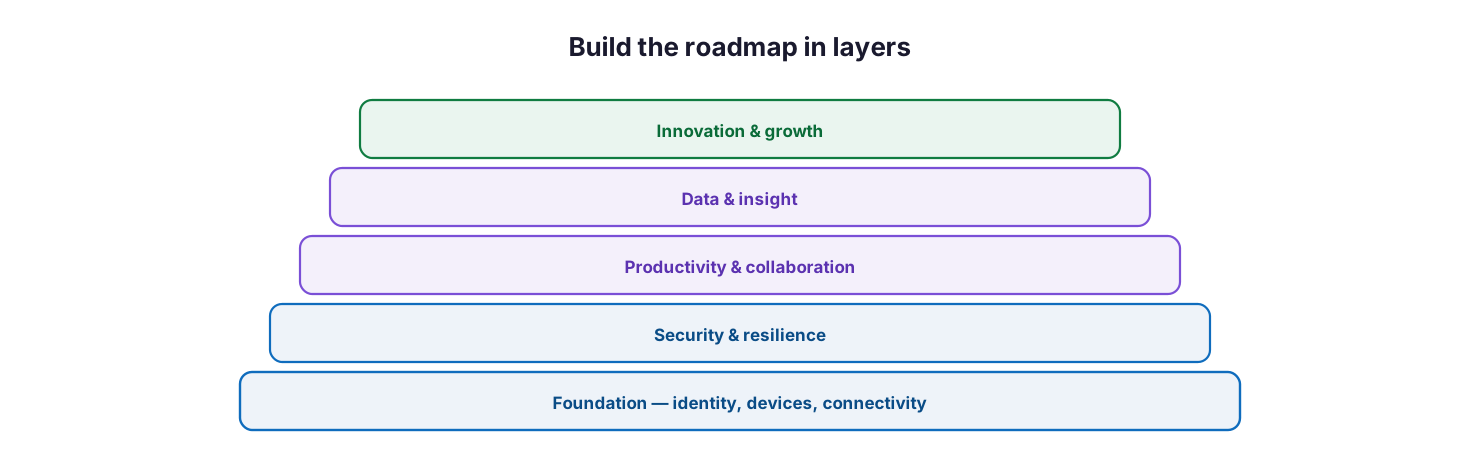
Plan across three horizons: Now (0–6 months) to stabilize and de-risk into a reliable, safe foundation; Next (6–18 months) to standardize and scale for efficiency and capacity to grow; and Later (18–36 months) to differentiate and innovate for competitive advantage.
| Horizon | Timeframe | Focus | Business outcome |
|---|---|---|---|
| Now | 0–6 months | Stabilize and de-risk | A reliable, secure foundation |
| Next | 6–18 months | Standardize and scale | Efficiency and capacity to grow |
| Later | 18–36 months | Differentiate and innovate | Competitive advantage |
The Now horizon fixes what is broken or dangerous — security gaps, no tested backup, unmanaged devices. The Next horizon standardizes and automates so IT can scale without adding proportional cost or risk. The Later horizon is where data, automation, and innovation create advantage. Most growing businesses should spend heavily on Now and Next, and treat Later as a direction rather than a commitment.
What do you build, and in what order?
Roadmaps go wrong when the exciting work is attempted before the boring work is done. Technology has a natural build order: each layer depends on the ones beneath it, and skipping a layer creates fragility that surfaces later at the worst time.
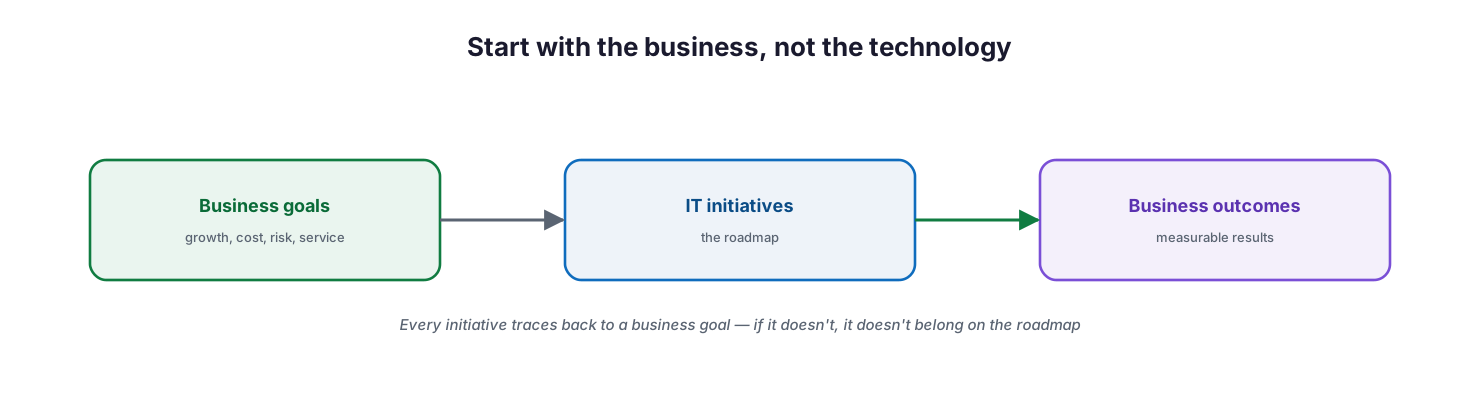
Build the roadmap in layers: a foundation of identity, devices, and connectivity; then security and resilience; then productivity and collaboration; then data and insight; and finally innovation and growth.
| Layer | What it delivers | Why the order matters |
|---|---|---|
| Foundation | Identity, devices, connectivity | Everything else depends on it |
| Security & resilience | Protection, backup, recovery | Protects the business as it scales |
| Productivity & collaboration | The tools people use daily | Direct, visible workforce value |
| Data & insight | Trustworthy data and reporting | Better, faster decisions |
| Innovation & growth | Automation, AI, new capabilities | Competitive edge |
The sequence is not rigid — work proceeds in parallel — but the dependency is real: a business chasing AI-driven insight on top of ungoverned data and unmanaged devices is building on sand. Get the foundation and security right, and the higher layers deliver far more reliably.
How do you prioritize and budget?
A roadmap that lists everything is not a plan; it is a wish list. The value comes from sequencing — deciding what happens first, funded and owned, and what waits. Two lenses do most of the work: the business value an initiative delivers, and the effort to deliver it.
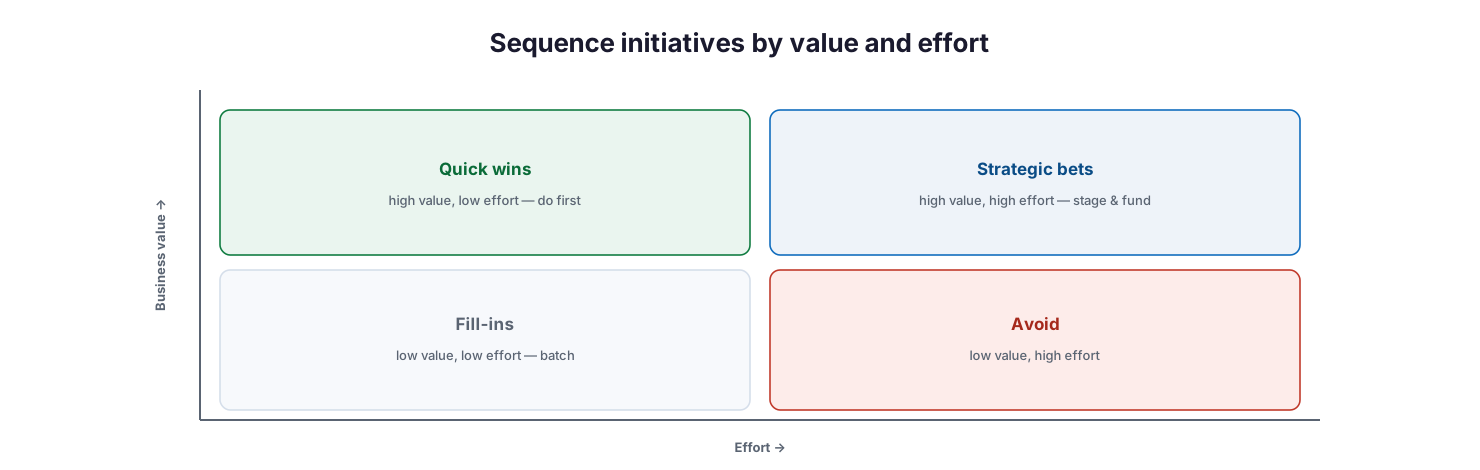
Sequence initiatives by value and effort: quick wins are high value and low effort (do first), strategic bets are high value and high effort (stage and fund), fill-ins are low value and low effort (batch), and low-value high-effort items are avoided.
Lead with quick wins to build momentum and credibility, stage the strategic bets so they are funded properly rather than half-done, and be willing to say no to the low-value work. It also helps to categorize incoming demands so the roadmap stays balanced across the reasons IT gets funded.
| Category | Priority | Typical example |
|---|---|---|
| Urgent risk reduction | Highest | Close a security or backup gap |
| Operational efficiency | High | Automate a manual, repetitive process |
| Compliance support | High | Meet a regulatory or contractual need |
| Growth enablement | Medium–high | Scale systems for new headcount or markets |
| Later-stage improvement | Lower | Optional enhancements and nice-to-haves |
Crucially, the roadmap makes budget predictable: by forecasting initiatives across the horizons, technology becomes a planned operating cost rather than a source of surprise expenses.
How do IT priorities change as you grow?
The right roadmap depends on where the business is on its growth curve. What is prudent for a twenty-person company is negligent for a two-hundred-person one.
| Growth stage | IT priority | Biggest risk |
|---|---|---|
| Early / startup | Cheap, flexible basics that work | Ad hoc setup, no security |
| Scaling | Standardize, secure, add capacity | Technical debt and breaches |
| Established | Optimize, govern, and innovate | Complacency and cost creep |
The transition that catches most businesses is from early to scaling: the informal, do-it-yourself IT that was fine at the start becomes a liability as headcount, data, and risk grow. A roadmap is what makes that transition deliberate instead of painful.
Who owns the roadmap, and how is it kept alive?
A roadmap is worthless if it is written once and filed. It needs an accountable owner, a funding decision, and a review cadence — otherwise it drifts out of step with the business it was meant to serve.
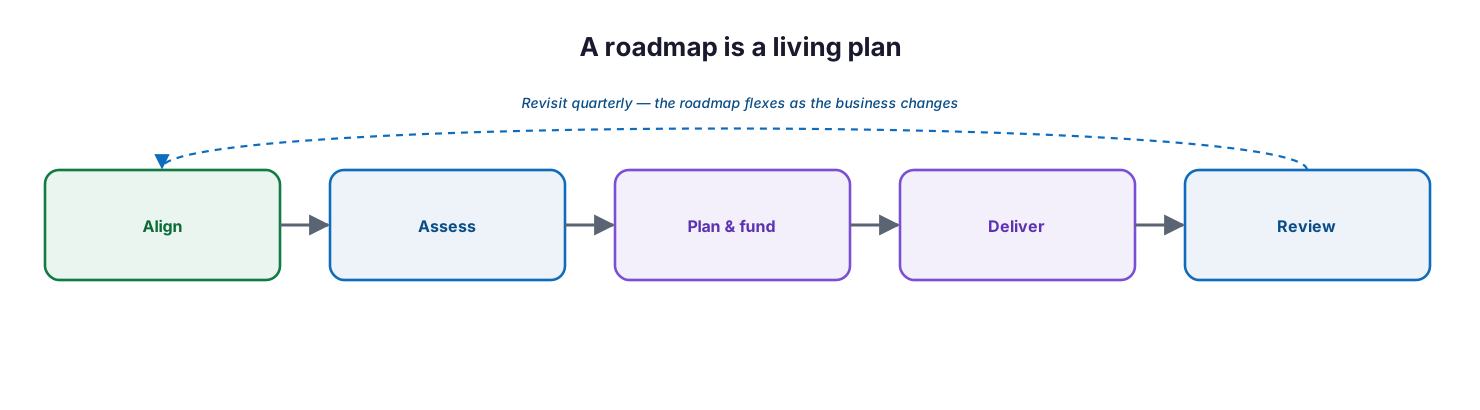
A roadmap is a living plan: align to business goals, assess the current state, plan and fund, deliver, and review — revisited quarterly so it flexes as the business changes.
| Activity | Responsible | Accountable | Output |
|---|---|---|---|
| Align to business goals | IT leader + executives | CEO / CIO | Agreed priorities |
| Assess current state | IT team / MSP | CIO | Baseline and gaps |
| Build the roadmap | vCIO + CIO | CIO | 1–3 year plan |
| Budget and fund | CIO + Finance | CFO / CIO | Funded plan |
| Review and re-plan | CIO | CIO | Updated roadmap |
The accountable owner is the CIO or equivalent, working with the executive team on priorities and finance on funding. Review the roadmap quarterly, adjust it as goals and conditions change, and measure delivery against it. A roadmap that is revisited is a management tool; one that is not is a document.
Implementation checklist
- Business goals for the next 1–3 years are documented and agreed
- The current IT environment has been assessed for gaps and risks
- Every roadmap initiative traces to a business goal
- Initiatives are placed across Now, Next, and Later horizons
- The build order respects dependencies — foundation and security first
- Initiatives are prioritized by business value and effort
- Demands are categorized (risk, efficiency, compliance, growth)
- Costs are forecast across horizons for predictable budgeting
- The CIO owns the roadmap; finance owns the funding
- The roadmap is reviewed and updated on a quarterly cadence
- Delivery is measured against the plan
Best practices
- Start from business goals and work backward to technology.
- Split the plan into Now, Next, and Later so it is fundable and clear.
- Build in layers — get the foundation and security right before the ambitious work.
- Prioritize by value and effort; lead with quick wins.
- Categorize demand so risk, efficiency, compliance, and growth stay balanced.
- Forecast cost across the horizons to make budgeting predictable.
- Give the roadmap an accountable owner and a funding decision.
- Review quarterly and adjust as the business changes.
- Measure delivery so the roadmap stays a management tool, not a document.
Common mistakes
- Buying technology tactically with no plan, accumulating debt and cost.
- Starting from tools instead of business goals.
- Chasing innovation before the foundation and security are solid.
- Producing a wish list with no priorities, owners, or budget.
- Treating the roadmap as a one-time document and never revisiting it.
- Letting early-stage, do-it-yourself IT persist well into the scaling phase.
- Failing to forecast cost, so IT spend stays a series of surprises.
- Measuring activity instead of delivery against the plan.
Frequently asked questions
What is an IT roadmap?
It is a high-level, strategic plan — usually one to three years — that aligns technology initiatives with business goals. It focuses on the why and what of IT investment and its sequence, not the granular detail of individual projects.
How is a roadmap different from an IT budget?
A budget allocates money; a roadmap decides what to invest in and when, and why. A good roadmap drives the budget by forecasting initiatives across horizons, turning IT into a predictable operating cost.
How far ahead should a roadmap look?
Typically one to three years. The near term (Now/Next) should be concrete and funded; the longer term (Later) is a direction that will be refined as the business and technology evolve.
Where do we start?
Start with business goals, then assess the current IT environment for gaps and risks, then prioritize initiatives by their impact on those goals. Technology choices come last, not first.
How often should it be reviewed?
Quarterly is a good default, with a fuller refresh annually or after any major change — new funding, an acquisition, a shift in strategy. A roadmap only stays useful if it is revisited.
Who should own the roadmap?
The CIO or equivalent IT leader, accountable to the executive team, working with finance on funding. Growing businesses without a full-time IT leader often use a virtual CIO (vCIO) to own it.
Conclusion
For a growing business, the difference between IT that constrains and IT that accelerates is a roadmap. It replaces reactive, tactical technology decisions with a deliberate plan that starts from business goals, sequences investment across horizons, builds in the right order, prioritizes ruthlessly, and makes cost predictable. It gives leadership a shared, fundable view of where technology is going and why — and it keeps the foundations scaling ahead of the business rather than breaking behind it.
The path forward is straightforward: agree the business goals, assess where IT stands today, map initiatives across Now, Next, and Later, prioritize by value and effort, fund the plan, and review it every quarter. Treated as a living management tool rather than a one-time document, an IT roadmap turns technology from a source of surprises into a dependable engine for growth.
References
This is a vendor-neutral overview of IT roadmap and strategy practice. The following industry and framework sources inform the approach; adapt them to your context. Source access date: 28 July 2026.
On this page
- Executive Summary
- Why does a growing business need a roadmap?
- How do you plan across horizons?
- What do you build, and in what order?
- How do you prioritize and budget?
- How do IT priorities change as you grow?
- Who owns the roadmap, and how is it kept alive?
- Implementation checklist
- Best practices
- Common mistakes
- Frequently asked questions
- Conclusion
- References