How to Choose a Managed Service Provider: A Practical Selection Guide
Once an organization decides to bring in outside help for its IT, the next question is decisive: which provider?
- Content owner
- Insyto Content Team
- Editorial reviewer
- Ritesh Mhatre
- Technical reviewer
- Navish Ansari
- Next review
- To be scheduled
- Last reviewed
- Review pending
- Technical level
- Beginner · CIOs, CTOs, IT directors
Executive Summary
Once an organization decides to bring in outside help for its IT, the next question is decisive: which provider? Choosing a managed service provider (MSP) is not like buying a piece of software or a commodity service. The provider you select will hold the keys to your IT — managing your systems, your data, your security, your users’ daily support, your uptime, and often your IT strategy itself. They become part of how your business runs every single day. That level of access and dependence makes the choice far more like selecting a long-term partner than making a one-off purchase, and it means the lowest price is rarely the right answer. Fit, trust, security, and track record matter more than the number on the quote.
Choosing well is worth real effort because getting it wrong is expensive. Switching MSPs later is disruptive, costly, and slow, since data, access, and accumulated knowledge all move with the provider. A weak MSP means downtime, security exposure, and frustration that ripples across the whole business, while a strong one becomes a genuine asset — reducing risk, enabling growth, and freeing leaders to focus on the business. The good news is that a good decision is not a matter of luck; it is the product of a structured process. That process means defining your needs clearly, scoring candidates against consistent criteria — expertise, security, SLAs, scalability, pricing transparency, communication, references, and a proactive strategic posture — running a deliberate selection sequence, watching for red and green flags, asking the questions that reveal how a provider truly operates, and nailing down the important promises in the contract.
This vendor-neutral guide walks through that decision end to end. It reframes MSP selection as choosing a partner, lays out eight evaluation criteria to score candidates fairly, presents a seven-step selection process, distinguishes the red flags that should give pause from the green flags that build confidence, and details the questions to ask and the contract and SLA terms to secure in writing. The throughline is simple: take the decision seriously, run a disciplined process, and insist that what matters is written down — because the cost of choosing carefully is always far lower than the cost of choosing wrong.
Choosing an MSP Is Picking a Partner, Not Making a Purchase
The single most important shift in mindset is to stop treating MSP selection as a procurement exercise and start treating it as choosing a partner. The reason is the depth of access and dependence involved.
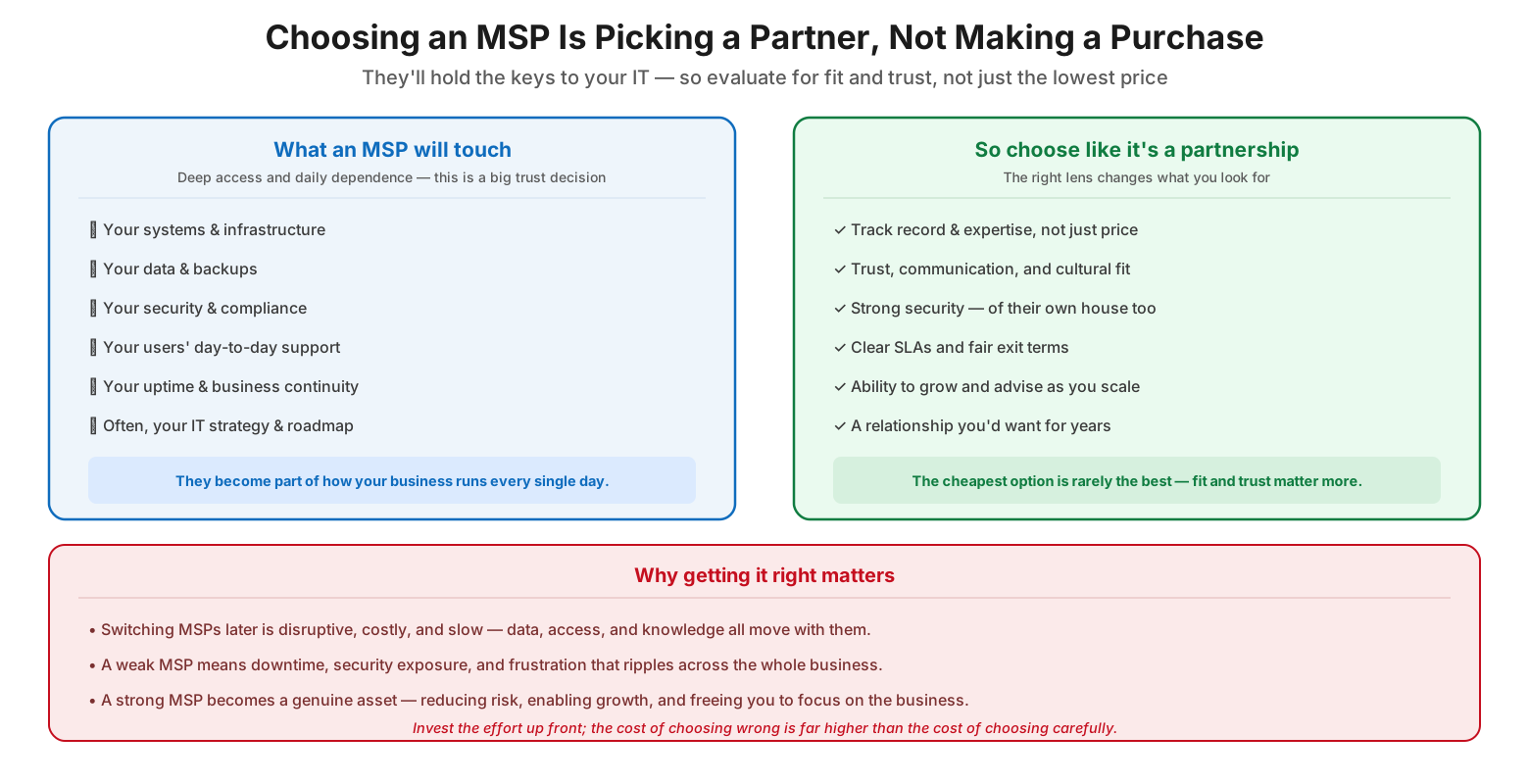
Choosing an MSP is picking a partner, not making a purchase
An MSP will touch nearly everything that matters: your systems and infrastructure, your data and backups, your security and compliance, your users’ day-to-day support, your uptime and business continuity, and often your IT strategy and roadmap. They become part of how your business runs every single day — which makes this a significant trust decision, not a simple transaction. Viewed through that lens, what you look for changes. You weigh track record and expertise rather than price alone; trust, communication, and cultural fit; strong security, including of their own house; clear SLAs and fair exit terms; the ability to grow and advise as you scale; and ultimately a relationship you would want to keep for years. The cheapest option is rarely the best, because fit and trust matter more. And getting the choice right matters because the stakes are high: switching MSPs later is disruptive, costly, and slow, as data, access, and knowledge all move with them; a weak MSP means downtime, security exposure, and business-wide frustration; and a strong MSP becomes a genuine asset that reduces risk, enables growth, and frees you to focus on the business. Invest the effort up front — the cost of choosing wrong is far higher than the cost of choosing carefully.
Eight Criteria for Evaluating an MSP
To compare candidates fairly rather than on gut feel or sales polish, score each against a consistent set of criteria. Applying the same yardstick to everyone makes the comparison defensible.
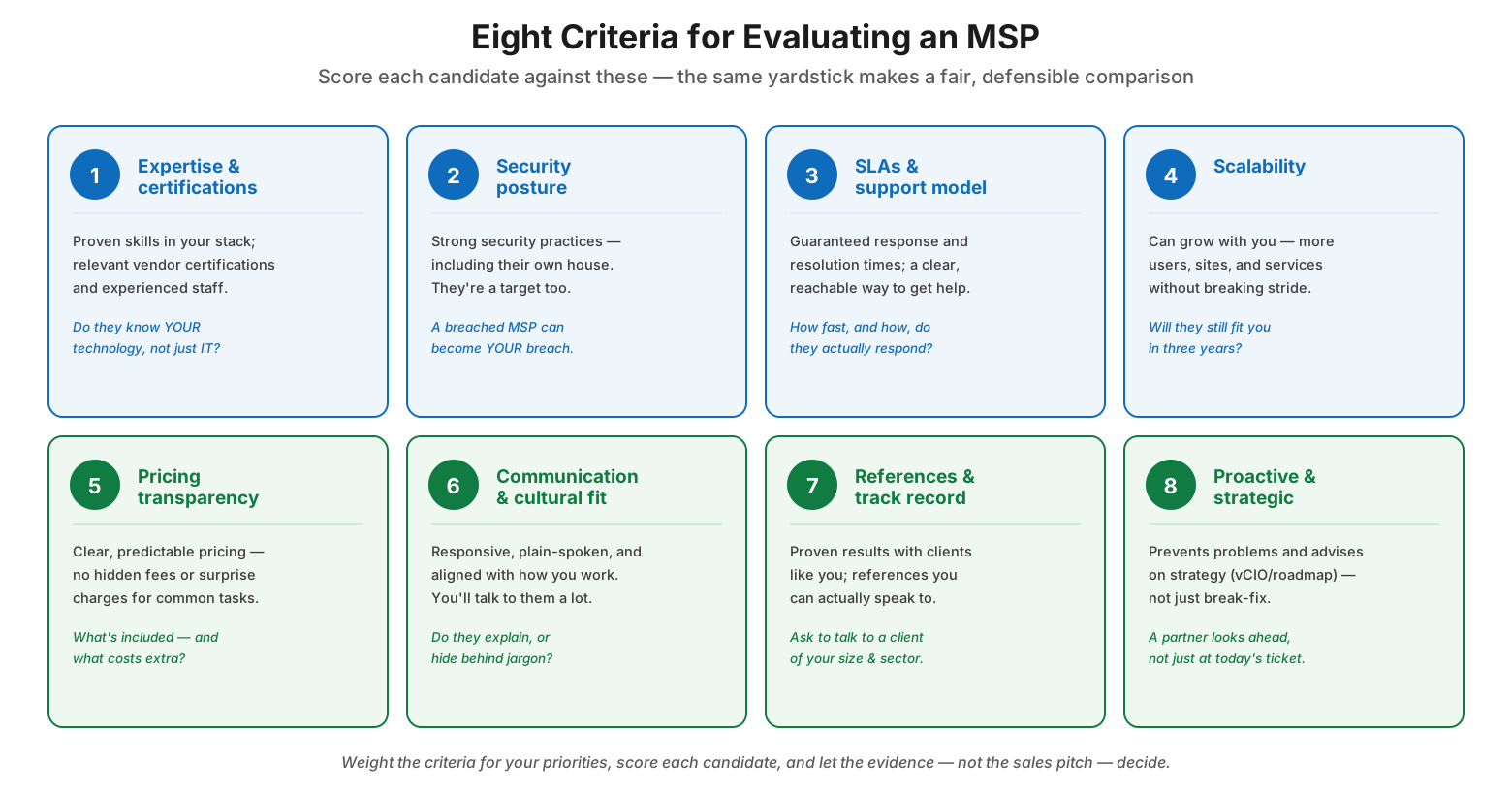
Eight criteria for evaluating an MSP
The first criterion is expertise and certifications: proven skills in your specific technology stack, relevant vendor certifications, and experienced staff — do they know your technology, not just IT in general. The second is security posture: strong security practices including their own house, because a breached MSP can become your breach. The third is SLAs and support model: guaranteed response and resolution times and a clear, reachable way to get help — how fast, and how, do they actually respond. The fourth is scalability: the ability to grow with you across more users, sites, and services without breaking stride, so they still fit you in three years. The fifth is pricing transparency: clear, predictable pricing with no hidden fees or surprise charges for common tasks — what’s included and what costs extra. The sixth is communication and cultural fit: responsive, plain-spoken, and aligned with how you work, since you’ll talk to them a lot — do they explain, or hide behind jargon. The seventh is references and track record: proven results with clients like you, and references you can actually speak to, ideally of your size and sector. The eighth is proactive and strategic posture: a provider that prevents problems and advises on strategy through a vCIO or roadmap, not just break-fix — a partner looks ahead, not only at today’s ticket. Weight these for your priorities, score each candidate, and let the evidence, not the sales pitch, decide.
| Criterion | What good looks like |
|---|---|
| Expertise & certifications | Proven skills in your stack; relevant certs |
| Security posture | Strong practices, including their own security |
| SLAs & support model | Guaranteed response/resolution; easy to reach |
| Scalability | Grows with you across users, sites, services |
| Pricing transparency | Clear, predictable; no hidden fees |
| Communication & cultural fit | Responsive, plain-spoken, aligned with you |
| References & track record | Checkable results with similar clients |
| Proactive & strategic | Prevents problems; advises (vCIO/roadmap) |
The MSP Selection Process, Step by Step
A structured process beats a rushed, sales-led decision. Working through these seven steps in order keeps the choice grounded in evidence rather than urgency.
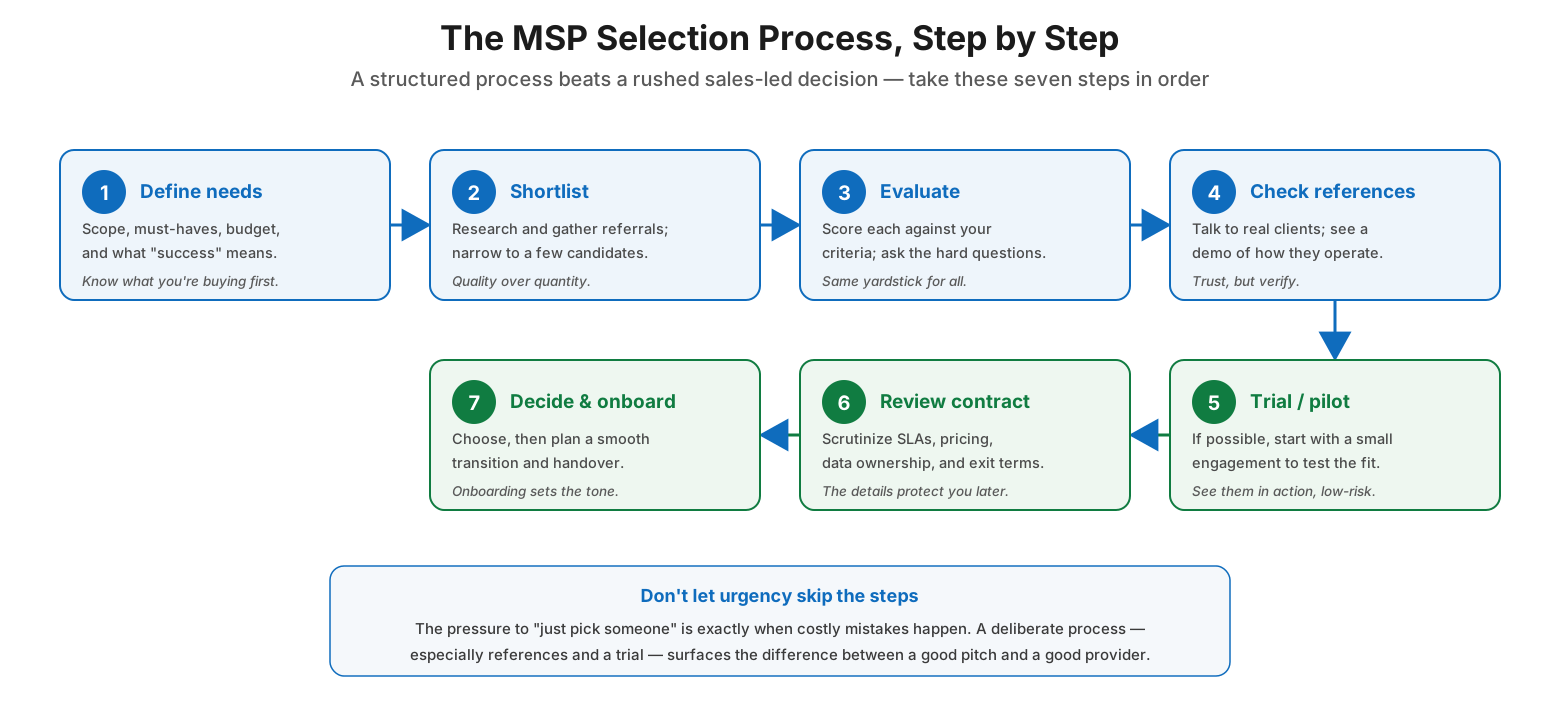
The MSP selection process, step by step
The process runs in seven steps. First, define needs: nail down scope, must-haves, budget, and what success means — know what you’re buying first. Second, shortlist: research and gather referrals, narrowing to a few strong candidates rather than a long list. Third, evaluate: score each against your criteria and ask the hard questions, using the same yardstick for all. Fourth, check references: talk to real clients and see a demo of how they operate — trust, but verify. Fifth, trial or pilot: if possible, start with a small engagement to test the fit and see them in action at low risk. Sixth, review the contract: scrutinize SLAs, pricing, data ownership, and exit terms, because the details protect you later. Seventh, decide and onboard: choose, then plan a smooth transition and handover, since onboarding sets the tone for the relationship. Throughout, resist the pressure to just pick someone — that urgency is exactly when costly mistakes happen. A deliberate process, especially the reference checks and a trial, surfaces the difference between a good pitch and a good provider.
| Step | What you do | Why it matters |
|---|---|---|
| 1. Define needs | Scope, must-haves, budget, success criteria | Know what you’re buying |
| 2. Shortlist | Research and referrals; a few candidates | Quality over quantity |
| 3. Evaluate | Score against criteria; ask hard questions | Fair, consistent comparison |
| 4. Check references | Talk to clients; see a demo | Verify the claims |
| 5. Trial / pilot | Small engagement to test fit | See them in action, low-risk |
| 6. Review contract | Scrutinize SLAs, pricing, exit terms | Protects you later |
| 7. Decide & onboard | Choose; plan a smooth transition | Onboarding sets the tone |
Red Flags and Green Flags
As you evaluate, certain signs should build confidence while others should give you serious pause. Learning to read them protects you from a costly mismatch.
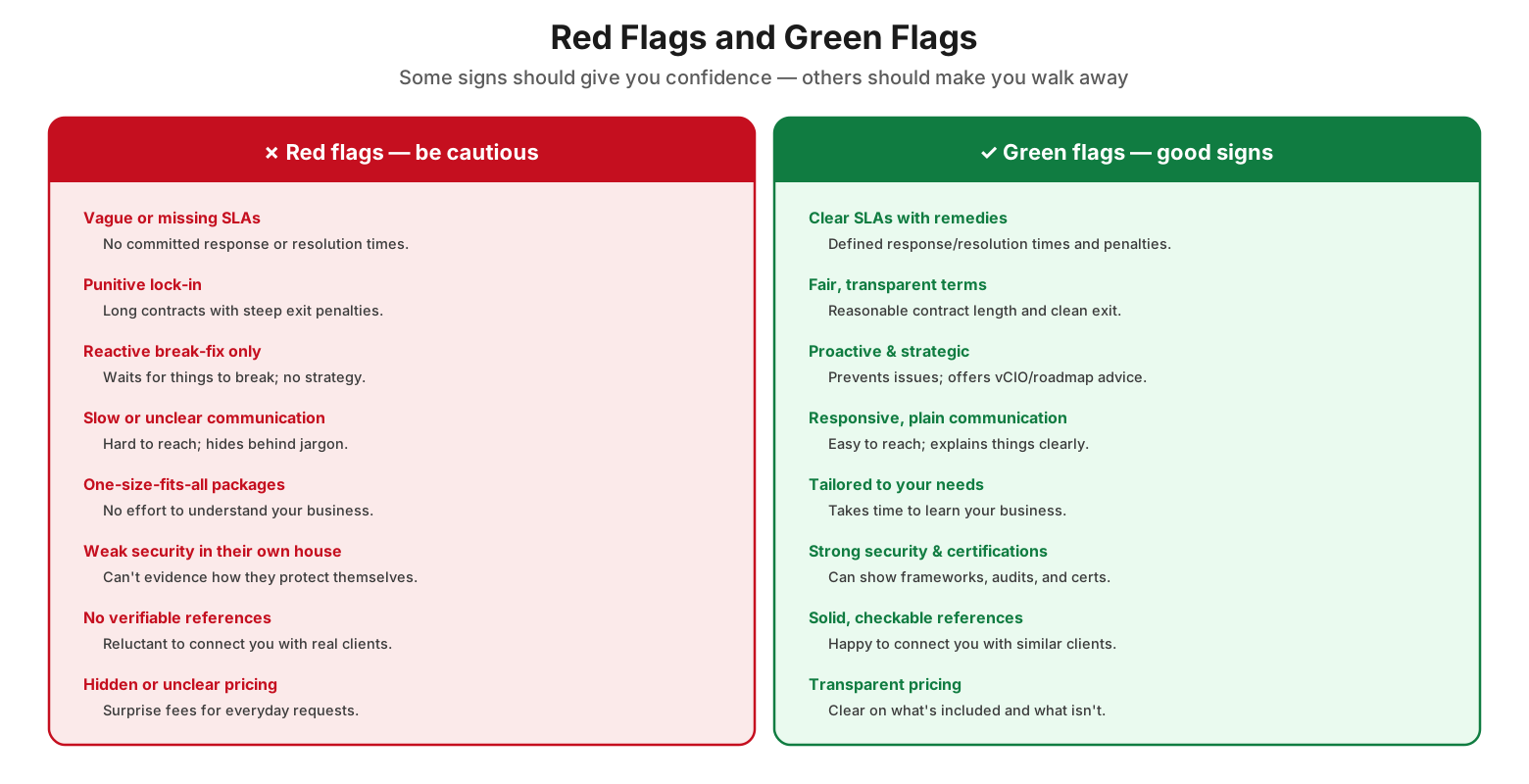
Red flags and green flags
The red flags to be cautious of include: vague or missing SLAs with no committed response or resolution times; punitive lock-in, meaning long contracts with steep exit penalties; a reactive break-fix-only approach that waits for things to break and offers no strategy; slow or unclear communication that is hard to reach and hides behind jargon; one-size-fits-all packages with no effort to understand your business; weak security in their own house, unable to evidence how they protect themselves; no verifiable references, being reluctant to connect you with real clients; and hidden or unclear pricing with surprise fees for everyday requests. The green flags that signal a strong provider include: clear SLAs with defined response and resolution times and remedies for misses; fair, transparent terms with a reasonable contract length and clean exit; a proactive and strategic posture that prevents issues and offers vCIO or roadmap advice; responsive, plain communication that’s easy to reach and explains things clearly; a tailored approach that takes time to learn your business; strong security and certifications they can demonstrate with frameworks and audits; solid, checkable references they’re happy to share; and transparent pricing that’s clear on what’s included and what isn’t. When the red flags cluster, walk away, however polished the pitch.
MSP Selection Checklist
- Treat the choice as selecting a long-term partner, not a commodity purchase.
- Define your needs, scope, budget, and success criteria before you start.
- Score candidates against consistent criteria — not just on price.
- Verify security posture, including how the MSP protects its own systems.
- Insist on clear SLAs with defined response, resolution, and remedies.
- Check that the MSP can scale with you as you grow.
- Demand pricing transparency — know what’s included and what costs extra.
- Talk to reference clients of similar size and industry.
- Prefer a proactive, strategic provider over reactive break-fix only.
- Run a trial or pilot where possible before committing.
- Watch for red flags — lock-in, vague SLAs, weak security, hidden fees.
- Get everything that matters in writing: SLAs, data ownership, and exit terms.
Best Practices
The right questions reveal how a provider truly operates, and the contract is where those answers become binding — these are the ones to secure.
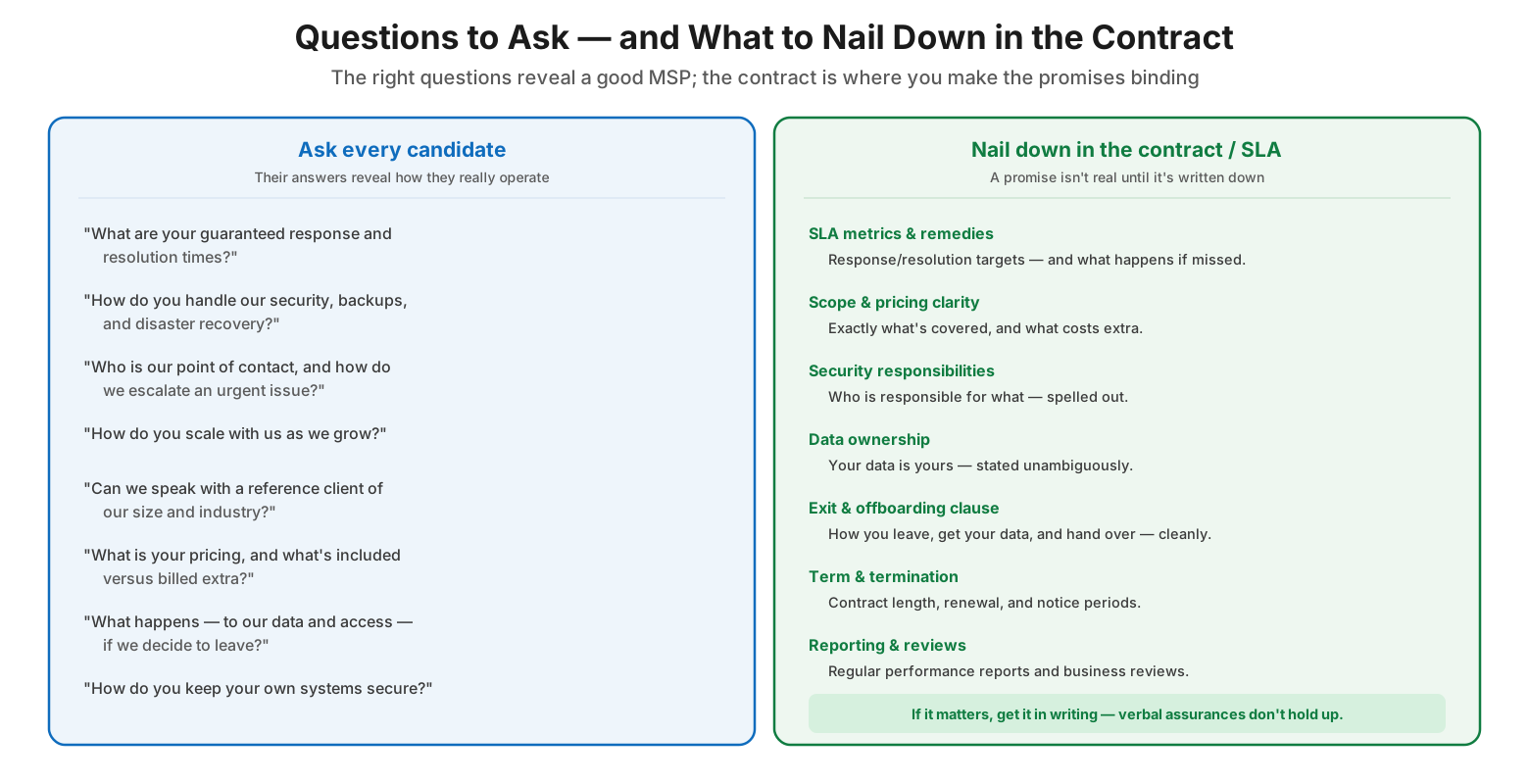
Questions to ask and what to nail down in the contract
| Ask every candidate | Nail down in the contract / SLA |
|---|---|
| Guaranteed response & resolution times? | SLA metrics and remedies for misses |
| How do you handle security, backups, DR? | Security responsibilities, spelled out |
| Who is our contact and how do we escalate? | Reporting and regular business reviews |
| How do you scale as we grow? | Scope and pricing clarity (included vs extra) |
| Can we speak to a reference client? | Data ownership — your data is yours |
| What happens if we leave? | Exit & offboarding clause; term & termination |
Choose for fit and trust, not price. Because an MSP becomes embedded in how your business runs, prioritize track record, security, communication, and cultural fit over the lowest quote. The cheapest provider often costs the most in downtime, risk, and rework.
Use a consistent scorecard. Evaluate every candidate against the same weighted criteria. A structured scorecard replaces gut feel and sales charisma with evidence, and makes the final decision defensible to leadership.
Insist on references and, ideally, a trial. What a provider does for real clients matters more than what they say in a pitch. Speak to references of your size and sector, and if you can, start with a small pilot to see how they actually operate.
Scrutinize security — including their own. An MSP with deep access is a high-value target for attackers, and a breach of your provider can become a breach of you. Require evidence of their security practices, frameworks, and certifications.
Get the promises in writing. SLAs, pricing scope, security responsibilities, data ownership, and exit terms must be in the contract, not just in conversation. If it matters, it belongs in the agreement, because verbal assurances don’t hold up.
Plan the exit before you sign. Ironically, the best time to think about leaving is before you join. A clear offboarding clause covering how you retrieve your data and transition out protects you and signals a confident, fair provider.
Common Mistakes
Deciding on price alone. Choosing the cheapest MSP without weighing expertise, security, and fit is the most common and costly error. The savings evaporate quickly when service is poor or an incident goes badly.
Skipping reference checks. Taking a provider’s claims at face value without talking to real clients removes the single best reality check available. Reluctance to provide references is itself a warning sign.
Ignoring the contract details. Focusing on the sales relationship while glossing over SLAs, data ownership, and exit terms leaves you exposed. The contract is where promises become enforceable — read it closely.
Overlooking the MSP’s own security. Assuming a security-selling provider is secure themselves is dangerous. An under-secured MSP is a direct risk to you; require evidence rather than assurances.
Accepting punitive lock-in. Signing a long contract with steep exit penalties traps you with a provider that may not work out. Prefer fair terms and a clean, well-defined exit path.
Rushing the decision. Letting urgency drive you to “just pick someone” bypasses the very steps — evaluation, references, and a trial — that prevent a bad match. A deliberate process is worth the extra time.
Frequently Asked Questions
What’s the most important thing when choosing an MSP? Fit and trust, ahead of price. Because the MSP gains deep access to your systems, data, and security and becomes part of your daily operations, their track record, security posture, communication, and cultural alignment matter far more than being the cheapest option.
How do I compare MSPs fairly? Use a consistent scorecard built on criteria like expertise and certifications, security posture, SLAs and support, scalability, pricing transparency, communication and fit, references, and a proactive strategic approach. Weight the criteria for your priorities and score every candidate against the same yardstick.
Why do I need to check the MSP’s own security? An MSP has privileged access to your environment, which makes it an attractive target for attackers. A breach of your provider can quickly become a breach of you. Require evidence of how they secure their own systems — frameworks, audits, and certifications — not just assurances.
What should I look for in the SLA and contract? Nail down SLA metrics and remedies (response and resolution targets, and what happens if they’re missed), scope and pricing clarity, security responsibilities, data ownership, an exit and offboarding clause, term and termination details, and regular reporting and reviews. If it matters, get it in writing.
What are the biggest red flags? Vague or missing SLAs, punitive lock-in with steep exit fees, a reactive break-fix-only approach, slow or unclear communication, one-size-fits-all packages, weak security in their own house, no verifiable references, and hidden or unclear pricing. When several appear together, walk away.
Should I run a trial before committing? If at all possible, yes. A small pilot or trial engagement lets you see how the provider actually operates — their responsiveness, communication, and quality — at low risk, and reveals far more than any sales presentation. Combined with reference checks, it’s the best way to confirm fit before a full commitment.
Conclusion
Choosing a managed service provider is one of the more consequential decisions a growing organization makes, precisely because the provider becomes woven into how the business runs. This is not a purchase to optimize for price; it is a partnership to choose for trust, capability, and fit. The right MSP reduces risk, enables growth, and gives leaders room to focus on the business, while the wrong one introduces downtime, security exposure, and the painful, costly prospect of switching later. That asymmetry is exactly why the effort of choosing carefully pays for itself many times over.
The way to choose well is not luck but discipline. Reframe the decision as selecting a partner. Score candidates against consistent criteria rather than sales polish. Follow a deliberate process — define needs, shortlist, evaluate, check references, trial, review the contract, and onboard — without letting urgency short-circuit it. Read the signals honestly, giving weight to green flags and walking away from clustered red ones. Ask the questions that reveal how a provider truly operates, and insist that every promise that matters is written into the SLA and contract, because verbal assurances don’t survive a bad day. Do these things, and you’ll end up not just with a vendor, but with a partner you’d want to keep for years — which is the whole point.
References
- Axelos — ITIL 4 Service Management (supplier management)
- ISACA — COBIT Framework (IT governance and vendor management)
- Gartner IT Glossary — Managed Service Provider (MSP)
- NIST Cybersecurity Framework 2.0 — Govern (supply chain risk)
- NIST SP 800-161 — Cybersecurity Supply Chain Risk Management
- CISA — Guidance for MSP customers and supply chain security
- U.S. SBA — Technology and IT for Small Business