Recovery Time Objectives Explained: RTO, RPO, and Setting Realistic Recovery Targets
Two acronyms sit at the center of every backup and disaster-recovery conversation, and they are the ones most often confused: RTO and RPO.
- Content owner
- Insyto Content Team
- Editorial reviewer
- Ritesh Mhatre
- Technical reviewer
- Navish Ansari
- Next review
- To be scheduled
- Last reviewed
- Review pending
- Technical level
- Intermediate · IT directors, infrastructure and recovery teams
Executive Summary
Two acronyms sit at the center of every backup and disaster-recovery conversation, and they are the ones most often confused: RTO and RPO. Recovery Time Objective (RTO) is how long a service can be down before the impact becomes unacceptable. Recovery Point Objective (RPO) is how much data an organization can afford to lose, measured as a span of time. They sound similar and are frequently used interchangeably, but they answer entirely different questions — one about downtime, the other about data loss — and getting them right is what turns a vague sense of “we need good backups” into a precise, costed, defensible recovery design.
These objectives matter because they are the bridge between business needs and technical decisions. RPO dictates how often data must be backed up: an RPO of twenty-four hours is satisfied by a nightly backup, while an RPO of minutes demands near-continuous capture. RTO dictates what recovery capability must be in place: an RTO of days can be met by restoring from backup, while an RTO of minutes requires a hot standby ready to take over instantly. Set the objectives too loosely and the organization is exposed to unacceptable loss; set them too tightly and it pays for expensive infrastructure it does not need. The art is choosing the right targets for each service, based on what downtime and data loss actually cost that service — not defaulting everything to “as fast as possible.”
This vendor-neutral explainer clarifies RTO and RPO and shows how to use them well. It places both on a single timeline around a disruption, explains how each drives a different design decision, illustrates the cost trade-off that makes tighter objectives exponentially more expensive, shows how to tier services so effort goes where it matters, and introduces the related metrics — maximum tolerable downtime, work recovery time, and actual recovery time — that complete the picture. Grounded in established contingency-planning guidance, the aim is to equip IT and business leaders to set recovery targets that are realistic, affordable, tested, and genuinely aligned to the needs of the organization.
RTO and RPO on One Timeline
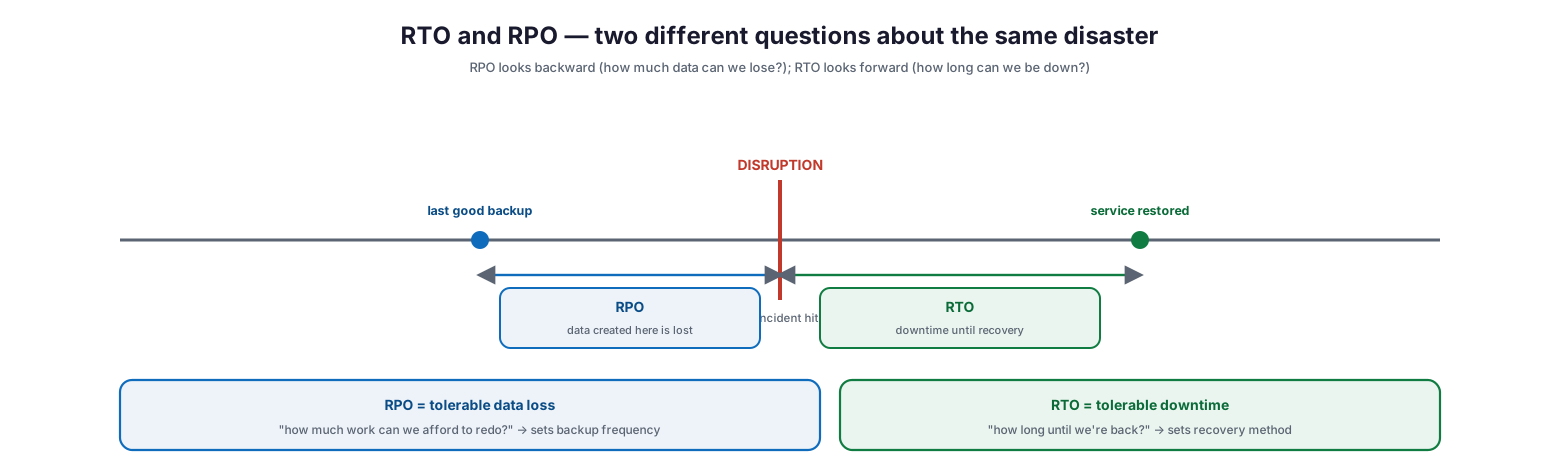
The clearest way to understand RTO and RPO — and to stop confusing them — is to place both on a timeline around the moment a disruption occurs. One looks backward from the incident; the other looks forward.
RTO and RPO — two different questions about the same disaster
Imagine the moment disaster strikes as a fixed point. Looking backward from it, the last good backup sits some distance in the past, and everything created between that backup and the disruption is lost. That gap is the RPO — the tolerable amount of data loss, which answers “how much work can we afford to redo?” and directly sets how frequently backups must run. Looking forward from the disruption, the service is down until it is restored, and the length of that outage is the RTO — the tolerable downtime, which answers “how long until we’re back?” and sets the recovery method. RPO is measured in the data you are willing to lose; RTO is measured in the time you are willing to be down. They are independent axes: a system might tolerate very little data loss but a slow recovery, or the reverse, and each must be set on its own terms.
What Each Objective Drives
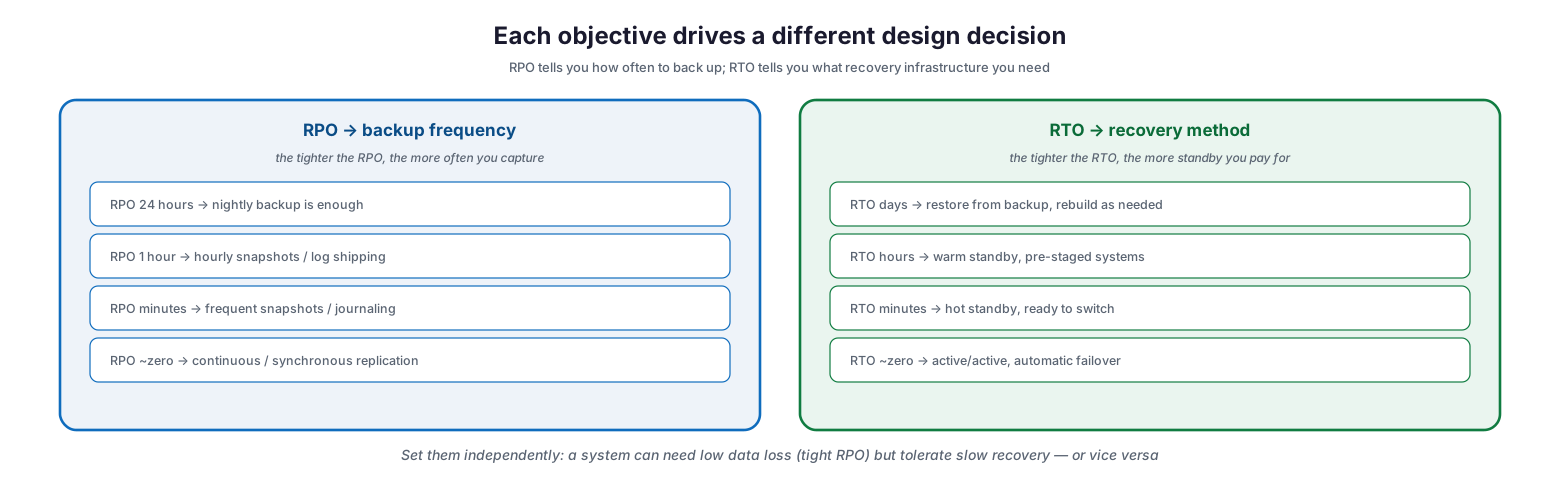
The practical power of RTO and RPO is that each translates directly into a concrete design decision. Knowing the target tells you what to build.
Each objective drives a different design decision
RPO drives backup frequency, because you cannot recover data you never captured. An RPO of twenty-four hours is met by a nightly backup; an RPO of one hour requires hourly snapshots or transaction-log shipping; an RPO of minutes demands frequent snapshots or journaling; and an RPO approaching zero requires continuous or synchronous replication. RTO drives the recovery method and the standby infrastructure you pay for. An RTO of days can be met by restoring from backup and rebuilding systems as needed; an RTO of hours calls for warm standby with pre-staged systems; an RTO of minutes needs a hot standby ready to switch over; and an RTO approaching zero requires an active/active design with automatic failover. Because these are independent, they should be set independently: a compliance archive might need near-zero data loss (tight RPO) but tolerate a slow restore (loose RTO), while a public website might tolerate losing a few minutes of data (looser RPO) but demand near-instant recovery (tight RTO).
| Objective | Value | What it requires |
|---|---|---|
| RPO 24 hours | Loose data loss tolerance | Nightly backup |
| RPO 1 hour | Moderate | Hourly snapshots / log shipping |
| RPO minutes | Tight | Frequent snapshots / journaling |
| RPO ~zero | Near-none | Continuous / synchronous replication |
| RTO days | Loose downtime tolerance | Restore from backup, rebuild |
| RTO hours | Moderate | Warm standby, pre-staged systems |
| RTO minutes | Tight | Hot standby, ready to switch |
| RTO ~zero | Near-none | Active/active, automatic failover |
The Cost Trade-off
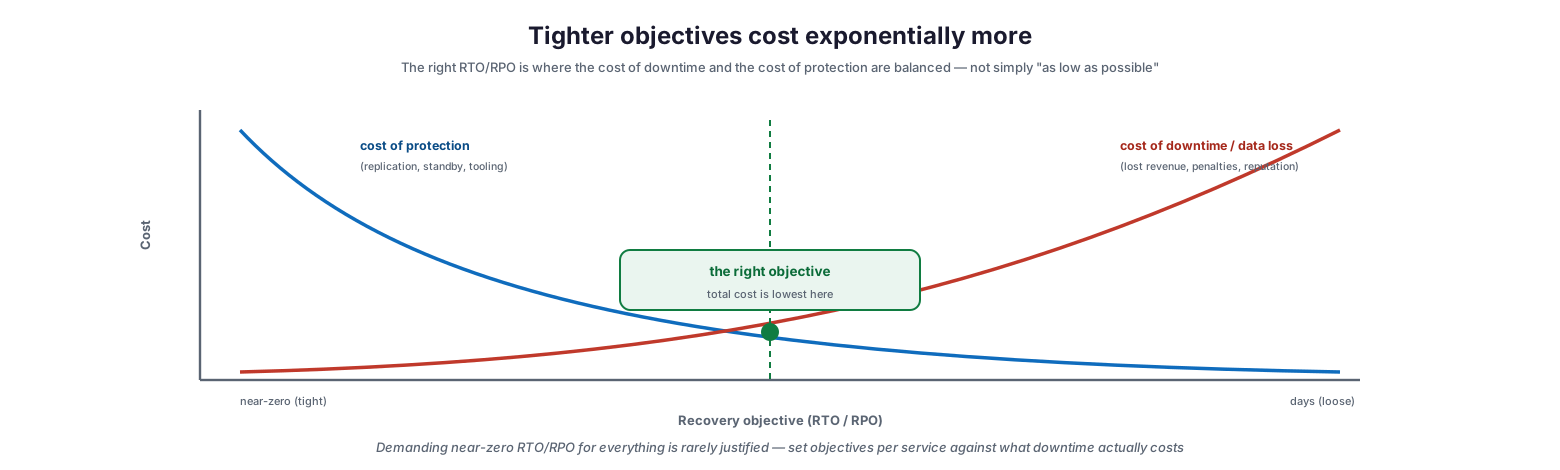
The instinct to demand the fastest possible recovery and the least possible data loss for everything is understandable — and expensive. Tighter objectives cost dramatically more, and the right target is a balance, not a minimum.
Tighter objectives cost exponentially more
Two costs move in opposite directions as objectives change. The cost of protection — replication, standby systems, and tooling — rises steeply as objectives tighten, because near-zero RTO and RPO require duplicated, always-ready infrastructure. The cost of downtime and data loss — lost revenue, penalties, and reputational damage — rises as objectives loosen, because longer outages and larger data losses hurt the business more. The right objective sits where the sum of these two is lowest: tight enough to keep downtime costs acceptable, loose enough to avoid over-spending on protection. Demanding near-zero objectives for every system is rarely justified, because most systems do not carry downtime costs high enough to warrant hot standby. The discipline is to set objectives per service against what an outage of that specific service actually costs, so the protection budget flows to where it genuinely pays off.
Tiering Services
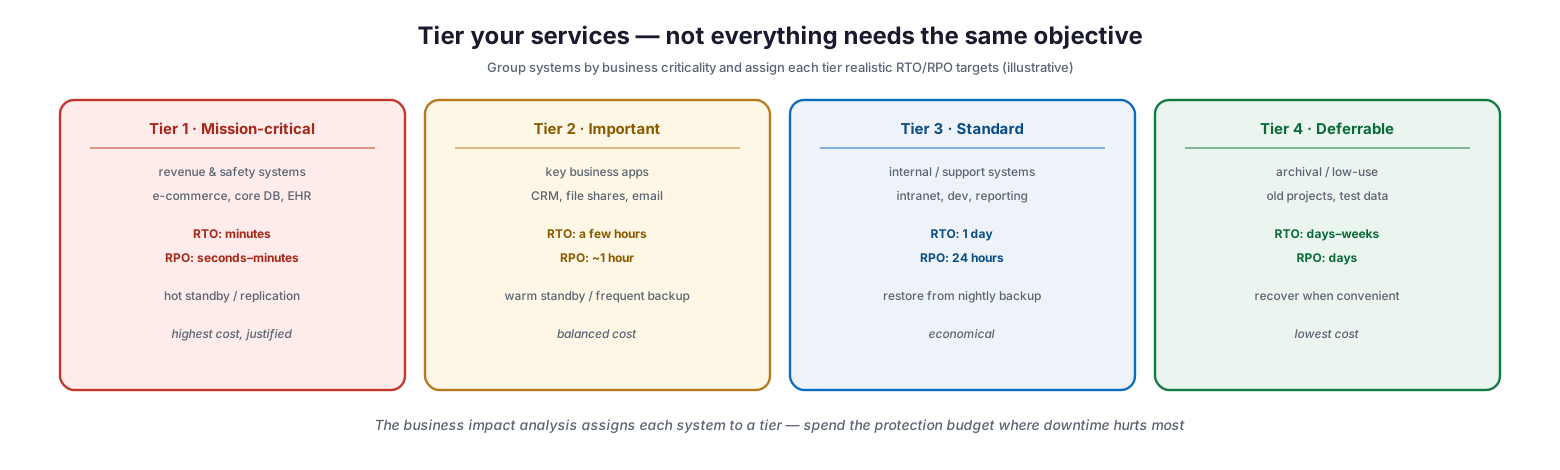
Because different systems carry very different downtime costs, they should not all receive the same recovery targets. Tiering groups systems by business criticality and assigns each tier realistic RTO and RPO values.
Tier your services — not everything needs the same objective
A common structure uses four tiers. Tier 1, mission-critical systems such as e-commerce platforms, core databases, or electronic health records, carry RTOs of minutes and RPOs of seconds to minutes, justifying hot standby and replication despite the high cost. Tier 2, important business applications like CRM, file shares, and email, carry RTOs of a few hours and RPOs of around an hour, met with warm standby and frequent backups at a balanced cost. Tier 3, standard internal and support systems such as intranets, development environments, and reporting, carry RTOs of a day and RPOs of twenty-four hours, met economically by restoring from a nightly backup. Tier 4, deferrable systems like archival data, old projects, and test environments, carry RTOs of days to weeks and RPOs of days, recovered whenever convenient at the lowest cost. These values are illustrative — each organization sets its own — but the principle is universal: the business impact analysis assigns each system to a tier, and the protection budget is spent where downtime hurts most.
| Tier | Examples | RTO | RPO | Approach |
|---|---|---|---|---|
| 1 · Mission-critical | E-commerce, core DB, EHR | Minutes | Seconds–minutes | Hot standby / replication |
| 2 · Important | CRM, file shares, email | A few hours | ~1 hour | Warm standby / frequent backup |
| 3 · Standard | Intranet, dev, reporting | ~1 day | 24 hours | Restore from nightly backup |
| 4 · Deferrable | Archives, test data | Days–weeks | Days | Recover when convenient |
The Related Metrics — and Objective vs Reality
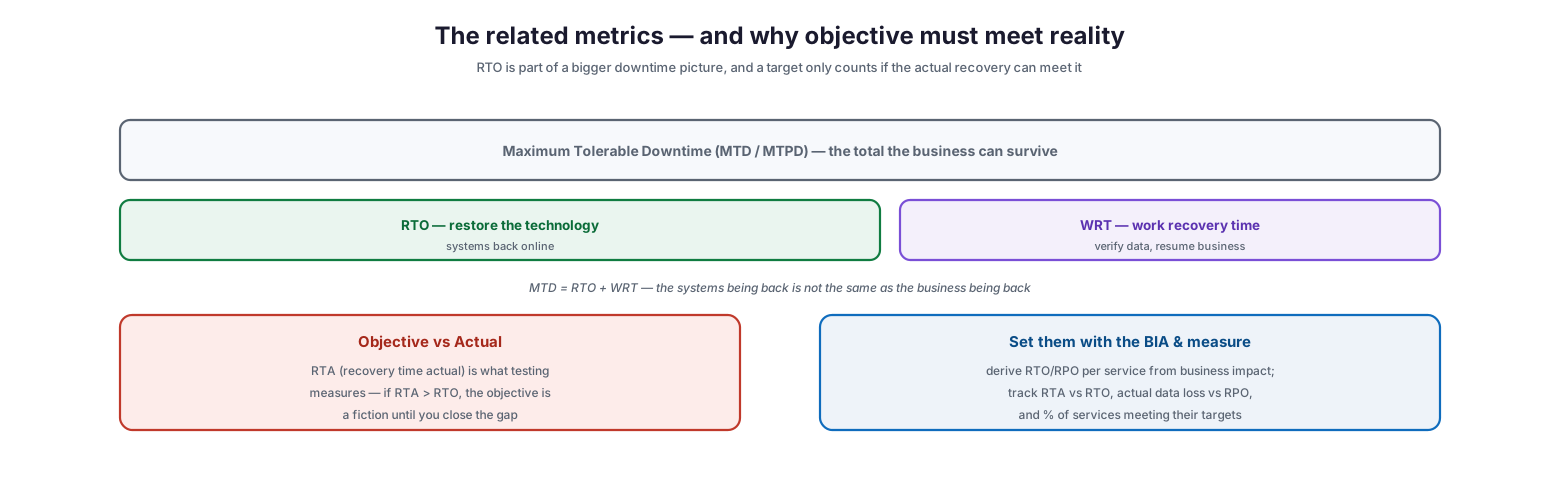
RTO and RPO do not exist in isolation. They are part of a broader downtime picture, and a target set on paper only means something if the actual recovery can meet it.
The related metrics — and why objective must meet reality
The overarching figure is Maximum Tolerable Downtime (MTD, sometimes MTPD) — the total outage the business can survive for a given function. Crucially, MTD is made up of two parts: the RTO, the time to restore the technology and get systems back online, and the Work Recovery Time (WRT), the additional time to verify data, catch up, and actually resume business operations. In other words, MTD equals RTO plus WRT, and the systems being back is not the same as the business being back — a distinction organizations frequently overlook. Equally important is the gap between objective and reality. The Recovery Time Actual (RTA) is what testing measures: how long recovery genuinely takes. If the RTA exceeds the RTO, the objective is a fiction until the gap is closed. This is why RTO and RPO must be derived from the business impact analysis, set per service, and then continuously measured — tracking actual recovery time against RTO, actual data loss against RPO, and the percentage of services that genuinely meet their targets.
| Metric | Full name | What it measures |
|---|---|---|
| RTO | Recovery Time Objective | Target time to restore a service |
| RPO | Recovery Point Objective | Target maximum data loss (in time) |
| MTD / MTPD | Maximum Tolerable Downtime | Total outage the business can survive (RTO + WRT) |
| WRT | Work Recovery Time | Time to verify data and resume operations after systems return |
| RTA | Recovery Time Actual | Measured recovery time in a test or real event |
RTO and RPO Checklist
- Define RTO (tolerable downtime) and RPO (tolerable data loss) separately for each critical service.
- Derive both from a business impact analysis, based on what downtime and data loss actually cost.
- Use RPO to set backup frequency: match capture interval to the data loss you can accept.
- Use RTO to set recovery method: restore, warm standby, hot standby, or active/active.
- Tier services by criticality and assign each tier realistic RTO/RPO values.
- Balance the objective against cost — avoid demanding near-zero targets where they are not justified.
- Account for the full picture: MTD = RTO + WRT; the business is back only after work recovery.
- Measure actual recovery time (RTA) against the RTO through regular testing.
- Measure actual data loss against the RPO after tests and incidents.
- Track the percentage of services meeting their targets and close the gaps.
- Document the objectives, the rationale, and the recovery approach for each service.
- Review and adjust objectives as business needs, costs, and systems change.
Best Practices
Set RTO and RPO separately. They answer different questions — downtime versus data loss — and a system’s needs on each axis can differ sharply. Treating them as one number leads to over- or under-investment.
Derive targets from business impact. Do not pull objectives from thin air or copy them across systems. Use the business impact analysis to base each target on what an outage of that service genuinely costs.
Tier, don’t uniform. Assign systems to criticality tiers and give each tier appropriate objectives. This focuses the protection budget on the systems where downtime is most damaging.
Respect the cost curve. Tighter objectives cost exponentially more. Choose the target where total cost — protection plus downtime — is lowest, rather than reflexively minimizing RTO and RPO everywhere.
Remember work recovery time. Systems coming back is not the business coming back. Plan for the WRT needed to verify data and resume operations, and make sure MTD accounts for it.
Test the objective, not just the plan. An RTO is only real if a measured recovery can meet it. Run restore and failover tests, compare actual times to the objectives, and close any gap.
Common Mistakes
Confusing RTO and RPO. Using the terms interchangeably leads to designs that protect the wrong thing — for example, over-investing in fast recovery for data that also needs frequent backup, or vice versa.
Setting objectives without a BIA. Targets chosen without reference to business impact are guesses, and they usually result in paying too much for some systems and too little for others.
Demanding near-zero for everything. Insisting on minimal RTO and RPO across the board drives cost through the roof for systems whose downtime does not warrant it. Match the objective to the cost of the outage.
Ignoring work recovery time. Declaring victory when systems are back overlooks the time needed to verify data and resume operations. The business is not recovered until work can resume.
Never testing the actual recovery time. An RTO that has never been validated by a real restore is aspirational. If the actual recovery time exceeds the objective, the promise is empty.
Setting and forgetting. Business needs, costs, and systems change. Objectives set once and never revisited drift out of alignment with what the organization actually requires.
Frequently Asked Questions
What is the difference between RTO and RPO? RTO (Recovery Time Objective) is how long a service can be down before the impact is unacceptable — it measures tolerable downtime. RPO (Recovery Point Objective) is how much data you can afford to lose, measured in time — it measures tolerable data loss. RTO looks forward from a disruption; RPO looks backward.
How does RPO affect backups? RPO sets how frequently you must back up. If your RPO is 24 hours, a nightly backup suffices; if it is one hour, you need hourly captures; if it approaches zero, you need continuous or synchronous replication. You cannot recover data you never captured.
How does RTO affect recovery design? RTO determines the recovery method. A long RTO can be met by restoring from backup; a short RTO requires warm or hot standby systems; a near-zero RTO requires active/active infrastructure with automatic failover. Tighter RTOs cost more.
Should every system have the same RTO and RPO? No. Systems carry very different downtime costs, so they should be tiered by criticality and assigned appropriate objectives. Spending on near-zero recovery for low-impact systems wastes money; under-protecting critical systems creates risk.
What is MTD and how does it relate to RTO? Maximum Tolerable Downtime (MTD) is the total outage a business function can survive. It equals the RTO (time to restore the technology) plus the Work Recovery Time (time to verify data and resume operations). Systems being back online is not the same as the business being back.
How do we know our RTO is realistic? By testing. The Recovery Time Actual (RTA) measured in a restore or failover test shows how long recovery really takes. If the actual time exceeds the RTO, the objective is not yet achievable and the gap must be closed through better tooling, standby, or process.
Conclusion
RTO and RPO are the language that connects business expectations to technical recovery design. RPO defines how much data loss is acceptable and therefore how often to back up; RTO defines how much downtime is acceptable and therefore what recovery infrastructure to build. Kept distinct and set deliberately, they replace vague anxieties about “good backups” with precise, defensible targets that everyone — from the server room to the boardroom — can understand and hold to account.
The key to using them well is balance and realism. Derive each target from the business impact of the specific service, tier systems so the protection budget flows to where downtime hurts most, and respect the cost curve rather than reflexively demanding near-zero objectives everywhere. Account for the full recovery picture, including the work recovery time that stands between systems being back and the business being back. And above all, test: an objective is only real once a measured recovery has met it. Set RTO and RPO with care, prove them with testing, and revisit them as the business changes — and recovery stops being a hope and becomes a commitment the organization can keep.
References
- NIST SP 800-34 Rev. 1 — Contingency Planning Guide (RTO, RPO, MTD)
- ISO 22301 — Business continuity management systems
- NIST SP 800-184 — Guide for Cybersecurity Event Recovery
- Ready.gov — IT Disaster Recovery Plan (RTO and RPO)
- NIST SP 800-53 — Contingency Planning (CP) control family
- CISA — Data Backup and the 3-2-1 rule
- NIST SP 800-34 — Business Impact Analysis and recovery priorities