Ransomware Recovery Planning: How to Get Back to Business After an Attack
Ransomware has become the defining operational threat of the era, and the uncomfortable truth is that prevention, however good, is never perfect.
- Content owner
- Insyto Content Team
- Editorial reviewer
- Ritesh Mhatre
- Technical reviewer
- Navish Ansari
- Next review
- To be scheduled
- Last reviewed
- Review pending
- Technical level
- Intermediate · CISOs, security teams, IT directors
Executive Summary
Ransomware has become the defining operational threat of the era, and the uncomfortable truth is that prevention, however good, is never perfect. Organizations invest heavily in stopping attacks — and should — but the ones that survive an attack with their business intact are those that also planned for the moment prevention fails. Ransomware recovery planning is that discipline: preparing, in advance, exactly how the organization will restore its operations after an attack encrypts its systems. It is not about avoiding the attack; it is about ensuring that when one lands, recovery is a fast, orderly, rehearsed sequence rather than a panicked improvisation with the business hanging in the balance.
The distinction matters because ransomware recovery is uniquely treacherous. The instinct under pressure is to rush straight to restoring data, but restoring into an environment the attacker still controls simply gets everything re-encrypted. Recovery has to follow a deliberate order: contain the spread and preserve evidence, understand the full scope and how the attacker got in, eradicate the malware and close the entry point, and only then restore — from clean, immutable backups, chosen from a point in time before the intrusion began, in a sequence that rebuilds the foundation first. Skip or rush any of these steps and the recovery fails or, worse, reintroduces the attacker. A plan turns this from a series of dangerous judgment calls made in the dark into a checklist executed with confidence.
This vendor-neutral guide lays out how to plan and execute ransomware recovery. It walks through the recovery lifecycle, explains why containment and assessment must precede restoration, details the correct recovery sequence from trusted backups, addresses the fraught question of whether to pay the ransom and why a recovery plan makes it moot, and covers rebuilding trust in the environment and communicating through the crisis. Grounded in established incident-response and recovery guidance, the aim is an organization that can recover from ransomware on its own terms — quickly, cleanly, and without paying criminals.
The Ransomware Recovery Lifecycle
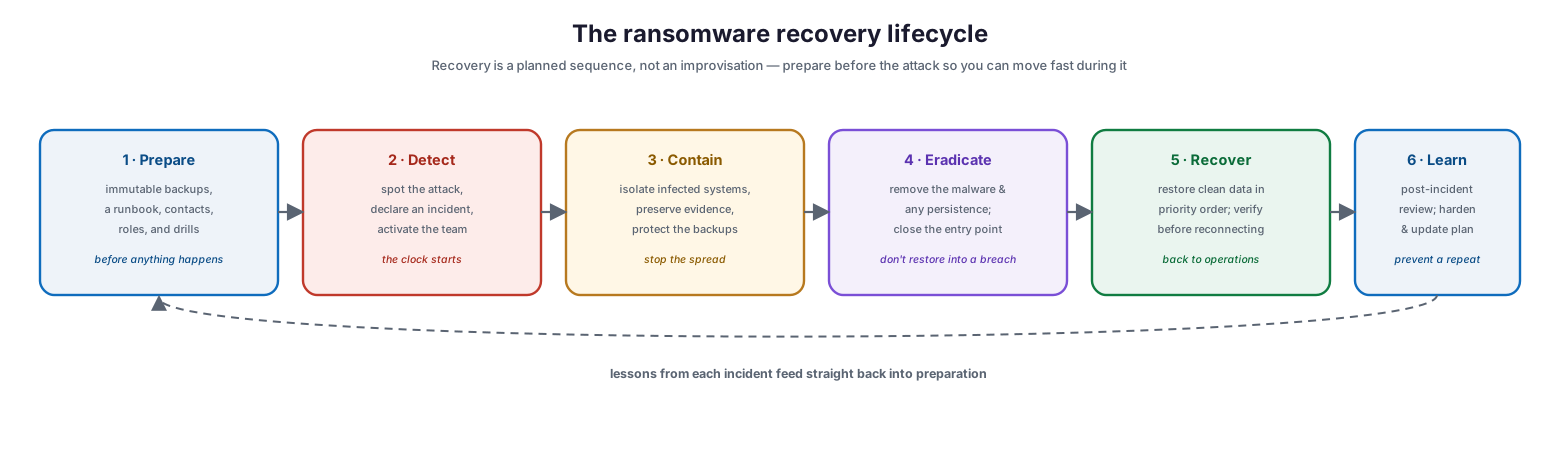
Recovery from ransomware is not a single act but a planned sequence of phases, most of which must be prepared long before an attack occurs. Treating it as a lifecycle ensures nothing critical is skipped in the heat of the moment.
The ransomware recovery lifecycle
The lifecycle begins with prepare — putting immutable backups, a recovery runbook, contact lists, defined roles, and rehearsed drills in place before anything happens. Detect is the moment the attack is spotted, the incident is declared, and the response team is activated; the clock starts here. Contain follows: isolating infected systems, preserving evidence, and protecting the backups from the spreading attack. Eradicate removes the malware and any persistence mechanisms and closes the entry point, because restoring into a live breach is futile. Recover is the phase most people picture — restoring clean data in priority order and verifying it before reconnecting — but it only succeeds if the earlier phases were done properly. Finally, learn captures the lessons in a post-incident review and hardens the environment and the plan against a repeat. Crucially, the lessons from each incident feed straight back into preparation, which is why recovery is drawn as a cycle rather than a one-way street.
| Phase | Focus | Prepared in advance? |
|---|---|---|
| Prepare | Immutable backups, runbook, roles, drills | Yes — entirely |
| Detect | Spot attack, declare incident, activate team | Detection tooling and process |
| Contain | Isolate systems, preserve evidence, protect backups | Runbook steps |
| Eradicate | Remove malware and persistence, close entry point | Playbook + forensic support |
| Recover | Restore clean data in priority order, verify | Recovery sequence + tested backups |
| Learn | Post-incident review, harden, update plan | Review process |
Contain and Assess Before You Restore
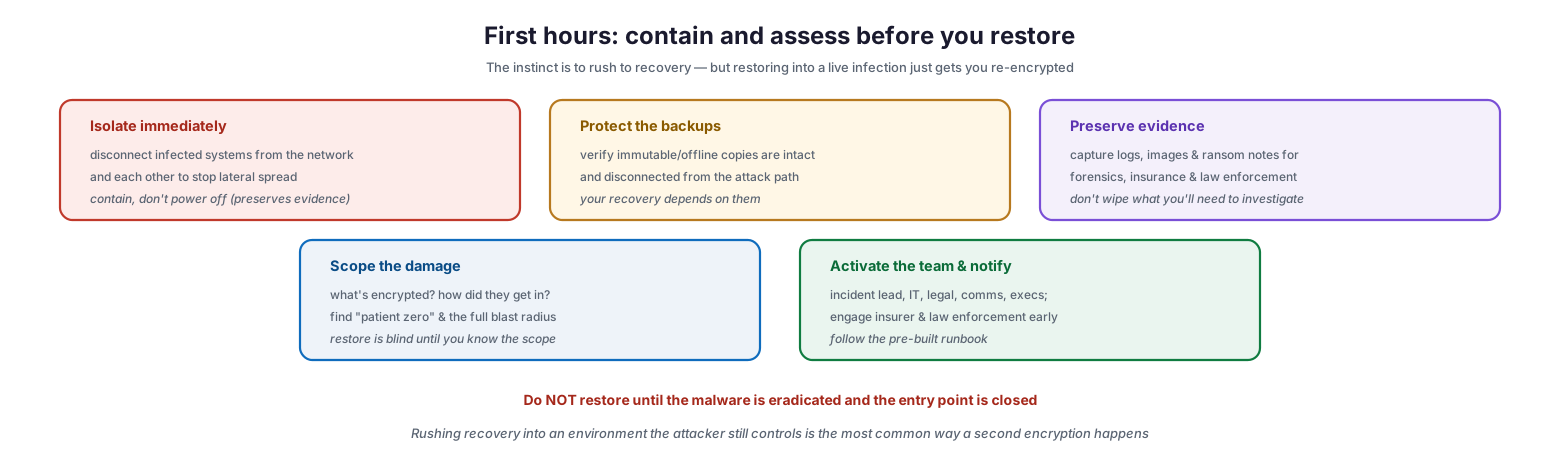
The single most common and most damaging mistake in ransomware recovery is rushing to restore. The first hours must be spent containing the attack and understanding it, not reaching for backups.
First hours: contain and assess before you restore
Five things happen first. Isolate immediately — disconnect infected systems from the network and from each other to stop lateral spread, containing rather than powering off so that forensic evidence is preserved. Protect the backups — verify that immutable or offline copies are intact and disconnected from the attack path, because the entire recovery depends on them. Preserve evidence — capture logs, disk images, and ransom notes for forensics, insurance, and law enforcement, rather than wiping what will be needed to investigate. Scope the damage — determine what is encrypted, how the attackers got in, and find “patient zero” and the full blast radius, because restoration is blind until the scope is known. And activate the team and notify — engage the incident lead, IT, legal, communications, and executives, and bring in the insurer and law enforcement early, following the pre-built runbook. Above all, do not restore until the malware is eradicated and the entry point is closed. Rushing recovery into an environment the attacker still controls is the most common way a second encryption happens.
| First-hours action | Purpose |
|---|---|
| Isolate infected systems | Stop lateral spread (contain, don’t power off) |
| Protect / verify backups | Preserve the means of recovery |
| Preserve evidence | Forensics, insurance, law enforcement |
| Scope the attack | Find patient zero, entry point, blast radius |
| Activate team & notify | Engage responders, insurer, law enforcement |
Recovering in the Right Order, From Clean Copies
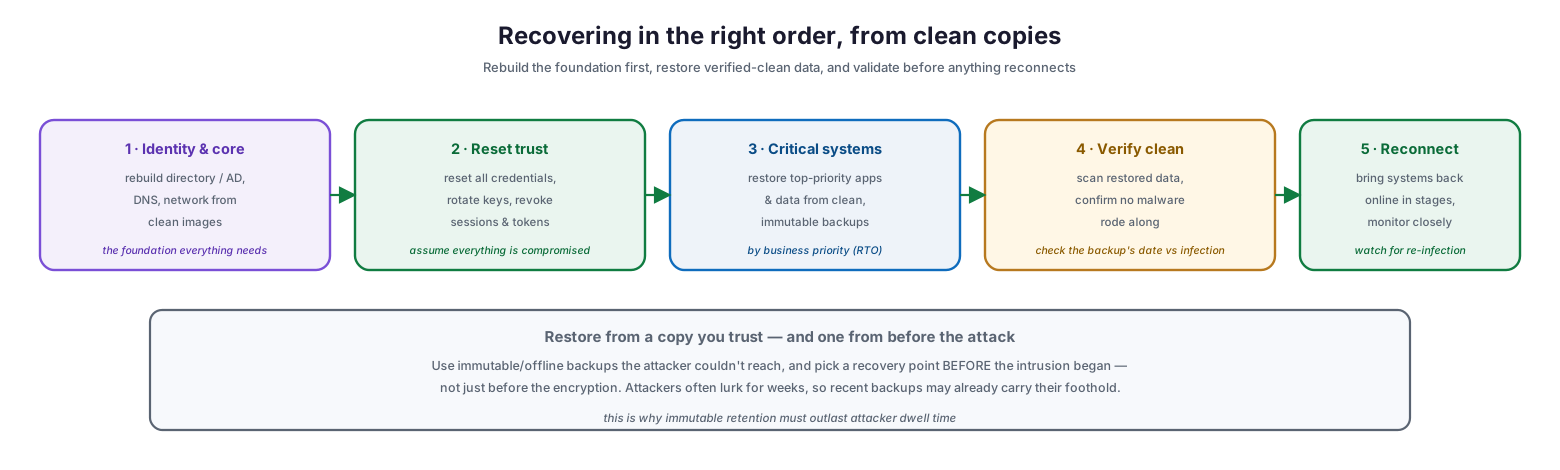
Once the environment is contained and the threat eradicated, recovery proceeds — but in a deliberate order and only from copies that can be trusted. Restoring the wrong things first, or restoring an infected backup, undoes all the careful work that preceded it.
Recovering in the right order, from clean copies
The sequence rebuilds from the foundation up. First, identity and core services — the directory or Active Directory, DNS, and network — are rebuilt from clean images, because everything else depends on them. Second, trust is reset: all credentials are reset, keys rotated, and sessions and tokens revoked, on the assumption that everything was compromised. Third, critical systems are restored — the top-priority applications and data, by business priority and recovery time objective, from clean immutable backups. Fourth, the restored data is verified clean, scanned to confirm no malware rode along, with attention to the backup’s date relative to the infection. Fifth, systems are reconnected in stages, monitored closely for any sign of re-infection. The governing principle is to restore from a copy you trust and one from before the attack: use immutable or offline backups the attacker could not reach, and pick a recovery point from before the intrusion began — not merely before the encryption. Attackers often lurk for weeks, so recent backups may already carry their foothold, which is precisely why immutable retention must be long enough to outlast attacker dwell time.
| Step | Action | Why it comes here |
|---|---|---|
| 1. Identity & core | Rebuild directory, DNS, network from clean images | Everything depends on it |
| 2. Reset trust | Reset credentials, rotate keys, revoke sessions | Assume full compromise |
| 3. Critical systems | Restore top-priority apps/data from clean backups | Business priority (RTO) |
| 4. Verify clean | Scan restored data; check backup date vs infection | Don’t reintroduce malware |
| 5. Reconnect | Bring systems online in stages, monitor | Watch for re-infection |
The Question of Payment
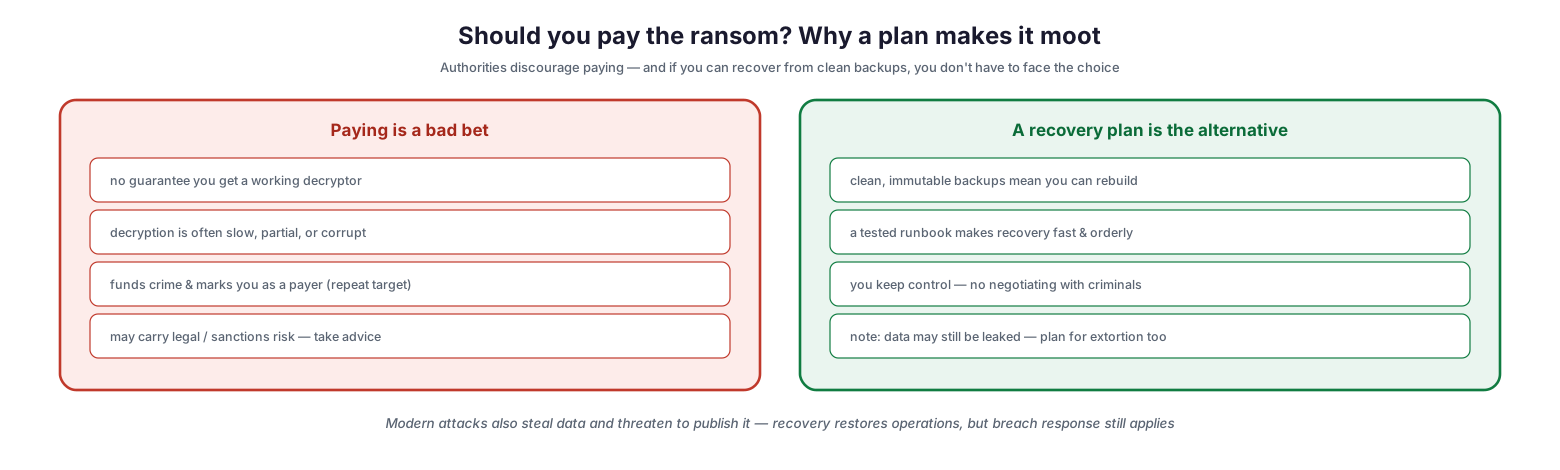
At some point in a serious ransomware incident, the question of whether to pay the ransom arises. A good recovery plan is what allows an organization to answer it from a position of strength — or avoid the choice altogether.
Should you pay the ransom? Why a plan makes it moot
Authorities broadly discourage paying, and for sound reasons. Payment carries no guarantee of receiving a working decryptor; decryption is often slow, partial, or corrupt even when it happens; paying funds criminal enterprises and marks the organization as a payer, inviting repeat attacks; and it may carry legal or sanctions risk, which is why legal advice is essential. The alternative is a recovery plan: clean, immutable backups mean the organization can rebuild without the attacker’s cooperation, a tested runbook makes that recovery fast and orderly, and the organization keeps control rather than negotiating with criminals. One important caveat has emerged with modern attacks: many now also steal data and threaten to publish it — so-called double extortion — meaning that even a flawless recovery of operations does not resolve the data-breach dimension, and breach response and notification obligations still apply. Recovery restores the business; it does not undo a theft. But being able to recover independently removes the leverage that payment relies on and is the foundation of a strong position.
Rebuild Trust, Communicate, and Test
Recovery is not finished when systems come back online. Two things remain essential — being certain the attacker is truly gone, and keeping people informed — and both depend on having tested the plan in advance.
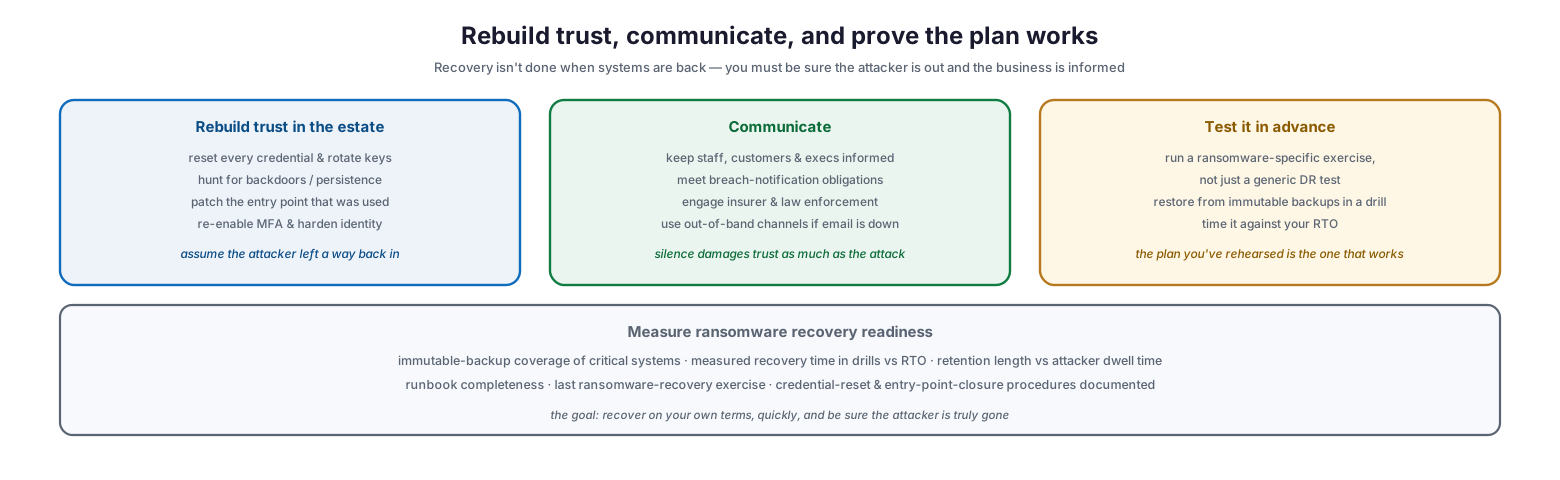
Rebuild trust, communicate, and prove the plan works
Rebuilding trust in the estate means resetting every credential and rotating keys, hunting for backdoors and persistence the attacker may have left, patching the entry point that was used, and re-enabling MFA and hardening identity — all on the assumption that the attacker left a way back in. Communication runs in parallel: keeping staff, customers, and executives informed, meeting breach-notification obligations, engaging the insurer and law enforcement, and using out-of-band channels if email itself is down, because silence damages trust as much as the attack does. And underpinning both is testing the plan in advance — running a ransomware-specific exercise rather than a generic disaster-recovery test, restoring from immutable backups in a drill, and timing that recovery against the RTO. The plan an organization has rehearsed is the one that actually works under pressure. Measured by immutable-backup coverage, recovery time in drills against the objective, retention length against attacker dwell time, runbook completeness, and the date of the last exercise, ransomware recovery readiness becomes a demonstrable capability rather than a hope.
Ransomware Recovery Checklist
- Maintain immutable, offline backups with retention longer than typical attacker dwell time.
- Write and maintain a ransomware-specific recovery runbook with roles and contacts.
- Detect and declare incidents quickly, and activate the response team.
- Isolate infected systems to stop spread; contain rather than power off to preserve evidence.
- Protect and verify the backups before anything else.
- Preserve logs, images, and ransom notes for forensics, insurance, and law enforcement.
- Scope the attack — identify patient zero, entry point, and blast radius — before restoring.
- Eradicate the malware and close the entry point before any recovery.
- Recover in order: identity and core first, then critical systems by priority.
- Reset all credentials, rotate keys, and revoke sessions and tokens.
- Restore from clean backups dated before the intrusion, not just before encryption; verify clean.
- Reconnect in stages and monitor for re-infection.
- Hunt for persistence and backdoors; patch the exploited entry point.
- Communicate with stakeholders and meet breach-notification obligations (plan for double extortion).
- Take legal advice on any payment decision; prefer recovery over paying.
- Run ransomware-specific recovery exercises and measure recovery time against the RTO.
Best Practices
Plan to recover, not just to prevent. Assume prevention will eventually fail and prepare a specific plan to restore operations after an attack. The organizations that survive ransomware are the ones that planned for it.
Protect the recovery copy above all. Immutable, offline backups the attacker cannot reach are the foundation of independent recovery. Without them, the choice narrows to paying or losing the data.
Contain before you restore. Resist the urge to rush to recovery. Isolate, preserve evidence, and understand the scope first, because restoring into a live infection simply repeats the disaster.
Recover from before the intrusion. Attackers lurk for weeks, so a backup from just before encryption may already be compromised. Retain immutable copies long enough to reach a point before the intrusion began.
Rebuild the foundation first. Restore identity and core services before applications, reset all trust, and verify data is clean before reconnecting. Order and verification are what make recovery stick.
Rehearse the specific scenario. A generic disaster-recovery test does not prove ransomware recovery. Exercise the real sequence — including restoring from immutable backups and resetting trust — and time it against your objectives.
Common Mistakes
Having no recovery plan. Relying entirely on prevention leaves an organization improvising during the worst crisis it will face. A specific, tested recovery plan is essential.
Rushing to restore. Jumping to recovery before containing and eradicating the threat gets systems re-encrypted and wastes the trusted backups. Contain first.
Restoring from a compromised backup. Recovering from a backup taken after the attacker was already inside reintroduces their foothold. Choose a recovery point from before the intrusion and verify it is clean.
Leaving the door open. Restoring systems without closing the entry point, resetting credentials, and hunting for persistence invites the attacker straight back in.
Ignoring the data-theft dimension. Treating ransomware as only an encryption problem overlooks that many attacks also steal data. Recovery restores operations, but breach notification and response still apply.
Never testing. A recovery plan that has only been written, not exercised, will fail under real pressure. Run ransomware-specific drills and fix what they reveal.
Frequently Asked Questions
How is ransomware recovery different from normal disaster recovery? Ransomware recovery must assume an active, intelligent adversary who has likely been inside for weeks, may have compromised the backups, and will re-encrypt if allowed. It requires containment, eradication, restoring from a point before the intrusion, and resetting all trust — steps a routine outage does not.
Should we pay the ransom? Authorities discourage it. Payment offers no guarantee of a working decryptor, funds crime, invites repeat attacks, and may carry legal risk. With clean, immutable backups and a tested recovery plan, you can recover independently and avoid the choice. Always take legal advice.
Why can’t we just restore from our most recent backup? Because attackers often lurk undetected for weeks, a recent backup may already contain their foothold. You need a recovery point from before the intrusion began, which is why immutable backups must be retained long enough to reach that point.
What should we recover first? Rebuild the foundation before applications: identity and core services (directory, DNS, network) from clean images, then reset all credentials and trust, then restore critical systems by business priority. Verify each restore is clean before reconnecting.
What is double extortion? Many modern ransomware attacks steal data before encrypting it and threaten to publish it unless paid. This means even a perfect operational recovery does not resolve the incident — the data breach must be handled separately, including any notification obligations.
How do we know our recovery plan will work? By testing it specifically for ransomware — restoring from immutable backups in a drill, resetting trust, and timing the recovery against your RTO. A rehearsed plan is the only kind you can rely on when a real attack strikes.
Conclusion
Ransomware recovery planning is the acceptance that prevention alone is not a strategy. Attacks will get through, and the organizations that come through them intact are the ones that prepared, in advance, exactly how they would recover. That preparation is specific and demanding: immutable backups retained long enough to outlast an attacker’s dwell time, a tested runbook, and a disciplined sequence that contains and eradicates the threat before restoring, rebuilds the foundation before the applications, and resets all trust before declaring victory. Done in this order, from copies the attacker never touched, recovery is possible without paying and without reintroducing the threat.
The payoff is control. An organization that can recover on its own terms is not at the mercy of criminals — it can decline to pay, restore its operations quickly and cleanly, and be confident the attacker is truly gone. Getting there requires treating ransomware recovery as its own discipline, rehearsing it rather than assuming it, handling the data-theft dimension alongside the encryption, and communicating openly throughout. Build that capability before the attack comes, and ransomware becomes a serious but survivable incident rather than an existential one.
References
- CISA / MS-ISAC — #StopRansomware Guide
- NIST SP 800-61 Rev. 2 — Computer Security Incident Handling Guide
- NIST SP 800-184 — Guide for Cybersecurity Event Recovery
- NIST IR 8374 — Ransomware Risk Management: A Cybersecurity Framework Profile
- CISA — StopRansomware resources hub
- NIST SP 800-53 — Incident Response (IR) and Contingency Planning (CP) controls
- CISA — Data Backup and the 3-2-1 rule