Software Asset Management: Staying Licensed, Compliant, and Cost-Optimized
Software is one of the largest and least-controlled lines in most IT budgets, and it is also one of the biggest hidden compliance risks.
- Content owner
- Insyto Content Team
- Editorial reviewer
- Ritesh Mhatre
- Technical reviewer
- Navish Ansari
- Next review
- To be scheduled
- Last reviewed
- Review pending
- Technical level
- Beginner · CIOs, IT directors, procurement leaders
Executive Summary
Software is one of the largest and least-controlled lines in most IT budgets, and it is also one of the biggest hidden compliance risks. Every application an organization runs carries licensing terms, and those terms are surprisingly easy to breach by accident — a few extra installs, a licensing metric misunderstood, a subscription that quietly auto-renewed for people who left months ago. Software asset management (SAM) is the discipline of keeping software licensing accurate and optimal: ensuring the organization is neither using more than it has paid for, which creates audit and legal risk, nor paying for far more than it uses, which quietly wastes money. It is the specialized, licensing-focused arm of IT asset management, and for most organizations it pays for itself many times over.
The stakes cut both ways. Being under-licensed — using more than you own — exposes the organization to true-up bills and back-charges after a vendor audit, penalties and legal liability, unbudgeted costs, and operational disruption, often surfacing at the worst possible time. Being over-licensed — paying for more than you use — bleeds money through shelfware bought and never assigned, seats for departed staff never reclaimed, duplicate and overlapping tools across teams, and renewals at higher tiers than needed. As software has proliferated — cloud subscriptions, SaaS tools bought on credit cards, per-core server products, and complex virtualization rights — staying in the sweet spot of compliant and cost-optimized has become both harder and more valuable. SAM is how organizations find that balance and hold it.
This vendor-neutral guide sets out SAM best practices. It explains the cost of getting licensing wrong in either direction, walks through the software asset lifecycle from request to reclamation, details the core reconciliation of entitlements against actual usage that produces an effective license position, surveys the licensing models that trip organizations up, and lays out how to run a continuous, audit-ready SAM program. Grounded in established software asset management standards, the goal is practical control over software spend and compliance — so that a vendor audit is routine rather than a crisis, and every software dollar is one the organization actually needs to spend.
The Cost of Getting Licensing Wrong
SAM exists because both directions of error are expensive, and the goal is to avoid both simultaneously. Understanding the two failure modes makes the value of the discipline obvious.
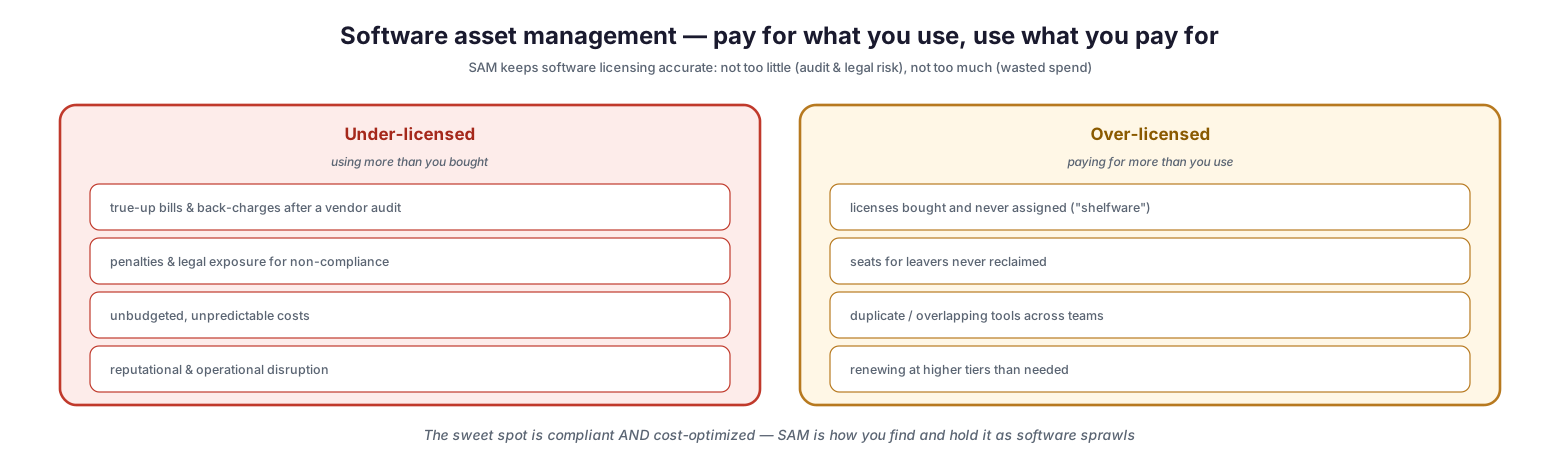
Software asset management — pay for what you use, use what you pay for
Being under-licensed — using more than you bought — is the compliance risk. It leads to true-up bills and back-charges after a vendor audit, penalties and legal exposure for non-compliance, unbudgeted and unpredictable costs, and reputational and operational disruption. Being over-licensed — paying for more than you use — is the waste risk. It shows up as licenses bought and never assigned (shelfware), seats for leavers never reclaimed, duplicate or overlapping tools across teams, and renewing at higher tiers than the organization actually needs. Neither extreme is acceptable: one invites legal and financial penalties, the other silently drains the budget. The sweet spot is being simultaneously compliant and cost-optimized, and SAM is the discipline that finds and holds that position even as software sprawls across cloud, SaaS, and on-premises systems.
| Failure mode | What it looks like | Consequence |
|---|---|---|
| Under-licensed | More installs/users than licenses | Audit true-ups, penalties, legal risk |
| Over-licensed | Shelfware, unreclaimed seats, duplicates | Wasted, unnecessary spend |
| Balanced (goal) | Entitlements match real usage | Compliant and cost-optimized |
The Software Asset Lifecycle
Like hardware, software should be managed across its whole life — but with a crucial twist: software licenses can be reclaimed and reused, which is where much of SAM’s savings come from. Managing the lifecycle deliberately keeps licensing accurate and recycles value.
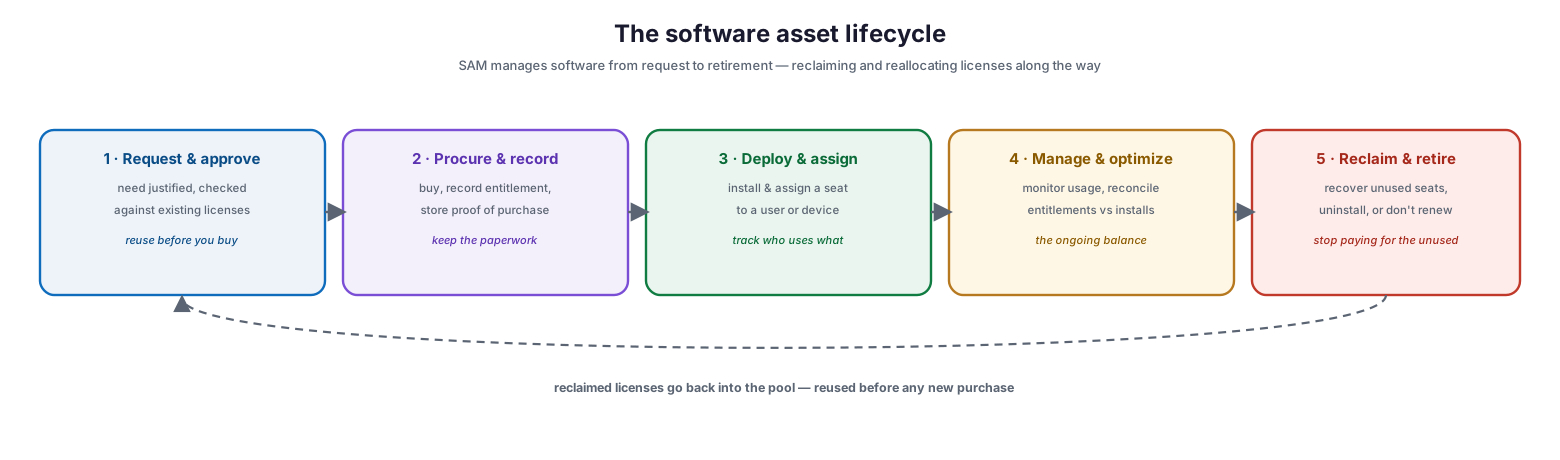
The software asset lifecycle
The lifecycle runs through five stages. Request and approve is where a need is justified and checked against existing licenses — reuse before you buy. Procure and record is where software is purchased, the entitlement recorded, and proof of purchase stored. Deploy and assign installs the software and assigns a seat to a user or device, so it is clear who uses what. Manage and optimize is the ongoing work of monitoring usage and reconciling entitlements against installs — the continuous balance at the heart of SAM. And reclaim and retire recovers unused seats, uninstalls software, or declines to renew, so the organization stops paying for the unused. The distinctive feature is the loop back: reclaimed licenses return to a pool and are reused before any new purchase, which means a well-run SAM program continually harvests savings rather than simply buying more.
| Stage | Key activity | SAM value |
|---|---|---|
| Request & approve | Justify need, check existing licenses | Reuse before buying |
| Procure & record | Buy, record entitlement, keep proof | Auditable evidence |
| Deploy & assign | Install and assign a seat | Track who uses what |
| Manage & optimize | Monitor usage, reconcile | Ongoing balance |
| Reclaim & retire | Recover seats, uninstall, don’t renew | Harvest savings |
Reconciling Entitlements Against Usage
The technical heart of SAM is a single, continuous comparison: what the organization is entitled to versus what it is actually installing and using. The gap between the two is either a risk to fix or a saving to capture.
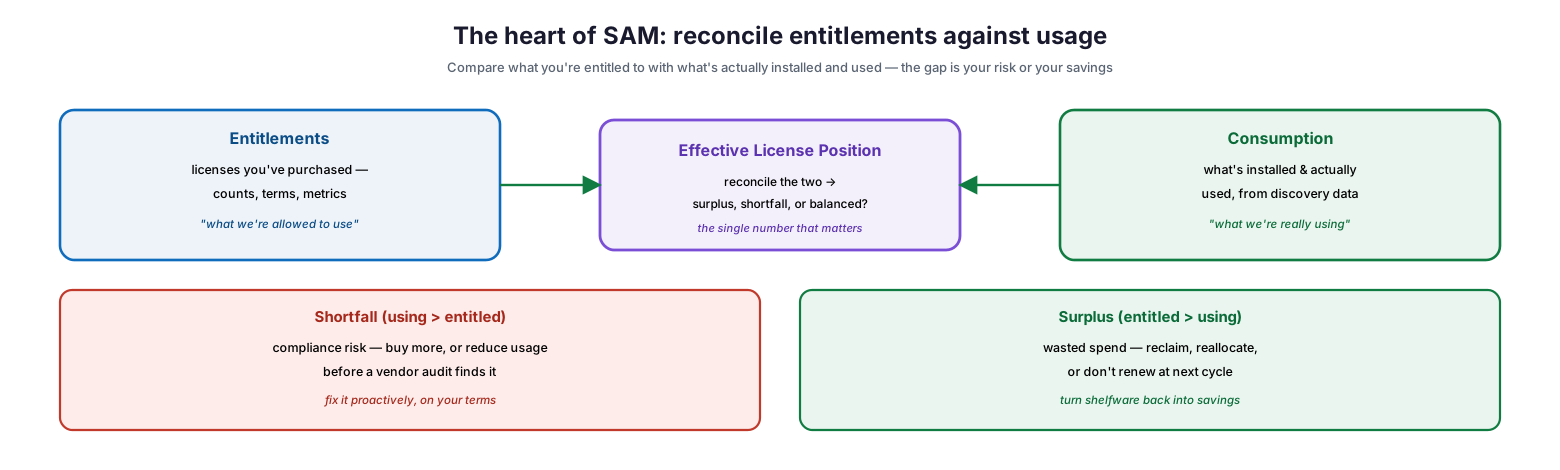
The heart of SAM: reconcile entitlements against usage
On one side sit entitlements — the licenses that have been purchased, with their counts, terms, and metrics: “what we are allowed to use.” On the other sits consumption — what is installed and actually used, drawn from discovery data: “what we are really using.” Reconciling the two produces the effective license position, the single number that tells whether the organization has a surplus, a shortfall, or a balance for each product. A shortfall — using more than entitled — is a compliance risk that should be fixed proactively, by buying more or reducing usage, before a vendor audit finds it and dictates the terms. A surplus — entitled to more than is used — is wasted spend that can be reclaimed, reallocated, or dropped at the next renewal, turning shelfware back into savings. Maintaining an accurate, current effective license position is the core deliverable of SAM, because it converts a vague sense of “we probably have enough licenses” into a precise, defensible statement of compliance and cost.
Know Your Licensing Models
A large share of accidental non-compliance comes not from using too much software but from miscounting how a product is licensed. Licensing models vary widely, and the metric — not the number of copies — determines compliance.
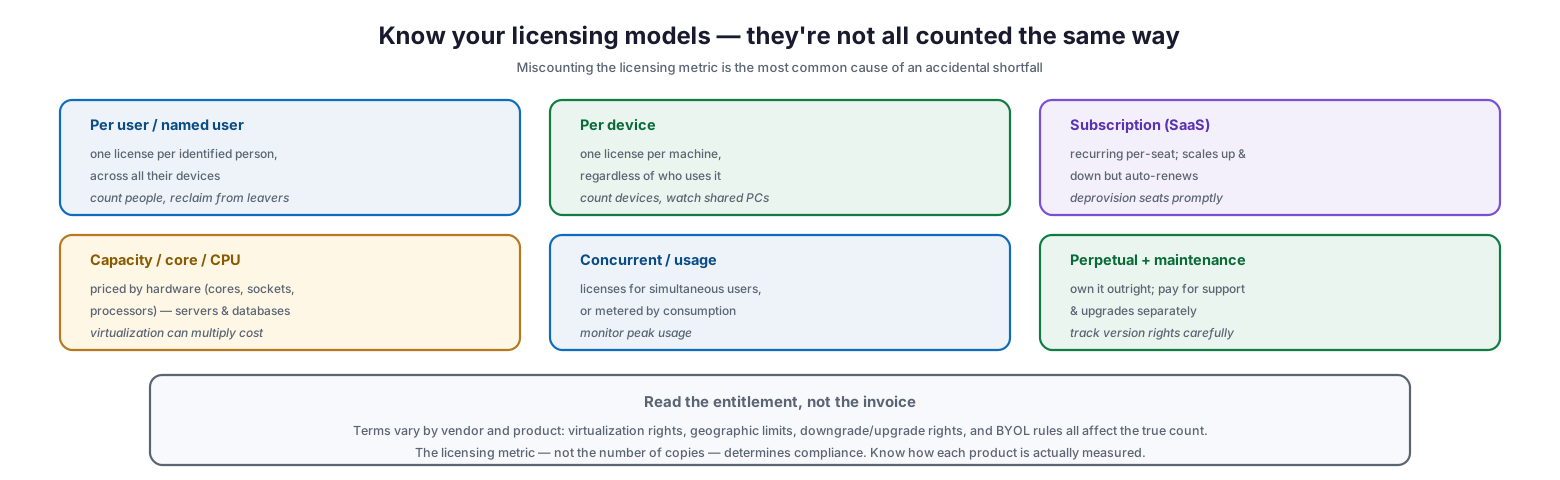
Know your licensing models — they’re not all counted the same way
The common models each count differently. Per user or named user assigns one license per identified person across all their devices, so you count people and reclaim from leavers. Per device assigns one license per machine regardless of who uses it, so you count devices and watch shared PCs. Subscription (SaaS) is recurring per seat, scaling up and down but auto-renewing, so seats must be deprovisioned promptly. Capacity, core, or CPU models price by hardware such as cores, sockets, or processors — common for servers and databases — where virtualization can multiply the cost unexpectedly. Concurrent or usage models license simultaneous users or meter by consumption, requiring monitoring of peak usage. And perpetual plus maintenance means owning the software outright while paying separately for support and upgrades, where version rights must be tracked carefully. The overarching lesson is to read the entitlement, not the invoice: terms such as virtualization rights, geographic limits, downgrade and upgrade rights, and bring-your-own-license rules all affect the true count, and knowing how each product is actually measured is what prevents an accidental shortfall.
| Licensing model | Counted by | Watch out for |
|---|---|---|
| Per user / named user | Identified people | Reclaim from leavers |
| Per device | Machines | Shared/multi-user devices |
| Subscription (SaaS) | Recurring seats | Auto-renewal, prompt deprovisioning |
| Capacity / core / CPU | Hardware (cores, sockets) | Virtualization multiplying cost |
| Concurrent / usage | Simultaneous users / metered | Peak usage spikes |
| Perpetual + maintenance | Owned + support terms | Version and upgrade rights |
Running a SAM Program
SAM delivers the most value as a continuous program rather than a once-a-year scramble before a renewal or an audit. A handful of habits keep an organization compliant, lean, and always ready for scrutiny.
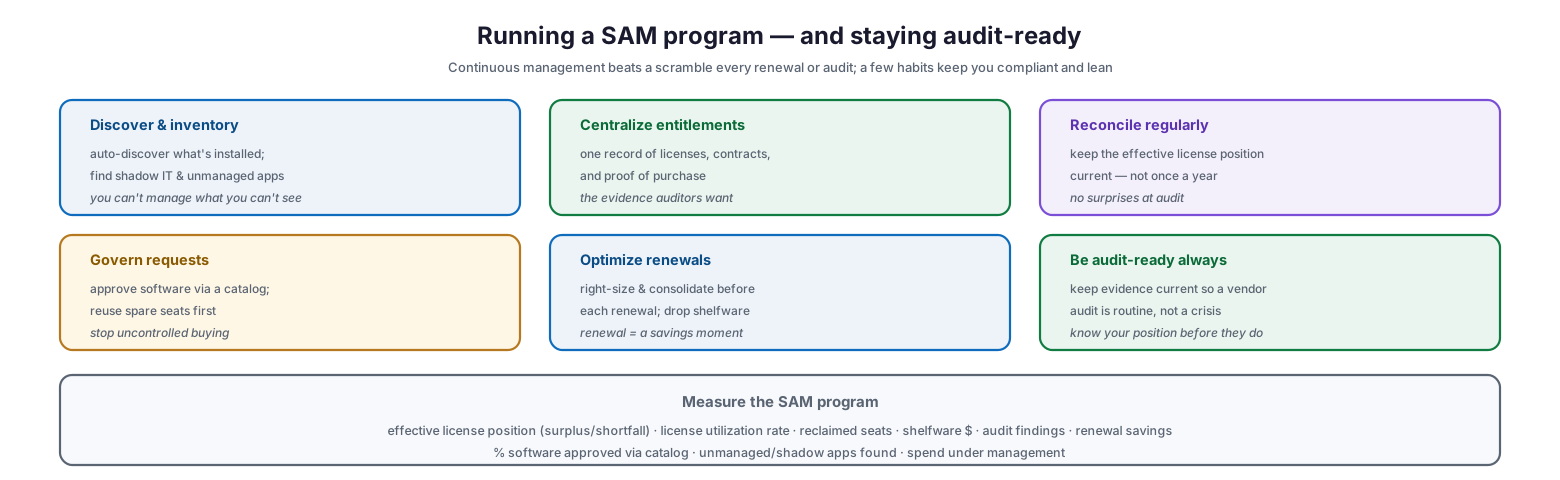
Running a SAM program — and staying audit-ready
Six practices define a healthy program. Discover and inventory what is actually installed, including shadow IT and unmanaged apps, because you cannot manage what you cannot see. Centralize entitlements into one record of licenses, contracts, and proof of purchase — the evidence auditors ask for. Reconcile regularly so the effective license position stays current rather than being calculated once a year. Govern requests by approving software through a catalog and reusing spare seats first, stopping uncontrolled buying. Optimize renewals by right-sizing and consolidating before each renewal and dropping shelfware, treating every renewal as a savings moment. And be audit-ready always by keeping evidence current so a vendor audit is routine rather than a crisis — knowing your position before the vendor does. Measured by the effective license position, license utilization rate, reclaimed seats, shelfware value, audit findings, renewal savings, catalog-approval rate, and unmanaged apps found, SAM becomes a demonstrable, continuously improving discipline rather than a periodic panic.
Software Asset Management Checklist
- Maintain a single, current record of software entitlements, contracts, and proof of purchase.
- Discover what is actually installed, including shadow IT and unmanaged applications.
- Understand the licensing model and metric for each product, not just the copy count.
- Reconcile entitlements against consumption regularly to maintain an effective license position.
- Fix shortfalls proactively before a vendor audit, on your own terms.
- Reclaim and reallocate surplus licenses; return reclaimed seats to a shared pool.
- Reuse existing licenses before purchasing new ones.
- Govern software requests through a catalog with approval and reuse checks.
- Deprovision seats promptly when staff leave, especially for subscriptions.
- Right-size and consolidate before each renewal; drop shelfware.
- Keep audit evidence current so a vendor audit is routine, not a crisis.
- Measure license position, utilization, reclaimed seats, shelfware, and renewal savings.
Best Practices
Maintain a live effective license position. The single most valuable SAM output is a current, accurate picture of surplus and shortfall per product. Calculate it continuously, not once a year, so there are never surprises at renewal or audit.
Read the entitlement, not the invoice. Compliance is determined by the licensing metric and its terms — virtualization rights, upgrade rights, geographic limits — not the number of copies installed. Understand how each product is genuinely measured.
Reuse before you buy. Reclaimed and unassigned licenses are free capacity. Check the pool of spare seats and route requests through a catalog before purchasing anything new.
Deprovision promptly. Seats for departed staff, especially subscriptions, are pure waste and can accumulate quickly. Tie license reclamation to the offboarding process so it happens automatically.
Treat renewals as savings moments. Every renewal is an opportunity to right-size, consolidate overlapping tools, and drop shelfware. Review usage well before the renewal date rather than rubber-stamping the same order.
Stay audit-ready. Keep entitlement evidence current so that a vendor audit is a routine confirmation rather than a fire drill. Knowing your own position before the vendor does puts you in control of the conversation.
Common Mistakes
Managing licenses only at audit time. Treating SAM as something to scramble on when a vendor audit lands leaves the organization exposed and negotiating from weakness. Continuous management is far cheaper and safer.
Miscounting the licensing metric. Assuming compliance based on copies installed, when a product is licensed by cores, users, or concurrent usage, is a leading cause of accidental shortfalls and audit true-ups.
Ignoring shelfware. Paying year after year for licenses that are never used quietly wastes significant budget. Regular reconciliation surfaces shelfware so it can be reclaimed or dropped.
Not reclaiming from leavers. Failing to recover seats when people depart, particularly subscriptions, steadily inflates cost. Reclamation must be part of offboarding.
Uncontrolled purchasing. Letting teams buy software independently creates duplication, shadow IT, and unmanaged licenses. A governed catalog with reuse checks prevents it.
Storing no proof of purchase. Without centralized entitlement records and proof of purchase, defending a position in an audit is difficult even when the organization is actually compliant. Keep the evidence.
Frequently Asked Questions
What is software asset management? SAM is the practice of managing and optimizing the purchase, deployment, maintenance, and retirement of software licenses within an organization. Its goal is to keep the organization compliant with licensing terms while avoiding paying for software it does not use.
How is SAM different from ITAM? Software asset management is a specialized subset of IT asset management focused specifically on software licenses, entitlements, and compliance. ITAM covers all assets — hardware and software — across their lifecycle; SAM zooms in on getting software licensing right.
What is an effective license position? It is the result of reconciling what an organization is entitled to (its licenses) against what it is actually consuming (installs and usage). For each product it shows a surplus, a shortfall, or a balance, and it is the core measure of both compliance and cost efficiency.
What is shelfware? Shelfware is software that has been purchased and licensed but is not actually being used — bought and never assigned, or assigned to people who no longer need it. It represents wasted spend that SAM aims to identify and eliminate.
Why do licensing models matter so much? Because compliance is determined by the licensing metric, not the number of copies. A product licensed per core, per user, or by concurrent usage is counted very differently, and miscounting the metric is one of the most common causes of accidental non-compliance.
How do we prepare for a software vendor audit? By running SAM continuously: maintain current entitlement records and proof of purchase, keep an up-to-date effective license position, and fix any shortfalls proactively. If you always know your position, an audit becomes a routine confirmation rather than a crisis.
Conclusion
Software asset management is how an organization takes control of one of its largest and most error-prone areas of IT spend. Because getting licensing wrong is costly in both directions — legal and financial penalties for using too much, wasted budget for paying for too much — the discipline is fundamentally about balance: staying compliant while eliminating waste. That balance is achieved by managing software across its lifecycle, reclaiming and reusing licenses, understanding how each product is actually counted, and above all maintaining a current, accurate effective license position that reconciles entitlements against real usage.
The organizations that succeed treat SAM as a continuous program, not an audit-time scramble. They discover what they have, centralize their entitlements, reconcile regularly, govern purchasing through a catalog, optimize at every renewal, and keep themselves audit-ready by design. Do that, and software stops being a source of surprise bills and hidden waste and becomes a controlled, optimized cost — one where the organization pays for exactly what it uses, uses what it pays for, and can prove it whenever a vendor asks.
References
- ISO/IEC 19770-1 — IT Asset Management (software asset management) systems
- ISO/IEC 19770-2 — Software identification (SWID) tags
- ITIL 4 — Software Asset Management practice (overview)
- ITAM Forum — Software Asset Management resources
- IAITAM — International Association of IT Asset Managers
- CIS Controls — Inventory and Control of Software Assets
- NIST SP 800-53 — Configuration Management (software usage restrictions)