IT Service Management Best Practices: Running IT as a Value-Delivering Service
There is a fundamental difference between an IT team that fixes things when they break and one that runs IT as a set of dependable services the business can plan around.
- Content owner
- Insyto Content Team
- Editorial reviewer
- Ritesh Mhatre
- Technical reviewer
- Navish Ansari
- Next review
- To be scheduled
- Last reviewed
- Review pending
- Technical level
- Intermediate · IT directors, IT operations managers
Executive Summary
There is a fundamental difference between an IT team that fixes things when they break and one that runs IT as a set of dependable services the business can plan around. The first is reactive, inconsistent, and forever firefighting; it measures success by whether the servers are up and is often seen by the rest of the organization as a cost centre and a blocker. The second is proactive and predictable; it defines its services, agrees the levels at which they will be delivered, follows repeatable processes, and measures itself by the value and experience it provides. IT service management (ITSM) is the discipline that turns the first kind of IT into the second — and it is arguably the most important operational shift a growing organization’s IT function can make.
ITSM is not a tool or a piece of software; it is a way of organizing IT around services and the value they deliver, most commonly guided by the ITIL 4 framework. At its heart is a simple reframing: IT does not exist to run technology, it exists to enable business outcomes, and everything it does should be organized around delivering those outcomes reliably. That reframing brings structure to the chaos — a clear front door for users, defined ways of handling the things that break, the things that change, and the things people ask for, agreed service levels that set expectations, and a habit of continual improvement that makes the whole system better over time. The payoff is IT that is measurable, consistent, and trusted, rather than heroic and unpredictable.
This vendor-neutral guide lays out ITSM best practices for organizations of any size. It explains what ITSM is and how it differs from a break-fix mindset, introduces the ITIL 4 service value chain that turns business demand into value, walks through the core service management practices that do the day-to-day work, clarifies the frequently confused distinction between incidents, problems, changes, and requests, and sets out the guiding principles and metrics that make adoption practical rather than bureaucratic. The goal is a clear, actionable picture of how to run IT as a professional, value-focused service — starting small, proving value, and improving continuously.
From Break-Fix to Service
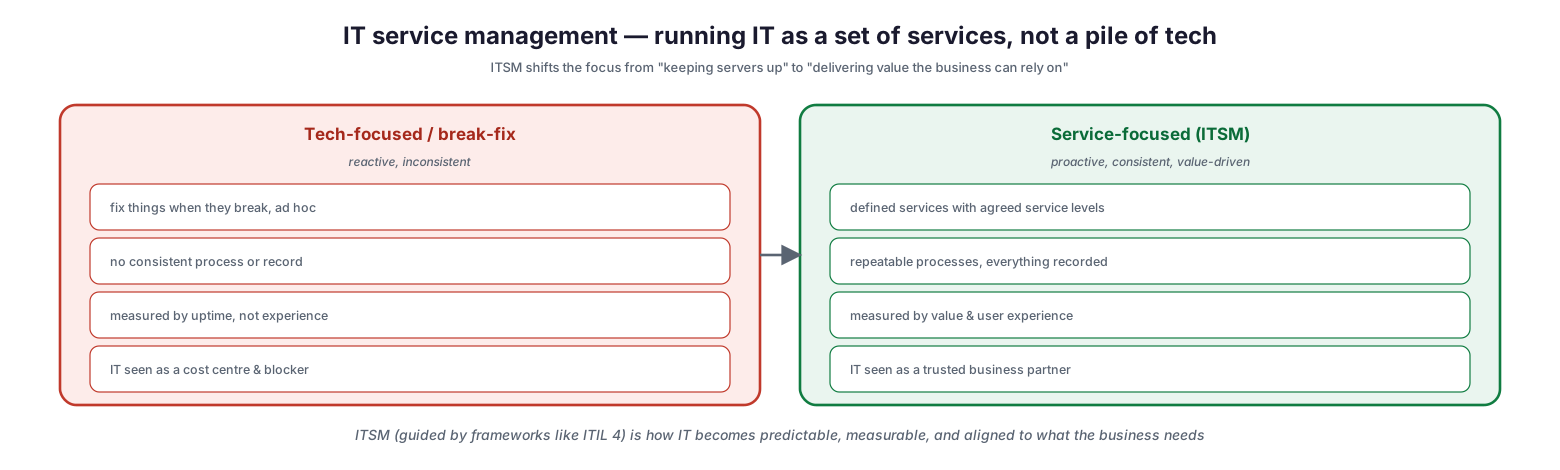
The starting point for ITSM is a shift in mindset, and understanding the contrast makes the value obvious. It is the difference between managing technology and managing services.
IT service management — running IT as a set of services, not a pile of tech
A tech-focused, break-fix operation fixes things when they break, ad hoc, with no consistent process or record. It is measured by uptime rather than experience, and the result is that IT is seen as a cost centre and a blocker — competent in a crisis, perhaps, but unpredictable and hard to plan around. A service-focused operation, by contrast, defines its services with agreed service levels, follows repeatable processes with everything recorded, and measures itself by value and user experience. In that model IT becomes a trusted business partner rather than an unreliable utility. ITSM, guided by frameworks like ITIL 4, is how an organization makes this transition — how IT becomes predictable, measurable, and aligned to what the business actually needs. The shift is not about adding bureaucracy; it is about replacing improvisation with a system that scales.
The Service Value Chain
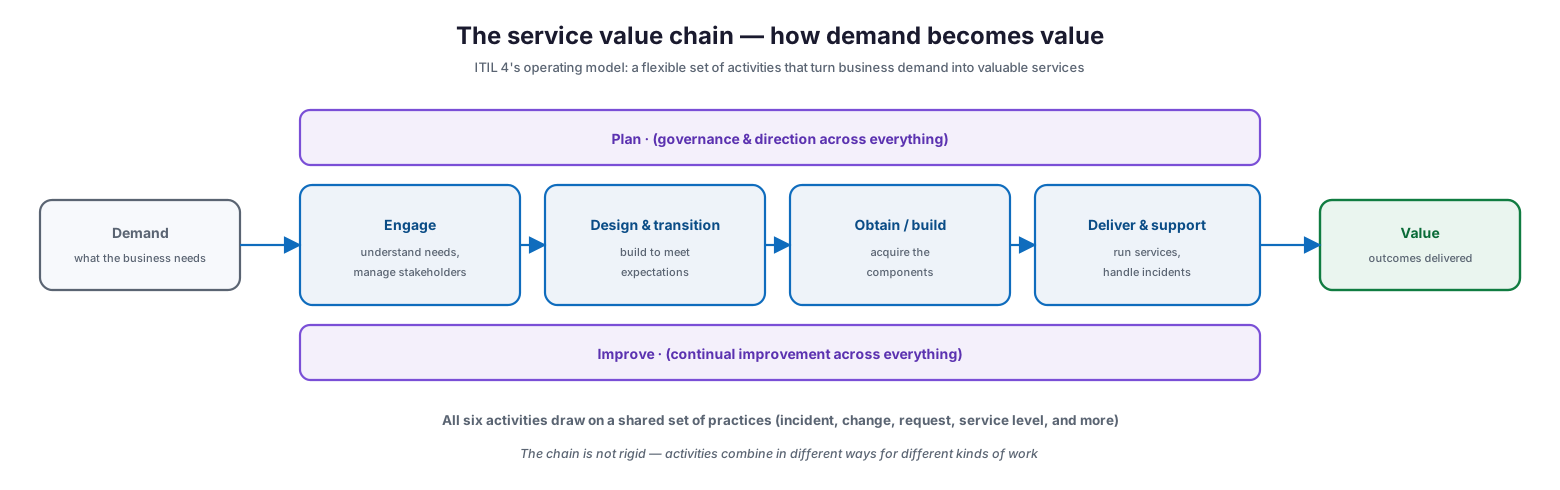
ITIL 4, the most widely used ITSM framework, describes how an organization turns business demand into value through a flexible operating model called the service value chain. Understanding it gives a map of everything IT does.
The service value chain — how demand becomes value
The chain takes demand — what the business needs — and converts it into value, the outcomes delivered, through six activities. Plan provides governance and direction across everything. Engage is about understanding needs and managing stakeholders and users. Design and transition builds services to meet expectations. Obtain or build acquires the components. Deliver and support runs the services day to day and handles incidents. And improve drives continual improvement across the whole. Crucially, this chain is not a rigid assembly line; the activities combine in different ways for different kinds of work, and all of them draw on a shared set of management practices — incident, change, request, service level, and more. The value of the model is that it locates every piece of IT work within a coherent system oriented toward delivering value, rather than treating each task as an isolated event.
The Everyday Engine: Core Practices
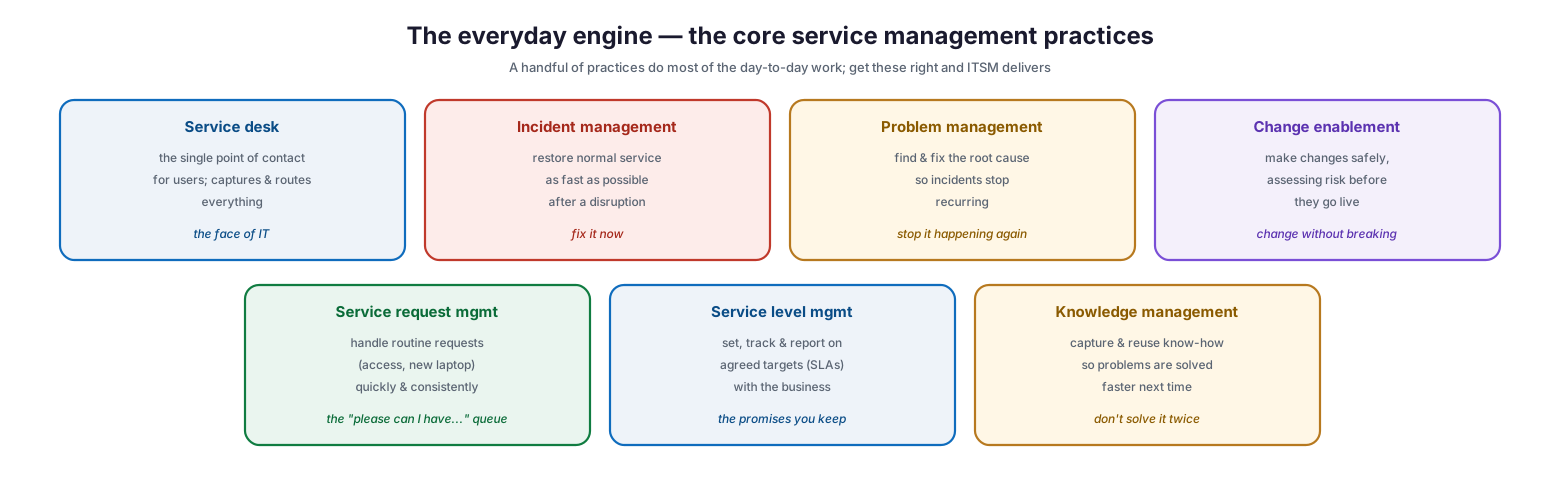
While the value chain describes the whole system, most of the day-to-day work of IT runs through a handful of core service management practices. Getting these right is where ITSM delivers its most visible benefits.
The everyday engine — the core service management practices
The service desk is the single point of contact for users — the face of IT — capturing and routing everything that comes in. Incident management restores normal service as quickly as possible after a disruption. Problem management finds and fixes the root causes so incidents stop recurring. Change enablement makes changes safely, assessing risk before they go live. Service request management handles routine requests like access or a new laptop quickly and consistently. Service level management sets, tracks, and reports on the targets agreed with the business. And knowledge management captures and reuses know-how so problems are solved faster the next time. These practices interlock: the service desk feeds incidents and requests, incidents reveal problems, problems drive changes, and knowledge accelerates everything. For most organizations, standing up a solid service desk with sound incident, request, and change practices delivers the bulk of the value, and the rest can be layered on over time.
| Practice | Purpose | In a sentence |
|---|---|---|
| Service desk | Single point of contact for users | The face of IT |
| Incident management | Restore service fast after disruption | Fix it now |
| Problem management | Eliminate root causes | Stop it happening again |
| Change enablement | Make changes safely | Change without breaking |
| Service request management | Fulfil routine requests | The “please can I have…” queue |
| Service level management | Set and track agreed targets | The promises you keep |
| Knowledge management | Capture and reuse know-how | Don’t solve it twice |
Incident, Problem, Change, Request
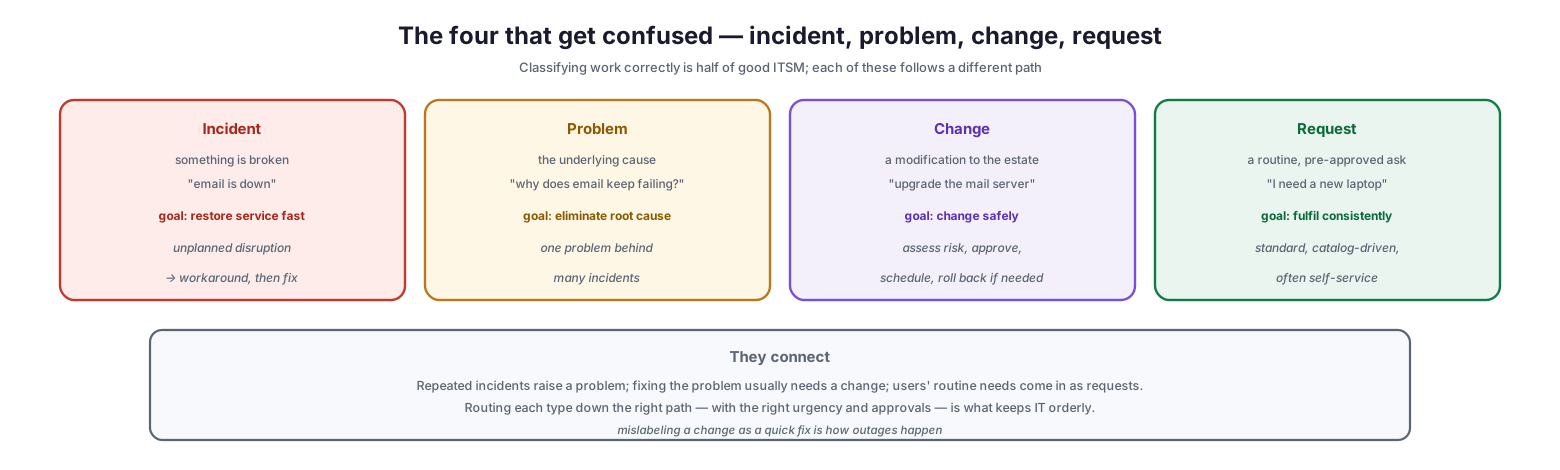
Four types of work sit at the centre of ITSM and are constantly confused with one another. Classifying work correctly is half of good service management, because each type follows a different path with different urgency and approvals.
The four that get confused — incident, problem, change, request
An incident is something broken — “email is down” — and the goal is to restore service fast, often via a workaround before a permanent fix. A problem is the underlying cause — “why does email keep failing?” — and the goal is to eliminate the root cause, since one problem often sits behind many incidents. A change is a modification to the estate — “upgrade the mail server” — and the goal is to make the change safely by assessing risk, approving, scheduling, and being ready to roll back. A request is a routine, pre-approved ask — “I need a new laptop” — and the goal is to fulfil it consistently, typically through a service catalog and often self-service. These four connect in a natural flow: repeated incidents raise a problem, fixing the problem usually requires a change, and users’ routine needs arrive as requests. Routing each type down the right path is what keeps IT orderly — and mislabeling a change as a quick fix, skipping its risk assessment, is exactly how avoidable outages happen.
| Type | What it is | Goal | Example |
|---|---|---|---|
| Incident | Something is broken | Restore service fast | “Email is down” |
| Problem | The underlying cause | Eliminate root cause | “Why does email keep failing?” |
| Change | A modification to the estate | Change safely | “Upgrade the mail server” |
| Request | A routine, pre-approved ask | Fulfil consistently | “I need a new laptop” |
Guiding Principles and Continual Improvement
ITSM frameworks can seem daunting, but ITIL 4 is explicitly designed to be adopted pragmatically, not followed slavishly. Seven guiding principles keep a program grounded, and continual improvement keeps it alive.
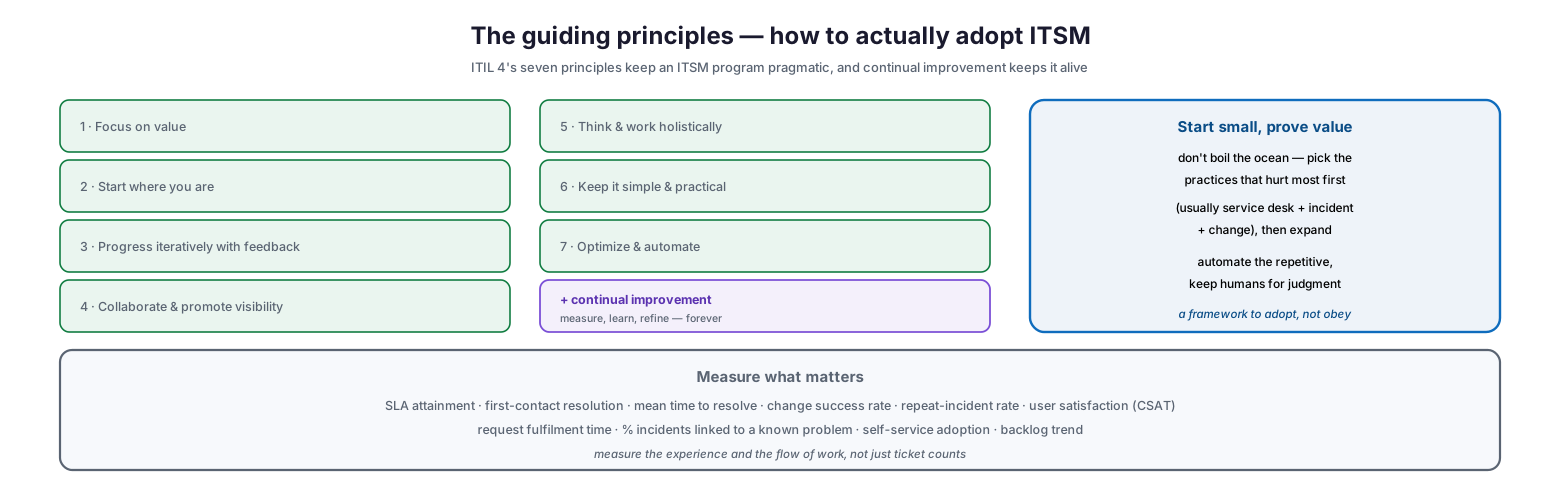
The guiding principles — how to actually adopt ITSM
The seven principles are: focus on value; start where you are; progress iteratively with feedback; collaborate and promote visibility; think and work holistically; keep it simple and practical; and optimize and automate. Underpinning them is continual improvement — the habit of measuring, learning, and refining, forever. The practical translation of these principles is to start small and prove value rather than trying to boil the ocean: pick the practices that hurt most first, usually the service desk together with incident and change management, then expand once they are working. Automate the repetitive and reserve human judgment for the things that need it. ITIL is a framework to adopt and adapt, not a rulebook to obey, and the organizations that succeed with it treat it as a source of good ideas to apply proportionately. What holds the whole thing together is measurement of the right things — the experience and the flow of work, not merely ticket counts.
| Guiding principle | In practice |
|---|---|
| Focus on value | Everything should trace to a business outcome |
| Start where you are | Build on what works; don’t rip and replace |
| Progress iteratively with feedback | Small steps, learn, adjust |
| Collaborate & promote visibility | Work across silos; make work transparent |
| Think & work holistically | See the whole system, not isolated parts |
| Keep it simple & practical | Remove steps that add no value |
| Optimize & automate | Improve first, then automate the routine |
IT Service Management Checklist
- Define your IT services and who they serve, rather than managing only technology.
- Establish a service desk as the single point of contact for all users.
- Implement incident management to restore service quickly and consistently.
- Add problem management to eliminate the root causes of recurring incidents.
- Put change enablement in place so changes are risk-assessed and approved before going live.
- Handle routine asks through service request management and a service catalog.
- Agree service levels (SLAs) with the business and track and report against them.
- Capture and reuse knowledge so issues are resolved faster over time.
- Classify every piece of work correctly as incident, problem, change, or request.
- Apply the guiding principles: focus on value, start where you are, keep it simple.
- Start small with the highest-impact practices, then expand iteratively.
- Measure experience and flow — SLA attainment, resolution time, change success, satisfaction — and improve continually.
Best Practices
Organize around services and value. The core shift is to stop thinking about technology in isolation and start thinking about the services it delivers and the outcomes they enable. Everything else follows from that reframing.
Stand up the service desk first. A single, well-run point of contact for users delivers immediate value: it captures everything, routes it correctly, and gives IT visibility into what is actually happening. It is the foundation the other practices build on.
Classify work correctly. Distinguishing incidents, problems, changes, and requests, and routing each down the right path with appropriate urgency and approvals, is what keeps IT orderly and prevents avoidable outages.
Start small and prove value. Do not attempt to implement every practice at once. Pick the ones that hurt most — usually service desk, incident, and change — get them working, demonstrate the benefit, and expand from there.
Keep it simple and automate the routine. Follow the framework proportionately, removing steps that add no value, and automate repetitive work so people are freed for judgment-based tasks. ITSM should reduce friction, not add bureaucracy.
Measure and improve continually. Track the metrics that reflect experience and workflow, not just ticket volume, and build a habit of regular improvement. A static ITSM program decays; a continually improving one compounds its value.
Common Mistakes
Staying in break-fix mode. Treating IT as a series of things to fix, with no defined services or processes, keeps the team reactive and unpredictable and prevents it from ever getting ahead of the work.
Implementing tools without process. Buying an ITSM platform and expecting it to deliver service management is a common and expensive error. The tool supports the practices; it does not replace defining them.
Confusing the four work types. Treating a change as a quick incident fix — and skipping its risk assessment and approval — is one of the most frequent causes of self-inflicted outages.
Trying to do everything at once. Attempting to adopt the full framework in one go overwhelms the team and stalls. Starting small and expanding iteratively is what actually works.
Neglecting problem management. Endlessly resolving the same incidents without ever addressing their root causes wastes effort and frustrates users. Problem management is what breaks the cycle.
Measuring only ticket counts. Judging IT by how many tickets it closes ignores whether users are actually well served. Measure SLA attainment, resolution times, change success, and satisfaction instead.
Frequently Asked Questions
What is IT service management? ITSM is the practice of designing, delivering, managing, and improving the way IT is used within an organization, organized around services and the value they deliver rather than around technology in isolation. It is commonly guided by the ITIL 4 framework.
What is the difference between ITSM and ITIL? ITSM is the overall discipline of managing IT as services. ITIL is the most widely used framework of best practices for doing ITSM well. In short, ITIL is a set of guidance; ITSM is the thing you are actually practicing.
What is the difference between an incident and a problem? An incident is a single disruption to be resolved quickly, like “email is down.” A problem is the underlying cause behind one or more incidents, like “why does email keep failing?” Incident management restores service; problem management removes the root cause.
Do small organizations need ITSM? Yes, in proportion. A small organization does not need heavy process, but it benefits enormously from a single point of contact, consistent handling of incidents and requests, and safe change management. Start with the highest-impact practices and keep it simple.
Where should we start with ITSM? Begin with a service desk as the single point of contact, then implement incident, request, and change management. These deliver the most value fastest. Prove the benefit, then expand to problem management, service level management, and beyond.
How do we measure ITSM success? Through metrics that reflect experience and workflow: SLA attainment, first-contact resolution, mean time to resolve, change success rate, repeat-incident rate, request fulfilment time, and user satisfaction. Avoid judging success by ticket volume alone.
Conclusion
IT service management is the discipline that turns IT from an unpredictable, break-fix operation into a professional, value-delivering function the business can rely on. Its central insight is simple but transformative: IT exists to deliver services and outcomes, not merely to run technology, and organizing everything around that purpose brings structure, consistency, and trust. The ITIL 4 service value chain provides the map, the core practices — service desk, incident, problem, change, request, service level, and knowledge management — provide the engine, and correctly classifying work keeps the whole system orderly.
Adopting ITSM does not mean drowning IT in bureaucracy. Guided by ITIL’s principles — focus on value, start where you are, keep it simple, optimize and automate — the smart approach is to start small with the practices that hurt most, prove the value, and expand iteratively while improving continually. Measure the experience and the flow of work rather than raw ticket counts, and let the framework serve the organization rather than the other way round. Do that, and IT becomes what every business wants it to be: dependable, measurable, and genuinely aligned with the outcomes the organization is trying to achieve.
References
- ITIL 4 Foundation — AXELOS / PeopleCert
- ISO/IEC 20000-1 — IT Service Management System requirements
- ITIL 4 service value system and value chain (overview)
- COBIT — Governance and management of enterprise IT (ISACA)
- NIST SP 800-53 — Configuration and change management controls
- ITIL 4 guiding principles (overview)
- itSMF — IT Service Management Forum